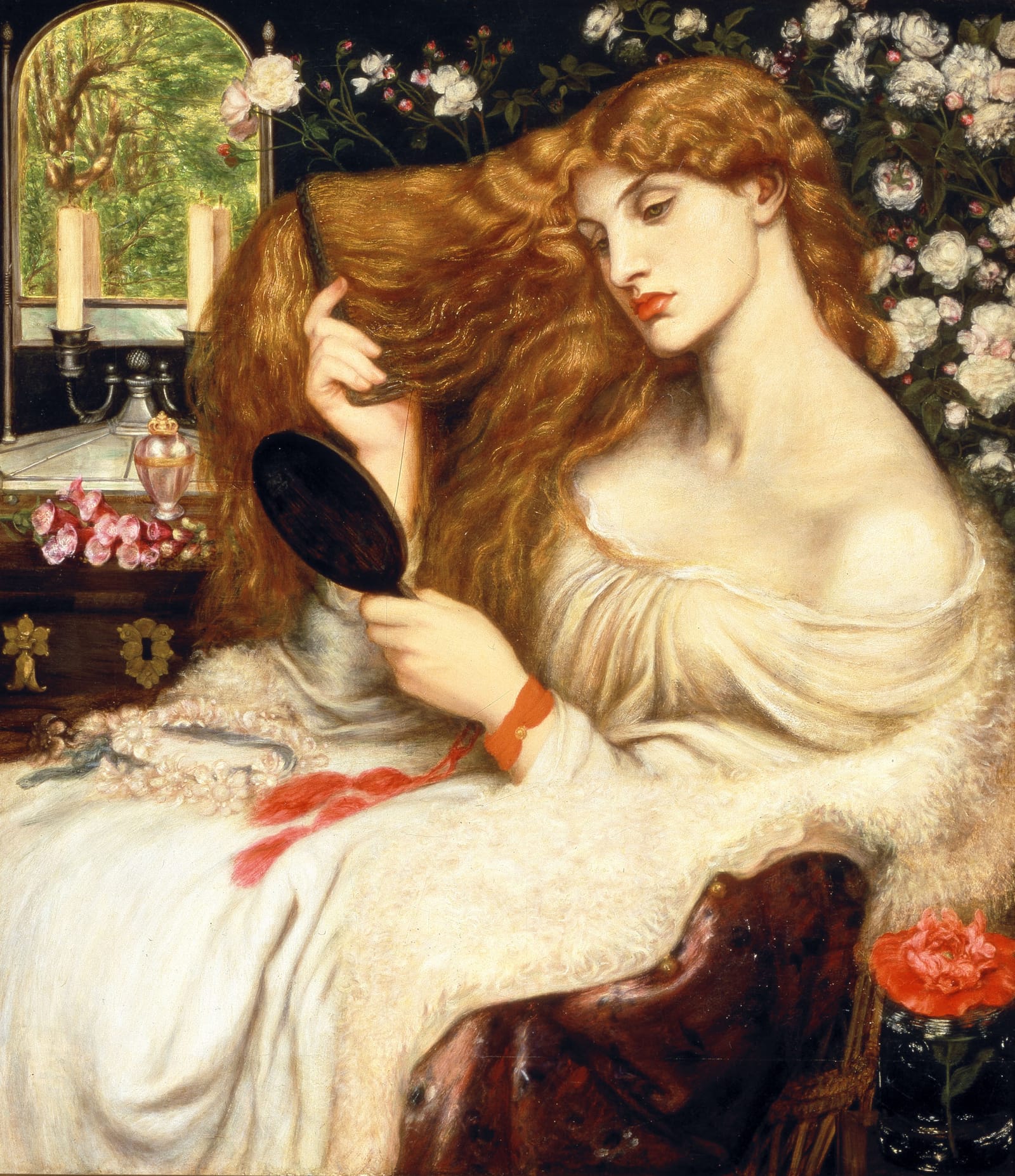
It is good knowing that glasses are to drink from. The bad thing is not knowing what thirst is for. (Antonio Machado)
Whoever is desireless, sees the essence of life. Whoever desires, sees its manifestations. These two are the same. (Tao Te Ching)
Man is compounded of both dust and spirit, and, like all creatures, he is covenanted concurrently to both time and eternity. This simultaneity and admixture inhere within the very fabric of creation and existence, of revelation itself. To exist is to be and, at the same time, not to be. Growth is a form of evanescence, dying a form of birth. Existence is now and, in a certain sense, forever. Form conceals essence, being resides within becoming, stasis abides in the heart of movement, reality is both present and fleeting, both beyond and within. And in this complexio oppositorum lies the paradox and ambiguity of spiritual expression: divine utterances, ourselves included, contain ineffable meanings. Words proclaim Silence.
It is this same ambiguity that clouds the nature of desire, a cloud only the rays of the Intellect—the supernal Sun—can disperse. This is the ambiguity of maya, the Cosmic veil. And at the heart of the ambiguity lies a choice given to all of mankind: to seek the fulfillment of desire in the beatific vision of the Sun’s celestial Light or to seek it in the tumult of the shadows.
From a metaphysical standpoint, privation and proximity, transcendence and immanence, the mystery of the Absolute and the radiance of the Infinite, are embedded within the very structure of Reality. It is our “ontological distance from God” that constitutes our privation, and it is the possibility of our “ontological reintegration” within God that constitutes our proximity. “Things are in God and God is in things with a kind of discontinuous continuity” (Frithjof Schuon), and Reality is therefore translucent with the radiance of God. Creation is understood in Traditional thought to be a veil through which—and in which—God is metaphysically transparent. Inasmuch as creation is separate from God, we are ontologically distant from the source of our existence and the object of our salvation, which remains ever-transcendent, mysterious, and beyond reach. Yet, inasmuch as creation is theophany, radiating the immanence of God, humanity—made in the image of God—has within it both the means and end of the fulfillment of its desires.
God, and not the created world, is the sole and final refuge of lustful man.
But what appears as translucent to the Inner eye of the Heart is perceived as opaque by the outer eye of the mind or senses. Therein lies the ambiguity of the Icon and the Veil, an ambiguity inherent in the process of Revelation. It is the Inner Eye’s spiritual vision (ta’wil, in the Sufi lexicon) which possesses the capability to “dis-cover” the Beauty beneath the Veil. And it is the Heart’s “sacred desire” (shawq) whose spiritual thirst impels the seeker to attain the taste (dhawq) of the Spirit’s quenching nectar.
From the Traditional perspective, since “all that exists tends towards perfection” and since “God is the Supreme Perfection”, desires are satisfied only by sublimating them into their Source. God, and not the created world, is the sole and final refuge of lustful man. This is why the 10th century Sufi mystic Niffari exclaims: “I take refuge in the unity of Thy Quality against every quality”. In the Islamic context, God is said to be both Zahir (“Manifest” or “outward”) and Batin (“hidden” or “Inward”). He is revealed to the extent that man perceives him through his Inner eye, the Eye of the Heart—the Eye of the Intellect. For Traditional man, there is no Truth without Presence, and there is no Presence until God is perceived in the “Eternal now”, both beyond and within the cosmic theophany: or, as William Blake puts it, To see a World in a Grain of Sand / And a Heaven in a Wild Flower, / Hold Infinity in the palm of your hand / And Eternity in an hour.
One of the key aspects of Modernism is its profanation of desire. In Traditional thought, “he who knows God is disinterested in the gifts of God, and he who is negligent of God is insatiable for the gifts of God” (Shaykh Ahmad al-‘Alawi). Modern man, while having an insatiable thirst for the gifts of God, is seemingly blind to their Source. Instead he perceives only the objects of his lusts, and lives in a world of concupiscence, exploitation, commodification and wanton consumption, in which desire is reduced to the need for the gratification of individual wants and cravings, and the indulging of personal appetites. The notion of the perfectibility of desire as love, or the conformity of the soul to the beauty of the Spirit, is all but forgotten—replaced by desire which is viewed in terms of behavioural instincts, or the pleasure/pain principle, or as libido, or explained by the evolutionist’s creed of the “survival of the fittest”. These theories are reinforced by the modern media and its various predations which fuel consumption by creating ephemeral wants and desires. Lost, is the respect for Traditional values, for the nobility of the person, the sanctity of relationships, the wonder of life, and of the Sacred, the appreciation that “everything that lives is holy”. In a world of wantonness, desires degenerate, pander to the unsalutary, and eventually erode the very foundations of society.
In Cymbeline, Shakespeare has a passage that aptly describes this pathology: The cloyed will,— /That satiate yet unsatisfied desire, that tub /Both fill’d and running,—ravening first the lamb, /Longs after for the garbage. (I, vi, 655).
the “desire for desirelessness” is itself a legitimate and necessary form of desire—a prolongation in the will of an apophatic discernment of the intelligence
What, then, can fulfill this “satiate yet unsatisfied desire”? It is true that some Traditional teachings have anathemized desire, but in so doing, they are in reality no more than condemning the desecration of desire—not desire itself. So, for example, when Bayazid exclaims “I desire not to desire”, or the Buddha—who teaches that craven desire is the cause of all suffering—advocates “blowing out the flame of desire”, the “desire for desirelessness” to which they aspire is itself a legitimate and necessary form of desire—a prolongation in the will of an apophatic discernment of the intelligence—and is another example of the complexio oppositorum referred to earlier. It is not until the final act of “letting go”—the initiatic “death” of the “psycho-physical res” which constitutes the crystallized being of man—that desire itself finally ceases, requited ultimately by Divine Presence (visio beatifica) or Mystical Union (unio mystico). But, till then, decentered Man is enjoined, by force of his privative conditions, to desire. For thirst and privation are the conditions of existence. Man cannot overcome his privative conditions. To exist in a contingent and imperfect world is to partake of those very qualities. Man will thirst, hunger, bleed and eventually die.
The desire of Man is prefigured in the desire of God.
But something in Man can transcend and survive the contingency and imperfections of his earthly existence. There is a connection between our worldly—sensual—desires (eros) and their intended end (telos). Worldly desires exist in order to be sublimated. The desire of Man is prefigured in the desire of God. This is one of the many meanings of the famous Hadith Qudsi (a sacred or divinely inspired utterance): “I was a hidden treasure; I desired to be known, so I created the world in order to be known.” Creation then is a projection of God’s desire into the world. In other words, God desires our existence precisely so that we may desire our return to Him, our Origin and final Sanctuary.
Though Man’s lot cannot be overcome, it can yet be transcended by reconnecting our desires to their sacred origin, a connection that is made through the golden thread of Amanah, the “Sacred Trust” of humankind. This is the true purpose of desire, whose fulfillment is both knowledge (“To know what is, and to know it in such a fashion as to be oneself, truly and effectively, what one knows”, as Guénon states) and vision (for “Everything is perishing but His Face”, as the Qur’an states: 28.88). For Man was made for Truth and Beauty. Herein lies the meaning of the Qur’anic Covenant of Alast (Qur’an: 7.172) in which each departing soul, before being sent out into the world, affirms its sacred Origin—a witnessing that is subsequently reaffirmed by every practicing Muslim in the words of the Shahadah or “profession of faith”: La ilaha illa ‘llah (“There is no deity but God”) and in the divine invocation or dhikr of Remembrance.
Beauty expresses Truth just as Truth manifests in Beauty. Holy desire requires the soul to be open to Beauty, and to be receptive to the grace of Truth so that the soul may thereby be assimilated into her spiritual substance. The Path to Truth is neither outwardness nor abstraction. It engages the whole of one’s being and living. It is not by renunciation but through detached engagement that the soul journeys through life towards God, by “living in two worlds at the same time”. Among religious seekers therefore one needs to guard against what Schuon has termed “the cult of suffering”, a form of renunciation based on “the error of believing that suffering is the only thing that brings one nearer to God”. The divine manifests through love in the theophany. The divine essence is present in the forms, in the Beautiful Names, and in the Qualities and Attributes which radiate it. The soul “puts them on” and partakes of them, for archetypal forms possess the power to both inform and transform the soul, alchemically. It is much an error to renounce beauty as a sacrament, as it is to reduce desire to profane outward attraction. So too it is an error to simplistically denounce sacred rituals without participating in them sacramentally. For grace, through love, goodness and beauty, can draw the soul into the divine sanctuary.
True knowledge (or Truth), by permeating our very being, is none other than Love (that is to say, moral intelligence—or Virtue) embodied as theophany (that is to say Presence—or Beauty): the True, the Good, and the Beautiful; Sat, Chit, and Ananda. It is through the cultivation of these sacred qualities that desire, through divine grace and human effort, is finally sublimated to its ultimate goal, the Pax Profunda, the “Peace of God, which passeth all understanding”.