Greetings, dear Subscribers!
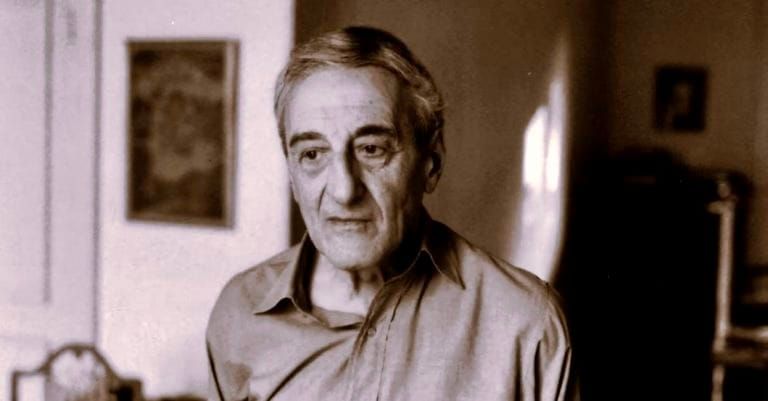
This week’s offering is an essay by the Traditionalist, mountaineer, and Buddhist scholar, Marco Pallis. The essay, titled ‘Nembutsu as Remembrance’, first appeared in Studies in Comparative Religion in 1978, and we are publishing here with their kind permission. The essay explains the foundations and practice of Nembutsu, the prayer of recollection in Amidist Buddhism. The practice is similar to the Nama-Japa of Hindu Bhakti traditions, the Jesus Prayer in Eastern Orthodox Christianity and the Dhikr practice of Muslims.
One of the delights of the essay is the writing of Pallis, who wears his scholarship lightly, explaining the history of the Nembutsu tradition, its relationship to the salvific goals of the bodhisattvas, and how the tradition is represented in stories and iconography.
Here are some excerpts:
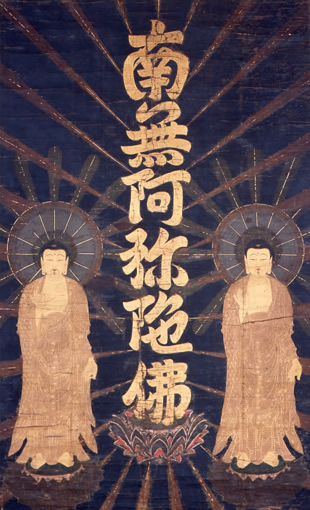
- The word nembutsu is a compressed form of the phrase Namu Amida Butsu, itself a Japanese reduction of the Sanskrit formula Namo ‘mitabhāya buddhāya. The literal meaning is ‘Praise to Amitābha Buddha’; here namo must be taken as comprising the faith, veneration and gratitude which suffering beings owe to the Buddha as dispenser of light; the name Amitābha itself means ‘infinite light’. This formula has provided its invocatory mantram for the Pure Land school of Buddhism; this ‘buddha-field’ is named after Amitābha’s paradise, symbolically situated in the West. The Pure Land teachings, first enunciated by the Indian masters Nāgārjuna and Vasubhandu, reached Japan via China and became widely diffused thanks to the example of two great saints, Hōnen (1133-1212) and his pre-eminent disciple Shinran (1173-1263), who gave its present form to the tradition under the name of Jōdo- Shinshū (‘True Pure Land Sect’).
- By its root meaning the word ‘bodhisattva’ denotes one who displays an unmistakable affinity for enlightenment, one who tends in that direction both deliberately and instinctively. In the context of the Buddhist path, it indicates one who has reached an advanced stage; such a person is the dedicated follower of the Buddha in principle and in fact. If all this is commonly known, what we are particularly concerned with here, however, is to extract from the bodhisattvic vocation its most characteristic trait, as expressed in the words of the Vow.
- In a more general connection, the question often arises as to how much importance should be attached to the frequent repetition of a formula like the maṇi or the nembutsu, compared with a sparser use of it; here one can recall the fact that in the period when Hōnen was preaching the Pure Land doctrine in Japan, many persons – carried away by their enthusiasm – vied with one another as to the number of times they were able to repeat the formula, as if this were the thing that mattered. In the face of such extravagances, Shinran applied a wholesome corrective by showing that the value of nembutsu is primarily a qualitative one, with number counting for nothing in itself as a criterion of effectiveness. The essence of a thing, that which makes it to be what it is and not something else, is not susceptible of multiplication: one can for instance count one, two or a hundred sheep, but the quality of ‘sheepness’ becomes neither increased nor subdivided thereby. The same applies to nembutsu or maṇi; each represents a unique and total presence carrying within itself its own finality irrespective of number, situation or timing.
The full essay can be read here:
 Marco Pallis