Traditionalism and Sufism
Reading Shah’s books was like eating peanuts or popcorn; you could go through a whole bag of them in no time. Unfortunately, he was also one of those so-called Sufis who claim that Sufism can be separated from Islam.
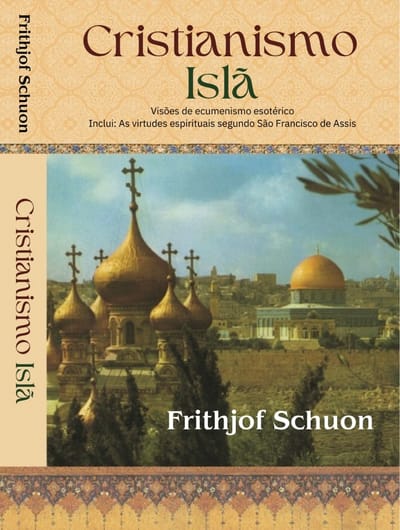
For most of our married life, Jenny has been the first to catch wind of major new developments; for example, she was the one who first “discovered” the movement in solidarity with the revolutions of Central America. Previously she had found the books of Marie-Louise Von Franz, probably the most interesting of the Jungians, whose most important work was in the area of the psychological exegesis of fairy tales, which she also related to dream interpretation. Next Jenny discovered the intriguing books of “Neo-Sufi” Idries Shah, collector (and also partly author?) of the corpus of the humorous yet perceptive Nasruddin stories, probably best described as Muslim folk tales. Most of Shah’s output was in the form of Sufi “teaching stories,” similar in style to the tales of the Hasidim. He also produced several very insightful books on the collective psychology of human self-deception, as well as The Sufis, an overview of the tradition of tasawwuf—valuable though not without a few worrisome errors and subterfuges; it had an Introduction by Robert Graves. Reading Shah’s books was like eating peanuts or popcorn; you could go through a whole bag of them in no time. Unfortunately, he was also one of those so-called Sufis who claim that Sufism can be separated from Islam, which is like believing that the Franciscan Order of monks could become a religion of its own, outside of Catholicism (though I don’t mean to suggest that something that crazy couldn’t actually happen, given the craziness of our times and the ongoing dissolution of the Roman Catholic Church). All these foreshadowings, however, were destined to converge on the higher ground of an entirely new viewpoint: that of the Traditionalist or Perennialist School, founded by French metaphysician René Guénon and headed at that time by a Swiss philosopher named Frithjof Schuon.
Schuon was on an entirely different level than Shah, the Jungians, the Pseudo-initiatory and Counter-initiatory spiritualities (two of Guénon’s categories) of the New Age, and the spotty and eclectic “traditionalism” of the hippie counterculture. His works on traditional metaphysics and comparative religion raised the entire discourse on mystical spirituality to a higher intellectual level. Nor was Schuon alone in his radically liberating perspective; he was recognized as the contemporary leader of a group of writers on traditional metaphysics and comparative religion that had included both René Guénon and Ananda Kentish Coomaraswamy, the Anglo-Indian writer on traditional art and metaphysics. Numbered in the present roster were Ananda’s son Rama P. Coomaraswamy, Professor James Cutsinger of the University of South Carolina, the Iranian Sufi and religious scholar Seyyed Hossein Nasr who still teaches at the George Washington University in Washington D.C., and—despite his earlier counterculture connections—the well-known popular writer (though equally serious and scholarly) on the world’s religions, Professor Huston Smith. Other members, both living and dead, included Titus Burckhardt, Martin Lings, Julius Evola, Marco Pallis, Charles le Gai Eaton, Alvin Moore Jr., Tage Lindbom, Lord Northbourne, Whitall Perry, Harry Oldmeadow, et al., all of them working on a strikingly elevated level. On top of that, Martin Lings, Dr Nasr, Prof. Cutsinger, Rama Coomaraswamy, Huston Smith and a few others—not to mention Schuon himself—were still actively writing and capable of being contacted.
Soon we immersed ourselves as deeply as possible in these writers and their books, which produced a true and complete metanoia in my spiritual outlook. From René Guénon I not only learned about his own version of the doctrine that Schuon called Transcendent Unity of Religions, perhaps the central teaching of his School, but about the Primordial Tradition from which all the Divine revelations ultimately branched, as well as the difference between true and false religion, between Tradition and Counter-Tradition. Guénon had been raised a Catholic as I had; largely between the World Wars he threw himself into every form of occultism and pseudo-religion he could find, just as I had done (though not so extensively) in the ’60s, ’70s and ’80s—Theosophy, Spiritualism, Martinism, the occultism of Éliphas Lévi, Neo-Gnosticism etc.—from which he emerged with the unshakable conviction that these various “alternative” religions were nothing less than the many manifestations of the Powers of Darkness, which together constituted what he called the “Counter-Initiation.” At the same time he was studying and seeking true initiation into, and writing books about, what he came to consider the valid and legitimate wisdom-traditions and spiritual Ways: the Hindu Vedanta, Taoism, Islamic Sufism, etc. He hoped to re-awaken the Catholic Church to its own metaphysical and esoteric traditions through a better understanding of the eastern religions where traditional metaphysics and esoterism were more intact than they were in the West—he dialogued for a time with the Catholic Neo-Thomist philosopher Jacques Maritain—but ultimately he despaired of this hope, converted to Islam, accepted initiation into a Sufi tariqah, and left Europe for Egypt, never to return.
Frithjof Schuon was a Muslim and a Sufi, but he is most often identified with his principle of the Transcendent Unity of Religions, which holds that God has sent more than one valid revelation to humanity, and that all these revelations or wisdom traditions—Judaism, Christianity, Islam, Hinduism, Buddhism, Zoroastrianism, Taoism, as well as such “First Nations” spiritualities as the Native American Sun Dance—are speaking, from their widely-differing points of departure, about the same Transcendent Principle (God to the Christians, Allah to the Muslims, etc.). Furthermore, each one of these revelations—if it remains intact—provides a complete Path of Return to that Principle. Certain verses of the Qur‘an say essentially the same thing. Nonetheless the differences between the religions are also necessary and providential, since they were designed by God to operate within different cultural frameworks and appeal to different human types. Consequently, to promiscuously mix the religions—for example, by attempting to practice more than one religion at the same time—is wrong-headed and destructive, and unnecessary as well, given that, in Schuon’s words, “each religion contains all the religions, because the Truth is One.”
All this gave me quite a bit to chew on. If anybody had ever mixed religions, it was certainly me. And without a doubt I had been deeply involved in spiritualities that were clearly Counter-Initiatory according to Guénon’s criteria. Nonetheless I had always maintained my interest in the traditional revelations, side-by-side with the more suspect beliefs and influences of hippie and New Age spirituality. But somewhere, in my heart of hearts, I had given the traditional revelations precedence. My pre-Vatican II Catholic education had taught me that there is such a thing as a science of metaphysics, and given me an instinctive feel for what a religion is, a revelation sent by God to man; both these lessons were of great help when I began my investigation of the non-Christian religions while still in my teens. But it was not until I plunged into the writings of the Traditionalist School that I realized that the non-traditional spiritualities were not simply of lesser value than the traditional religions, but were in many cases actually opposed to them—sometimes naively and unconsciously, sometimes consciously, actively, and with a ruthless and openly-declared determination to sweep them off the face of the earth. This realization ultimately led me to write what some have called my magnum opus, The System of Antichrist: Truth and Falsehood in Postmodernism and the New Age, which came out in 2001. In that book, besides providing a comparative eschatology based on the end-time prophesies of eight religious traditions, which I compiled in a deliberate attempt to “update” René Guénon’s prophetic masterpiece The Reign of Quantity and the Signs of the Times, I also provided a detailed refutation, according to the principles of traditional metaphysics, of a number of New Age belief-systems, most of which I myself had accepted at one time. These included the “sorcery” of Carlos Castaneda, the channeled “Seth” material of Jane Roberts, and A Course in Miracles. In the process of composing The System of Antichrist, I “wrote myself out” of both the hippie counterculture and the New Age.
If I had been “ripe” for a serious relationship to the spiritual Path in the ’60s, I might have gone for some form of hippified Hindu yoga—for which one of the textbooks would certainly have been Be Here Now by Ram Dass (Richard Alpert), whose lectures I had attended in both the U.S. and Canada—or possibly the kundalini-yoga of Sikh guru Yogi Bhajan, who (as you’ll remember) I met on one occasion. If I had ripened in the ’70s, my choice would likely have been Tibetan Buddhism, particularly the brand brought to the west by Chögyam Trungpa, a teacher that many of my fellow poets (largely under the influence of Allen Ginsberg) had been attracted to, as I’ve already made clear. The fact is, however, that I became ready for a serious commitment to the spiritual Path only in the 1980s—the decade when, mostly through the work of Robert Bly and Coleman Barks, the Sufi Jalalluddin Rumi had emerged as the most popular poet in the English-speaking world, just as more-or-less traditional Islamic Sufism was becoming established in the West. Seen from this point-of-view, my choice of Sufism as a spiritual path was little more than a function of its availability and my readiness.
Where the “traditionalism” of the hippie spiritual revolution was an entirely hit-and-miss affair, that of Frithjof Schuon was highly informed, integrated, culturally sophisticated, and all of a piece.
But that’s neither the whole story nor the real story, since when seen from the standpoint of the Dream of My Life I recounted in Chapter One—the one with the black-faced North African marabouts or Sufis in white jellabas—my rendezvous with Sufism was pre-planned and pre-accepted. That dream was so powerful that whenever my life has gone through a major change I’ve returned to it, each time seeing new aspects to its symbolism, which continues to be relevant and enlightening no matter what point-of-view I see it from. So the truth is, I was destined for Sufism from the beginning.
In any case, Jenny’s discovery of the books of Frithjof Schuon drew us into a world and a worldview that determined the main current of our spiritual development for the next thirty years. Schuon’s perspective on things of the Spirit was sober, comprehensive, profound, and relevant in many incisive and unexpected ways. He had the spiritual universalism that up until then we had only encountered, in a much less satisfying form, in the world of religious liberalism—in other words, he accepted that God had sent more than one valid Revelation to humanity, and that more than one of these Revelations might be effectively in force at the same time, thus avoiding the kind of militant religious exclusivism that is always in danger of placing opposition to religions other than one’s own on a higher plane than the in-depth practice of the religion one actually professes. This, however, is where any resemblance to religious liberalism ended, seeing that his take on the world’s great faiths was in no way modernizing or progressive. On the contrary, it was profoundly traditional—I might almost say, profoundly adult. Where the “traditionalism” of the hippie spiritual revolution was an entirely hit-and-miss affair, that of Frithjof Schuon was highly informed, integrated, culturally sophisticated, and all of a piece. For comparative religion and universal metaphysics, Schuon seemingly had no peer, at least in any of the contemporary spiritual literature that either myself or my wife were aware of at the time.
And we did in fact end up contacting, or at least communicating with, six names on the above list of Traditionalist authors. Undoubtedly the most gracious and helpful people we met in the Traditionalist world were Seyyed Hossein Nasr, who put us in touch with several congenial friends and teachers, and Prof. Huston Smith, world-renowned writer on comparative religion, whose book The World’s Religions (formerly titled The Religions of Man), a highly-readable popularization of the subject that never sacrifices sound scholarship and subtle insight for accessibility to a wide readership, has become a classic. Huston was truly “a gentleman and a scholar,” a congenitally sunny soul who radiated a genuine positivity that was free from the slightest taint of hypocrisy and narcissistic “charisma.” We first met him at “CCC,” the Community Congregationalist Church of Belvedere-Tiburon, a church we’d originally been introduced to through our work in solidarity with the revolutions of Central America and the Sanctuary Movement for Salvadoran refugees. CCC was the biggest Liberal church of Marin County, probably bigger and more influential than even the Unitarian Universalists; they were in the habit of hosting speakers from many religious and spiritual traditions, since the further a nominally Christian church departs from traditional Christianity, the more holes appear in the fabric of its ministry that tempt the ministers to plug them by fragments taken from other faiths.
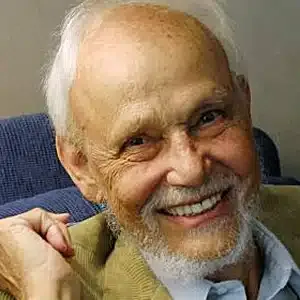
Huston Smith was perfect for a role like that, not only because he was the recognized doyen of comparative religion studies in the English-speaking world but because he had also participated in the early research on psychedelics conducted by Harvard University. We ran into him again at one of the highly interesting symposia held by the Ibn ‘Arabi Society on the campus of U.C. Berkeley, several of which we attended and through which we immersed ourselves in an abstruse yet surprisingly stimulating world of highly intellectual spirituality, one that bore definite similarities to Schuon’s perspective and served as a perfect preliminary introduction to it. Later we became acquainted with Seyyed Hossein Nasr, with James Cutsinger, and with the most spiritually significant of our Traditionalist contacts, Rama Ponnambalam Coomaraswamy, son of the co-founder with René Guénon of the Traditionalist School, Ananda Coomaraswamy; cardiologist to Mother Theresa; one of Schuon’s “Christian muqaddams” (representatives); in later life a licensed psychiatrist; and finally a traditional sedevacantist Catholic priest, as well as an exorcist who worked in the New York area with the fascinating and controversial Fr Malachi Martin—a mercurial figure who sometimes seemed to be a sedevacantist (someone who believes, like Mel Gibson, that “the Seat is vacant,” that all the popes following Pius XII have been false), sometimes a conservative Novus Ordo priest (“Novus Ordo” being the sedevacantist term for the new version of the Catholic Church that grew out of the Second Vatican Council), sometimes simply a jurisdictional and theological loose cannon who changed like a chameleon to match his surroundings and play into various people’s assumptions about him. Nonetheless everybody should read his Hostage to the Devil (one of the best and most readable books on demonology) and Windswept House (a thinly-fictionalized exposé of the “resident evil” within the post-Vatican II Catholic Church.)
the subtle, unofficial but nonetheless pervasive tendency in the world of the Traditionalist School to identify Love with a strictly devotional bhakti, placing it on a lower plane than jñana or Knowledge, would have to be paid for rather heavily down the road
The Traditionalists initially fulfilled two functions for us. First, they represented a clean break with the counterculture and the New Age spiritualities, while at the same time raising a few of the themes that these spiritualities had promiscuously played around with to a higher and more integrated level. In addition, they provided a new intellectual approach to mystical spirituality that protected us, at least for a while, from the traumatic heartbreak of the fall of Santa Venetia Presbyterian Church that had devastated other members of our once tight-knit group, sometimes permanently. We needed something a bit more cool and detached at that point, something with a degree of sang froid in it that manifested clarity, apatheia and spiritual objectivity. We were looking for a space where we could park our wounded feelings; only gradually did we come to the dual realization that the subtle, unofficial but nonetheless pervasive tendency in the world of the Traditionalist School to identify Love with a strictly devotional bhakti, placing it on a lower plane than jñana or Knowledge, would have to be paid for rather heavily down the road, and that not everything in Schuon’s circle—to say the least—was really as cool and detached, or as truly Traditional, as our first impressions had led us to believe.
The Nimatullahis
We were initiated according to the ancient Persian rite where the postulant presents to the initiating shaykh a coin, a ring, a piece of rock candy, a nutmeg, and a length of cloth.
In any case, our growing connection with the Traditionalist School opened up a number of fertile spiritual possibilities. Dr Nasr, in one of his books, had provided a list of the more-or-less traditional and orthodox Sufi tariqahs operating in the west, one of which was the Nimatullahi Sufi Order from Iran, headed at that time by Dr Javad Nurbakhsh. And since that tariqah had a khaniqa (Sufi lodge, the Persian equivalent of the Arabic zawiya) in San Francisco, Jenny and I decided to check it out.
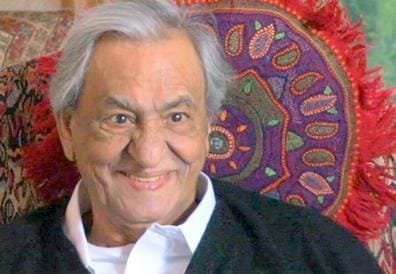
There we met with one Ron Harris, a Black man who was later appointed the shaykh (in Nimatullahi terminology, the local leader) of that particular khaniqa. Nurbakhsh himself, whom we addressed as the Master, held the title of Pir. To Jenny he quoted from the Gospel of Thomas: “If you bring out what is within you, it will save you; if you fail to bring out what is within you, it will destroy you.” And to me he told the story of the dervish who traveled to Paradise every night in his dreams, but nonetheless ended up dying on a dungheap. When I got home I gulped down my usual nightly quart of Rainier Ale—but somehow my heart wasn’t in it. And the next day, when I opened what turned out to be my last quart of what was popularly known as the Green Death, I just couldn’t drink it. If I joined the Nimatullahis I would have to become a Muslim for real, and I knew that alcohol is prohibited in Islam—consequently alcohol left my life at that very moment, and I haven’t taken another drink in the past 35 years. It’s not that I never craved alcohol; the craving, which was sometimes pretty fierce after 15 years as a confirmed alcoholic, came and went, first every week, then every month, then every three months, etc. etc. It’s simply that I never once considered giving in to it. I sought no psychotherapy, no Alcoholics Anonymous, not even any nutritional support; I simply relied on the unbreakable certainty that I would never drink again. Will-power was not involved—unless the will in question was the Will of the Almighty. It was not a question of effort, it was an effect of Command. By that time I had been smoking marijuana no more than two or three times a year (psychedelics had disappeared some years earlier), but pretty soon that indulgence was gone for good as well. Such experiences as astral projection also came to an end around the same time, seeing that I had involved myself with them through an essentially magical paradigm where the ego, not Allah, is the “Doer.” My excursions in the direction of God as a distant reality were coming to an end; I had begun working on the premise that, as Allah has informed us in a hadith qudsi, “Heaven and earth cannot contain Me but the Heart of my loving slave can contain Me.” And as the Heart is the crucible of the Spirit, so the human body is the crucible of the Heart.
So I sat in the Nimatullahi circle for twenty years, rarely saying more than a few words, and concentrating on two themes: Remember God and forget yourself, and put God’s Will above your own will—even your will to see Him and be united with Him.
So something was definitely going on! And not long after that, Jenny and I joined the Nimatullahi Order, though she moved on a few years later. We were initiated according to the ancient Persian rite where the postulant presents to the initiating shaykh a coin, a ring, a piece of rock candy, a nutmeg, and a length of cloth. The coin symbolized detachment from “laying up treasure on earth”; the ring, allegiance to the Master; the rock candy, the rejection of the ability to derive sweetness from anything but Allah; the nutmeg—which stood for one’s head—the sacrifice of self-will, of the headstrong ego; and the cloth—which represented one’s funeral shroud—the renunciation of attachment to life itself through the willingness to embrace fana’, annihilation in God. I took this step because I knew I had had enough of flitting from flower to flower in the spiritual life; now I wanted the Hive. So I said to myself: “Stop, choose one path, stay with it, and sink or swim.” So I sat in the Nimatullahi circle for twenty years, rarely saying more than a few words, and concentrating on two themes: Remember God and forget yourself, and put God’s Will above your own will—even your will to see Him and be united with Him. By this method I allowed Him to slowly recollect my scattered psyche, disordered by years of alcohol and drug use, psychic experimentation and unguided spiritual aspiration. (“Forget yourself” does not mean “ignore the actions and agendas of your nafs, your lower self”; it means “stop working to build and maintain your identity, give up your fear of losing it, and stop making claims.”) During that time, Ron Harris said two things that have everything to do with the question of identity. The first was: “We are not here to become ‘Sufis’”; and the second: “The only ‘Master’ is God.”
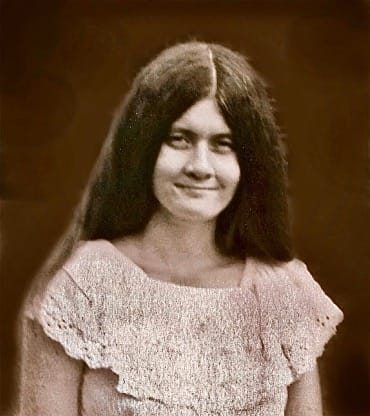
Jenny, however, almost balked before she took this final step. Her misgivings were primarily due to her meeting with one Mr Niktab—old, thin and white-bearded, Dr Nurbakhsh’s main representative—the Shaykh al-Mashaykh. He was the one who ultimately conducted our initiation, which consisted of whispering to us the words of the dhikr we were to use and writing the Name of Allah with his finger on our hearts.
When Mr Niktab first met us, he said to me: “We search the world over to find sincere seekers such as yourself”—pretty obviously in order to see if he could inflate my spiritual pride only to puncture it further on, as on the later occasion when he told me, apropos of nothing, “you—you’re nothing much.” I don’t remember being either inflated by his flattery (which only made me vaguely suspicious of him) or deflated by his insult, since I saw both as parts of a “Sufi teaching technique” that was undoubtedly effective with certain people under certain circumstances, but which was clearly not designed for universal application. Then he asked me: “What is your conception of Sufism?,” to which I replied “There is only God” (as if that represented my actual station at the time, which it certainly did not). Next he turned to Jenny, and rather insolently challenged her: “And you??” “I, I don’t know what to say” she replied, flustered.
This is what is known as “getting off on the wrong foot;” it was an encounter that definitely foreshadowed Jenny’s future problems with the Nimatullahi Order, which led her to drop out after two or three years, leaving me to fend for myself. Because it was clear that some of the dervishes had no intention of accepting her as a sister-in-good-standing. When she made an observation on one occasion about the reality of higher worlds, one of the male dervishes snapped: “That’s just thought!” Another dervish told me, in a “helpful and friendly manner,” that he saw Jenny as “mentally challenged,” after which I had to call him on his affront and ask him to apologize to her, which he gladly did; by that worthy action he changed an unconscious vice into a conscious virtue. One of Dr Nurbakhsh’s most useful teachings was: If you are still capable of taking offense, you haven’t yet reached the stage of the soul-at-peace. I am pretty good at ignoring insults directed at myself, but not so good at standing by and letting the people I love be disrespected; that’s where my “spiritual detachment” comes to an end. Some might say: “You can’t stand to see your wife be insulted because she is an extension of your ego”—something that might conceivably be true, if only there were no such thing as love on earth… For my part I was unwilling to accept an insult offered to my wife behind her back as somehow acceptable because it was “an understanding between us guys” that the little woman didn’t need know about, realizing that a Devil’s-bargain like that is precisely a curse designed to come between husband and wife—this, according to the Qur‘an, being the main goal of the evil magic that was taught to mankind by the angels Harut and Marut in Babylon [Q. 2:102]. … Nonetheless, the Nimatullahis strongly emphasized adab, etiquette, sometimes quoting the saying that “Sufism is all adab.” Leave it to those who preach against over-indulgence to be gluttons, against sexual sin to be libertines, and against discourtesy to be oafs—oafs, at least, according to the better standards of Western civilization. But who is still civilized enough in the West to teach these proprieties to clueless immigrants from the Middle East—or, for that matter, to contemporary deculturated Americans? “The tribe without a history is not redeemed from time” said T.S. Eliot… Furthermore, after Jenny had been out of the khaniqa for some time, the dervishes invented the story (with zero evidence) that we had divorced, after which one of the attractive Iranian girl-dervishes cocked her eye in my direction, setting her sights on me as available, vulnerable and likely to be caught on the rebound. Luckily for us, by that time we had become friends with Huston Smith; when I told him about the sort of treatment Jenny had endured at the hands of the Nimatullahis, he was quite surprised, observing that “her sincerity is transparent.” That, however, might have been the very problem; there is no worse affront to the cunning than sincerity. Or had Mr Niktab initiated all this cold-shouldering by putting an invisible mark of some kind on Jenny that affected the group psyche? The more likely cause was simply Jenny’s difficulty with certain groups—especially emotionally immature groups like the San Francisco poets—that her abusive family-life and the sibling-rivalry her mother had set up with her younger sister had made her vulnerable to. And few groups have ever been more “poetic,” more prone to confuse aesthetics with spirituality, than the Persian dervishes! All the best and some of the worst of that orientation can clearly be seen in the exquisite poetry of Hafiz. Wine, wine and more wine, invisible wine, spiritual wine, under the influence of which nothing could be more spiritually unhip than sobriety (al-Hallaj as the wild and crazy hipster, al-Junaid as the straight, Philistine old fogey)—and who could be more sober and stoic, in her deepest essence, than Jenny Donne? Beyond that, were the Nimatullahis able to so swiftly break my addiction to alcohol simply because they offered me a better wine, the wine of the fountains of Paradise, which the Qur‘an tells us produces neither madness nor headache, neither sloppiness nor hangover? Did the Order somehow function as my spiritual halfway house, with their own highly effective methadone program?
Only God knows for sure. But whatever their method was, it worked. I sat in that khaniqa in San Francisco twice a week for 20 years, concentrating on my dhikr, hardly saying a word, while slowly and laboriously recollecting the dissipated psyche that, over the previous 20 years, I had blown to the four winds—with grass, with booze, with psychedelics, with poetry, with unguided kundalini-yoga, with Leftist politics, with the “lyric sorcery” of Carlos Castaneda, and with every conceivable brand of New Age psychic experimentation—slowly, slowly picking up the pieces that fit while discarding the foreign fragments that didn’t, working on the spiritual station that the Christians call “recollection” and the Sufis jam’, “gathering.”
And did I ever need it. But for Jenny’s part, the fact is—and I have seen this many times—she often has a very strange effect on people. One group (let’s call them “the sheep”) accept her as the wise, sincere and loving person she obviously is, while the opposite group (the “goats”) unexpectedly repress her, slight her, demean her—possibly (I have been forced to speculate) due to a deep unconscious fear of something that she represents. I believe that Jenny somehow participates, by God’s decree, in a kind of imposed obscurity—an invisible hijab if you will—as if He somehow wanted to keep her all for Himself; consequently she often functions (in line with her Libran nature) as a hidden snare of justice capable of exposing the obsessive and unconscious discourtesy of those in whom a particular kind of worldliness has become second nature; she acts as a stumbling-block that’s invisible to them until they trip over it and fall on their face. On the other side of the same coin, there are some people who, when encountering a profoundly arcane dimension of the Divinity, have the immediate impulse to hide it, to declare it haram, a word that denotes not just “forbidden because corrupt” but also, as with the Masjid al-Haram, the precincts of the Kaaba in Mecca, “forbidden because sacred”—an impulse that is essentially based on fear. They fear that the vision of that mystery will destroy their whole picture of reality, along with their own meticulously-crafted self-identity—an apprehension which in turn invokes, on a deeply unconscious level, their fear of the end of the world. And it may be that both of these factors have played a part in the way Jenny has been treated over the years, at least by a certain class of people. Yet there is still a secret in her, as indeed there is in all of us, that all this “well-informed speculation” can never fully elucidate; therefore I must pray to God that He will keep the deepest secret of her nature safely hidden from any eyes but His.
We do not have the power on our own to walk the spiritual Path; only Allah possesses that power. Our sole contribution is to express our willingness to walk it, by virtue of our niyat, our intent…
The central teachings and practices of the Nimatullahis were those of classic Islamic tasawwuf. Unfortunately, however, the dervishes tended to identify “Islam” with the exoteric aspect of the religion and “Sufism” with the esoteric aspect, but in such a way that Sufism’s intrinsic relationship to Islam, its identity as Islam’s inner spiritual core, remained uncertain. The Iranian Revolution had been traumatic for the Sufis of Iran, particularly those who had accepted a degree of patronage from the Shah—as Dr Nurbakhsh might well have done, at least according to certain indications. The Sufi orders have suffered persecution under the Iranian Revolutionary government; the fact that the Nimatullahis maintain khaniqas in the Western nations has undoubtedly placed them under a certain amount of suspicion. And it is true that the Islamic character of the Order slowly faded during the years I was connected with them; for one thing, the Muslim daily prayer (salat in Arabic, namaz in Persian) was gradually discontinued, though it remained “optional” for the dervishes (Sufis) in their own homes. I have no doubt that Dr Nurbakhsh had attained a high spiritual station—but as the connection of the Nimatullahi Order with Islam and its Prophet continued to weaken, I had the impression that it was becoming less and less possible for the dervishes to derive real benefit from the Master’s spiritual presence. It felt to me as if we were attempting to draw light from his individual person rather than his transcendent function. And since it is impossible to really participate in the spiritual destiny of another, this left me with a kind of “so near yet so far” feeling, though I have no way of knowing whether anyone else felt that way. People came, stayed, left, but their reasons for moving on were never shared and never discussed.
When I first began to practice the Nimatullahi zekr (dhikr), I had an interesting experience: it was as if I were not silently pronouncing it, but as if the Master were pronouncing it for me, and in me. And since the Master was the authorized representative of Allah, I began to come into the field of the principle that “only God is the Doer.” We do not have the power on our own to walk the spiritual Path; only Allah possesses that power. Our sole contribution is to express our willingness to walk it, by virtue of our niyat, our intent—the intent to embrace taslim, the total submission of our will to God’s Will. Though Allah may have led us to the Ark and pointed it out to us, we board the Ark by our own volition—and it is also up to us to resist the temptation to jump ship at every port where we drop anchor. But the Ark alone carries us—that, and the Wind of God that moves it, across the face of His Ocean.
According to Nimatullahi dogma, the Master of the Path must be perfect—because if he is not perfect you will worship him, and worshipping the Master is the same thing as worshipping yourself. And it is certainly true that all idolatry is, in a way, self-idolatry. This, to my mind, is a very subtle and interesting proposition, since it implies that if you do end up worshipping the Master—as plenty of us did, at least on and off—this only proves that he is not worthy of that worship. But why construct such a maddening paradox? A perfect being apparently deserves worship, or something like it—yet that very worship goes to proves that the being in question is not perfect; what kind of a Gordian Knot is that? In any case, the relationship between the murid and the Pir was apparently constructed (theoretically at least) so as to induce the dervish to project the imago dei, or (in Jungian terms) the Self archetype, onto the Master—and then to gradually realize, in the face of many endlessly disappointing instances of self-worship/Master-worship, that only Allah deserves our worship and is really capable of receiving it—a pretty dicey maneuver, in my opinion. And in view of the fact that Dr Nurbakhsh was a practicing psychiatrist who received his degree from the Sorbonne, one can easily see the similarity between this method and the famous transference phenomenon that Freud defined as the “best tool” available to the psychoanalyst. But did it actually work in a Sufi context? I am far from convinced that it did, except perhaps as a preliminary way of dealing with psychologically disordered people who were not yet capable of fully understanding spiritual principles and acting on them—a description that might well have applied to me at that time of my life. Nonetheless, Nurbakhsh maintained that “Psychiatry has everything to learn from Sufism; Sufism has nothing to learn from psychiatry.” …
Be that as it may, I met some very interesting people in the Nimatullahi circle … (including) … Leonard Lewisohn, an accomplished academic scholar of Sufism, especially of some of the more-or-less antinomian types centered in Iran, who sometimes visited us from England. …
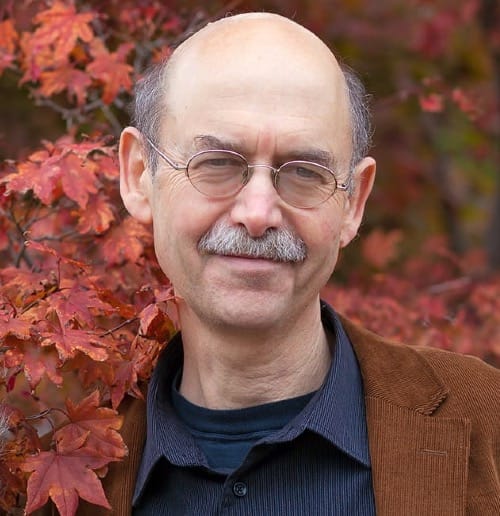
We saw Leonard Lewisohn and his wife Jane in a different context when we traveled to England to visit Dr Nurbakhsh at his headquarters at that time, the London khaniqa. Lenny introduced us to the well-known English poetess Kathleen Raine, with whom we enjoyed a perfect latter-day version of a Victorian tea-hour. Lenny built me up to her as “an important poet who had a dream in which Blake spoke to him,” Ms Raine being both a major William Blake scholar and a woman who still believed, a-la Percy Bysshe Shelley, in the “divine” status of the young male poet. She was suitably impressed but of course totally ignored Jenny, this being the standard adab for both the Nimatullahis and the world of puer aeternus poets, and their sponsoring matrons, in the late 20th Century—though Jenny, who now has a greater appreciation for Kathleen Raine after viewing some of her YouTube videos, suspects that this breach in courtesy was more the fault of Prof. Lewisohn than of the distinguished English poetess herself. We also met the poetess’s son (I forget his name) who—not surprisingly—radiated an intense aura of refinement, hyper-sensitivity and shame. Also on our spiritual-tourist itinerary was Westminster Abbey, whose celestial radiance not even 500 years of Anglicanism had been able to entirely snuff out. I saw the Stone of Destiny in the Coronation Chair, open and unguarded, before it was returned to Scotland; would that I had kissed it! My other main impressions of England—this was my first visit there—were that workmen still worked with shovels and pick-axes and milkmen still made deliveries, an amenity that had disappeared from the States some time in the early 1960s.
Lenny’s big project, when I was with the Nimatullahis, was to hook the poet Robert Bly into the Order—Bly, whose works sometimes appeared in the Temenos Academy Journal along with those of Kathleen Raine, one of the Academy’s founders, Wendell Berry and many others. (Temenos, which has flourished under the patronage of the Prince of Wales, now King Charles III, is a sort of quasi-Traditionalist world of highly aesthetic spirituality and/or highly spiritualized aesthetics.) And since Lenny identified as a poet as well as a scholar, of course Bly would be just the kind of big fish whose initiation would totally validate his worldview; ultimately, the Professor did succeed in reeling him in. My difficulty with this development was that Bly’s book Iron John, which was to become a central pillar of the “Mythopoetic Men’s Movement,” started to become something like an unofficial addition to the teaching-literature of the Nimatullahis. This was quite unfortunate to my mind, since Bly (a bit like D.H. Lawrence in The Plumed Serpent) tended to exalt the bloody authenticity of Pagan violence in the name of re-kindling the chthonic masculinity of the wimpy late 20th-Century puer aeternus, as well as adopting a generally Jungian-polytheistic attitude to Divinity, a worldview in which Zeus, Jesus, Allah and the Great Mother all live together in a big hotel called the Collective Unconscious. His Jungianism at that point was most directly influenced by the Neo-Jungian James Hillman, whose psychic polytheism led him to claim that Multiple Personality Disorder (now known as Dissociative Identity Disorder) was the “natural” state of the human psyche, as well as leading him ever closer to the denial of individuation and the Self archetype. Psychic balance was to be maintained by overcoming the ego’s imperialistic attempt to introduce a false unity into the psychic contents, which were essentially multiple and should be allowed to remain so. He was right in his analysis of the spurious unification proposed by the ego and the multiplicity of the undeveloped psyche, but wrong as wrong could be in his denial that a true, integrated unity-of-psyche was possible, and essential to the traversing of the spiritual Path, as a reflection within the psychic substance of the realized Unity of God.
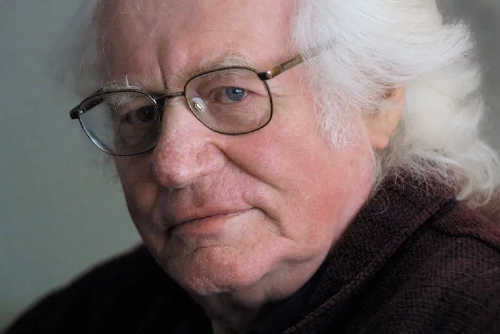
All of this was diametrically opposed to the stated teachings of the Nimatullahi Order, as well as those of Islam and Sufism in general—and this was not something that I could allow to be preached in my presence; I’d come too far to get to Sufism to let the rug be pulled out from under my feet. So I wrote and published a book called Hammering Hot Iron: A Spiritual Critique of Bly’s Iron John. What Bly never understood about my book—if he ever read it—was that I had expressed great admiration for his intent in writing Iron John and for many of his insights, while pulling no punches in critiquing those aspects of it which I saw as contradicting either the Sufism he now professed or the doctrines of the Perennialists that I was then in the process of fully understanding and adopting—doctrines that were drawn from all the world’s great revealed religions and wisdom traditions. The pressure I put myself under in writing that book while sitting twice a week in a Nimatullahi khaniqa as my central spiritual practice—one of the main principles of the Order being cordial adab with one’s fellow dervishes—can perhaps be imagined by those of an empathic nature, though not easily described by me. On one occasion I actually met not only with Bly but with James Hillman, in San Francisco—this was just before Hammering Hot Iron was published—on which occasion I let Hillman know that I would be attacking him in my next book. I cannot imagine a clearer demonstration of how dedication to principle can sometimes make you pretty ruthless. Be that as it may, Hammering Hot Iron has an almost audible break in it, where the center of my worldview visibly moves from the psychological/ mythopoetic level where C. G. Jung, Marie-Louise Von Franz and Joseph Campbell were the psychopomps, to the properly metaphysical level where Schuon, Guénon, Coomaraswamy, Nasr, Nurbakhsh and Huston Smith, as well as the scriptures, saints and sages of the world’s major religions, were the voices of authority.
Which would be a more beautiful world—one in which everyone could perform miracles or one in which everyone treated his or her fellow human beings with sensitivity and respect?
But Lenny did tell us a particular Sufi story that I thought was very enlightening. On one occasion he was visiting another tariqah that indulged in karamat, miraculous and paranormal actions—one of which was to cut themselves with knives and swords and emerge uninjured. Lenny was attending a majlis (group gathering) of this tariqah when he saw one of the dervishes lean onto a razor-sharp sword, which cut deeply into his belly. Shocked, he ran over to the seemingly wounded man, asking if he needed help. The dervish proceeded to remove the blade from his belly, revealing that he had not bled in the slightest and had received no wound. “Are you unfamiliar with such happenings in your tariqah?” he asked in a haughty manner. “With us they are commonplace.” I always saw this as an indication that it actually takes greater spiritual power to remain humble and courteous to one’s brothers and sisters than to perform miraculous feats. Which would be a more beautiful world—one in which everyone could perform miracles or one in which everyone treated his or her fellow human beings with sensitivity and respect?
During my stay with the Nimatullahis, which largely ended in 2004 when Jenny and I moved to Kentucky, and ended for good in 2006 when Dr Nurbakhsh passed away, my intellectual standpoint—largely under Jenny’s influence—was becoming more and more firmly grounded in the Traditionalist/Perennialist worldview. But since I detected, even then, a tendency in the Traditionalist world to grant Love a more-or-less secondary status vis-à-vis Gnosis or Knowledge I clung to the Nimatullahis as representing a more Love-oriented or bhaktic Path—which was what they at least claimed to be doing—but a Path that was still open to the Gnosis that the Traditionalists continually emphasized. In other words, I was both self-divided and at war with the thought of my fathers and my kin—just as Yeats, in A Vision, had predicted for my particular phase of the Moon: Please Eleven, the phase of the Consumer, the Pyre-builder.
Persia is old, inconceivably old; over its long history it has been host to a slow, regal, magnificent sunset, (and is) well suited to transmit that other and deeper color of yearning—namely, the nostalgia for Paradise.
I experienced the Nimatullahi Tariqah, in the San Francisco of the 1980s, as if I were living in the rich and fading afterglow of an immensely high tradition, breathing in the final perfume of an ancient stream of spiritual power and wisdom that was on its last legs. The traditional apparatus of the Persian Sufism was all there: the Shaykh, the Pir-e dalil, the Doudeh-dar (tea-master), the wirds (litanies), the zekr (dhikr or invocation of a Name of Allah), the majles (the gathering), the “low Mass” communal meal (the sofreh), and the “high Mass” communal meal (the deeg-jush), this last sponsored by a particular dervish who feels the time has come to offer himself to the Master and to God as a supreme sacrifice, and who therefore provides a meal of lamb ground to a paste and mixed with chick-peas, along with other items of high Persian cuisine—this meal representing, precisely, himself. In other words, in the deeg-jush the dervish in question sacrificially offers himself, in sacramental form, to his Sufi brothers and sisters, exactly as Christ offered himself to his apostles at the Last Supper. Is this a quasi-Christian influence appearing within a nominally Shi’a form of tasawwuf, seeing that Frithjof Schuon characterized Shi’ism as the manifestation of the Christian archetype within Islam? Or are the Last Supper, the Passover Feast and the deeg-jush all cultural /religious variations on a common theme more ancient than any of them?
And the music! Classical Persian music is without doubt one of the greatest artistic traditions of the human race, incomparable in its ability to render the dance of longing and loss, of concealment and revelation, between God and the human soul. This music usually came to us in recorded form but sometimes live, depending on the visits of traveling musicians, who were capable of drawing from a simple ensemble of setar(percussive “lute”), daf (hand-held drum) and ney (that breathy Persian flute) a truly celestial expression.
All this I assimilated on a deep layer of my soul, somehow intuiting that I was privileged to have been invited to a unique farewell performance. Persia is old, inconceivably old; over its long history it has been host to a slow, regal, magnificent sunset, a nostalgia of possibly longer duration than any other in civilized history, and one well suited to transmit that other and deeper color of yearning—namely, the nostalgia for Paradise.
All the published books of the Order continued to emphasize that no one could be a Sufi without first being a Muslim and following the shari‘ah—but that’s not how things were on the inside.
But I do mean nominally Shi’a. Though the Nimatullahis under Dr Nurbakhsh were one of the few Sufi tariqahs that operated in Shi’a Iran, they were as contemptuous of the Shi’a authorities as of the Sunnis, particularly after the Iranian Revolution that had installed the Ayatollah Khomeini and driven both Javad Nurbakhsh and Seyyed Hossein Nasr out of their homeland forever—an exile that only worked to emphasize the prideful and rebellious defiance of the traditional Persian dervishes against the more secular authorities and their exoteric mullahs that had marked the long, though intermittent, history of Sufi-killing pogroms in Iran—an attitude that unapologetically declared: “We are the Kings of Love! That’s why so many of us take the name of Shah. What are you the kings of, O murderers, but the dungheap of This World?” And the shock of that revolution, and of the anti-Sufi persecutions that followed it, slowly but surely acted to drive the very Islam out of the Nimatullahi Order in the West. All the published books of the Order continued to emphasize that no one could be a Sufi without first being a Muslim and following the shari‘ah—but that’s not how things were on the inside. When we were in London, I was incautious enough to mention a piece I had written about the relationship between shari‘ah and tariqah in the presence of Alireza Nurbakhsh, the Master’s son who now heads the Order. He went ballistic, cursing the shari‘ah as freely and openly as any American Islamophobe. In response I chose to believe, on naked will-power alone, that the necessity for shari‘ah presented in Dr Nurbakhsh’s books represented his true position, taking it as an undeniable axiom that “the Master wouldn’t lie!,” thereby planting myself firmly, as the American saying goes, on the banks of a river in Egypt. But then, slowly but surely, first intermittently and then permanently, the namaz disappeared from the San Francisco khaniqa. The Qur‘an was never quoted, the name of Muhammad never mentioned. I once asked Ron Harris why we couldn’t call down blessings on the Prophet, to which he answered: “My heart isn’t in it.” On one occasion I was even expressly forbidden to pray the namaz in the khaniqa—a spiritual shock that nearly tore the heart out of my chest. A dervish from England who was close to the Master told us that Nurbakhsh had said, “We’re really Zoroastrians”—yet we never performed any Zoroastrian rites or kept any of the Zoroastrian feasts. As was common with many Iranians who had newly immigrated to the west around the time of the Revolution, the Iranian Nimatullahis began to fall back on their ethnic identity, as well as resurrecting the ancient Persian grudge against the Arab conquerors, identifying it—consciously or unconsciously—with the newly-imposed and oppressive regime of the Shi’a restoration. That’s exactly how the cruelty, and the irony, of This World, the dunya of the latter days, works to crush the Spirit of God out of us, even to the brink of tempting us to reject the Trust itself, thereby abandoning the human form. “And because of the tribulation of those days, the love of many will wax cold” [Matthew 24:12].