
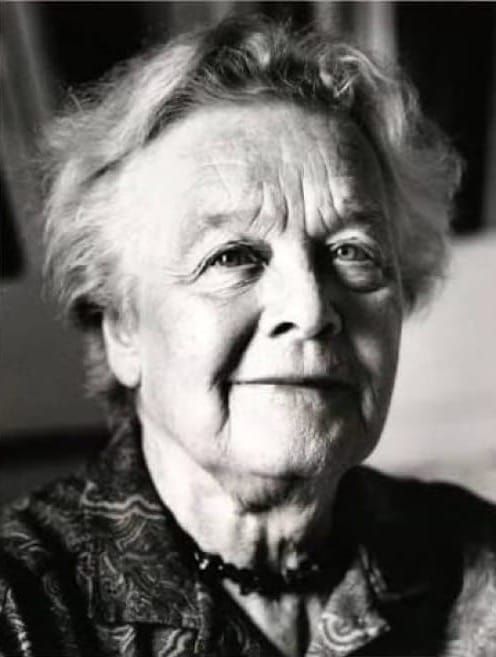
Tradition and a Question Raised by Kathleen Raine
The basic question here is what it means at one and the same time to be an artist, to be living in the modern world, and to be engaged in a spiritual or esoteric path.
I hope to offer here a direct contribution to the ‘conversation’ begun in many places about the problem which we find ourselves in the midst of, namely, the experience of modernity in relation to spiritual life as taught in Traditional sources. It is more than probable that the Traditionalist School, as a school, came into being precisely by way of asserting its opposition to modernity, the emergent ‘modern world’ which Guénon identified as the ‘reign of quantity’. And a number of years spent exploring and writing on this matter has resulted in the question whether, at the deepest level of the teaching’s meaning, the idea of a school limited to a certain time and place (even when it avers a source beyond time and place) is not itself something of a limitation of our potential relation to the radiance and mystery of the unnamable.
The way I came to want to develop this idea is through the contemplation of beauty in the fine arts and esoteric education (hence my involvement with Temenos). My suggestion in brief is that the non-affiliated and non-orthodox character of the creative arts as vehicles for the life of the soul and spirit is, despite some arguments to the contrary, a method of transmission suitable to the modern age; and that in this sense (and in this sense only), artists who have been denounced or treated guardedly by some in the Traditionalist School might come to be acknowledged as their most significant inspirations, complements and indeed secret allies.
I also offer metaphysical validation for the suggestion that the esoteric account of the self of man that Tradition gives as a challenge to the orthodox humanist self, is also secretly carried as art in the modern world as well as in traditional art, and that an outright dismissal of art that we cannot assign to a traditional place is a blindness we can ill afford at this time. I do not argue for or against specific instances of works, but for the principle of the barzakh—isthmuseity—itself in relation to art.
For many in modern culture, a strictly materialist world-view dictates that art and the spiritual ways should be impenetrably fenced off...
Although our general theme is the creative arts, we are really concerned here with the value of poetic imagination, not with an essay in literary criticism or art-appreciation. The basic question here is what it means at one and the same time to be an artist, to be living in the modern world, and to be engaged in a spiritual or esoteric path. For many in modern culture, a strictly materialist world-view dictates that art and the spiritual ways should be impenetrably fenced off, such that the artists and the spiritualists might more or less confidently exclude each other, and the modern divide himself from both:—from the spiritual which he might regard as revealing archaic or regressive consciousness (even, or especially, in its ‘New Age’ formulations) and from the artistic because art appears to serve no immediate economic or survival need. And then again many engaged in spiritual work will likewise exclude modern artists as ministers of chaos or illusion.
This exclusion has happened in many places and causes difficulties to which I propose a solution that lies at the kernel of artistic creativity and spiritual method alike. The two being seen esoterically as one vision, there can be neither logically nor intuitively any real grounds for treating art and spirituality as mutually exclusive activities (any more than there can for the polarization of science and the arts, let alone science and the spiritual).
And yet the problem is that this exclusion is all too prominent and deadly a reality in the academic world and in the judgements (no matter whether casual or considered) of the printed and broadcast media. To explore how this problem relates to the experience of being a ‘modern’—inevitably born into a kali yuga—is unarguably amongst the functions of a journal such as this one.
Kathleen Raine committed herself to expressing a doubt which goes to the heart of the contemporary spiritual and artistic experience of modernity.
One of this century’s greatest poets, Kathleen Raine, studied Guénon for many years and since then she has had numerous contacts with Traditionalist writers and teachers. (Writing and teaching are often interchangeable in esoteric terms, whereas in classical humanism they are rigidly separated more often than not.) There is no doubt that in Guénon’s works she found an intellectual respondent and inspiration to the search upon which she was embarked in the practice of poetry, scholarship and in particular the art of living spiritually, in consonance with the daimon, the art which Shelley called ‘the poetry of life’. But in the late 1960s she committed herself to expressing a doubt which goes to the heart of the contemporary spiritual and artistic experience of modernity. And the nature of this doubt opens the debate in Tradition and modernity directly to the world of soul. She wrote in 1965 as follows: [[1]]
René Guénon’s bitter diatribes and intellectual pride suited my mood, and his masterly discourse on the metaphysical aspect of traditional symbolism commanded my respect… I am doubtless in closer sympathy with [the Traditional] School than with any other; had I not, in discovering the secret of Blake’s ‘originality’ found it to lie precisely in his fidelity to these origins and originals? But even with these initiates of wisdom I could not wholly identify myself.
[[1]]: Kathleen Raine, Autobiographies (London: Skoob, 1991), pp. 352-3
This misgiving, differently expressed, was the doubt [[2]]
whether these defenders of the ancient springs would recognise the ‘wind blows where it listeth. We hear the sound thereof, and it is gone.’ The parable of the new wine in old bottles might, I felt, be applied to the school of Guénon. Forms will always be new. These people, I sensed, did not live by the imagination; was there, even, a certain hatred, or envy of the creative spirit in the monotonously negative judgements passed (for example) upon Jung and Teilhard de Chardin, who, whatever their limitations, are seminal imaginative thinkers? God knows I myself was sick of the cant of progress and evolution, most often heard in those quarters where spiritual, intellectual and moral retrogression was most evident; and inherently probable as I felt the opposite view to be (the decline towards Armageddon), a view supported not least by the very evidence of ‘progress’ the evolutionists point to with most confidence and pride, yet I could not relinquish my poet’s faith in the prophetic spirit, which has never failed.
[[2]]: op. cit. pp. 353-4
I find with advancing age that one can be certain only of the Mystery itself.
Many years later, in her most recent memoir, India Seen Afar (1989), summing up her continuing reflections on traditionalism, she wrote: [[3]]
One group only do I feel nowadays somewhat coldly towards, and that is the Guénonist ‘Traditional’ school. From this group also I have learned much, in the excellent expositions of traditional sacred teachings to be found in the works of many of its exponents, but what they seem to me finally to lack is a living sense of the secret workings of the Holy Spirit. They offer an intellectual security to seekers for certainties; whereas I find with advancing age that one can be certain only of the Mystery itself to which alone we can entrust the mystery of ourselves. And this I do.
[[3]]: Raine, India Seen Afar (Barnstaple: Green Books, 1990), p. 23
It is precisely in this question whether intellectual certainty can give what the seeker really seeks, that the artist speaks in the voice unique to the artist. And yet, in speaking of entrusting the mystery of ourselves to the Mystery Itself, the artist is at one with the esotericist. In many more places throughout her work she has adverted to this difficulty which never was resolved and recurred in the way I have drawn attention to. What becomes clear is that her vocation in receptivity of the ‘workings of the Holy Spirit’ has proceeded for decades in a manner distinguished by high intellectual standards but with little patience either for the established mores of classical humanism (which Traditionalists alike have sought to supersede) or for a certain emphasis of some Traditionalists, in which she could not cease to be troubled by a [[4]]
negative attitude [which] seems to arise out of a too exclusive insistence on horizontal transmission through institutional religion and iconography, to the exclusion of ‘renewal vertically’ which is the peculiar mark of the prophetic genius; a term which must include the imaginative inspiration of all sublime art.
[[4]]: Raine, “Resacralisation”, Temenos 4 (1983), p. 195
The true poet is the vehicle of ‘things unknown’, listens to no voices but those that speak the deepest secrets of the heart.
It is this principle of renewal vertically, of the constancy of intuition and invitation of the Holy Spirit, which I suggest is the spiritual potential of the arts as such. Raine found again and again this principle of vertical renewal in the [[5]]
central mainstream of imaginative learning which flows in unbroken continuity from Orpheus to Ovid, carrying a perpetual renaissance from the Florentine school into all poetic traditions, continuous throughout English poetry down to Yeats’s Ireland. I had discovered that knowledge of myths is a kind of learning not to be had in a day, …that mythology is a language inseparable from the metaphysics of the Perennial Philosophy, whose expression it is.
And elsewhere she states,[[6]]
[...] The true poet is the vehicle of ‘things unknown’, listens to no voices but those that speak the deepest secrets of the heart. And that task demands nothing less than a total dedication undreamed of by an age in which neither the writers nor the readers of verse are aware of any higher source of poetic inspiration, of Plato’s ‘garden of the muses’, known to true poets. This being so, it follows that the decline of poetry at this time is to be found wherever Western materialism casts its shadow.
[[5]]: Raine, Autobiographies, p. 352
[[6]]: Raine, India Seen Afar, pp. 169-70
... are we not all gathered in honour of an imperishable living spirit to which adversarial division must forever remain inimical?
This is not the place to argue point by point the justifications and merits of the particular doubt expressed by the reflections quoted here, for are we not all gathered in honour of an imperishable living spirit to which adversarial division must forever remain inimical? Besides, Kathleen Raine’s debt to the initiative of the Traditionalist School is obviously every bit as real as her apprehensions concerning it. Such absorbed contemplation of Tradition, and such evident reluctance to turn her back on its school altogether, argue a deeper commitment to some at least of its aims. There could have been no Temenos Academy without the example of Guénon’s metaphysics, and that academy shares the Traditionalists’ unstinting rigour in criticism of the so-called modern Humanities. The manifesto of Temenos has much the same direction as many Traditional theses:
...concerned with fundamental values, ‘that civilisation may not sink’ …a reversal of the obsolete premisses of our materialist civilisation, and reaffirm[ing] the Perennial Philosophy which has been the ground of all civilisations where wisdom and beauty have flowered.
What we are suggesting is that the fact that this modern poet found such profound appeal and such evident difficulty within the one school—in relation to her own life and work and what it stood for—is an example of the wider fact that the concerns related by artists reflect a problem that is deeply inherent within the experience of modernity for all of us in any way drawn to the life of the creative principle, to spiritual development, and to the possible future of human society.
... a sad shared recognition amongst many artists that certain exponents of the Traditional School have given way to a meanness of spirit...
I think such an enduring doubt where there is obviously so much continuing debt, must point to a problem which only a keen exploration of the relationship between tradition and modernity can solve. Is this relationship, at the deepest level, the clash that it appears to be? There seems to be a sad shared recognition amongst many artists that certain exponents of the Traditional School have given way to a meanness of spirit in relation to what are really their creative respondents and allies. And in adverting so directly to the workings of the Holy Spirit, the ‘Church of the Heart’, this modern poet has actually pointed out—by virtue of saying what she misses in the Traditionalists’ negative diatribes against culture—the actual kernel of the ‘Way of Love’, typified by Rumi’s teachings and by many a community of practitioners of wahdat al-wujud, the Way of Unity.
It is as if the artists end up being those who point out to the metaphysicians that whatever is unduly negative in Traditionalist rhetoric could run the risk of drying up the very fountain of its own, and our, inspiration. And it is vital now, as many other artists of the imagination and practitioners of the esoteric paths have also told me, to ask the question, what place can condemnatory judgement really have in a spiritual practice and orientation whose origin and destination is the causeless and infinite compassion of the One for its own ‘Hidden Treasure’?
Metaphysically speaking, the exact focus of the Traditionalist reservations to which Kathleen Raine draws attention, and towards whose consequences she as an artist feels uneasy, could be explained like this. The writings and teachings of the Tradition express the absolute unity of existence; the one reality other than which none exists. This is the esoteric meaning of the Islamic shahadah, ‘la illaha il allah’, the basic standpoint of view of the Sufi practice of wahdat al-wujud, that there is only One Reality. The worlds laid open by the arts, viewed at any rate from some angles, appear contradictory to this. The multiplicity inherent in the spectrum of emotion, passion, the colouring of human responses made evident in music and poetry, seem to say: how can we simply insist reality is one, and that the diversity of life as represented in music, painting, comedy, tragedy, merely the accretions of a polytheistic perspective? For that, at one extreme of Traditionalist philosophy, is what is being insisted.
The potential answers to this question open up to exploration at the point when self (nafs) enters into an understanding of the world of soul (alam al-arwah and beyond) in a Westerner’s practice of the path of Unity, even when that path may have a non-Western formulation, such as Sufism or Tibetan Buddhism. There can be no doubt that the true artist’s reception of ‘things unknown’ is receptivity to the soul-world at this level. The debate in Traditional studies so far extends to the recognized distinction between traditional art and modern art, which for many though not all Traditionalists is nested in turn within a distinction between sacred art and profane art. In this view, offered eloquently by Titus Burckhardt, sacred art is a vehicle for the unadulterated transmission of the Teaching. (As there is only one Reality, so there is only one Teaching, ultimately trans-historical and trans-finite, which is the knowledge of that Reality by that Reality.)
Traditionalism has alas become almost as notable for its suspicion of the inner world of the modern as it has for its profound affirmation of the values of esoteric tradition.
But a strict line is drawn between this kind of art and the art of modernity, which has come to be the focus of a sort of dismissive condemnation. Traditionalism has alas become almost as notable for its suspicion of the inner world of the modern as it has for its profound affirmation of the values of esoteric tradition.
It is this paradox that Kathleen Raine’s life-work found itself ideally suited to address, precisely because she was an artist: in sympathies a sacred artist, and a modern artist in terms of environment and history. Indeed the shape of her life and work were almost forged in the furnace of this paradox. In what she wrote as a poet, she inhabited the world of soul, and did not allow any intellectual dogma to dictate the form, direction or message of her poetry. As such, while her poetry is spiritual and prophetic, and in consonance with the principle of ‘transmission and renewal vertically’,[[7]] it does not offer explanations, nor the consolations that might be expected of a conventional spiritual ‘apologetics’. But the opportunity and potential of esoteric education is not on the level of offering consolations and explanations. Like the arts, it faces the difficulty of spiritual life without compromise. Like the poetry of Rumi, and the Romantics, Raine’s poetry gives direct expression to agony, longing, perplexity, ambivalence, passion, misery, ecstasy. In terms of her life-work as a scholar and intellectual, on the other hand, Kathleen Raine has sought to foster a community of scholarship and study which could properly be “devoted to the arts of the imagination.” It is because this impulse could have a direct intellectual manifestation in the last quarter of the twentieth century (whose main cultural forces seemed unequivocally opposed to esotericism) that I was originally encouraged to study the arts and literature in the light of esoteric Tradition rather than agreeing to the dichotomy between them that the ordinary humanities still so dogmatically imposes.
[[7]]: See Raine, “The Vertical Dimension” Urthona 9 (1998), pp. 31-35
With an eye equally deeply comprehending the worlds of intellect and of imagination, Kathleen Raine has been uniquely placed to express a reservation about the very Traditional Studies that she also admits to having greatly benefited from. I suggest that insight into this paradoxical situation (many other people I know have also remarked upon its presence in their life and work) is possible only by remembering that the arts, their method being acknowledged as refractive and metaphorical, are the organ of soul-states, and that their mode of revelation is not subject to judgement from an independently devised moral framework, but is rather a mode of revelation in which intrinsic moral taste[[8]] may itself come into being—and a mode without which moral judgements are likely to be false or adventitious.
[[8]]: This phrase is intended as an analogue to the term dhawq in esoteric Islam
This creation of taste, aesthetic education, teaches what I would venture to call literacy in the bandwidth of soul.
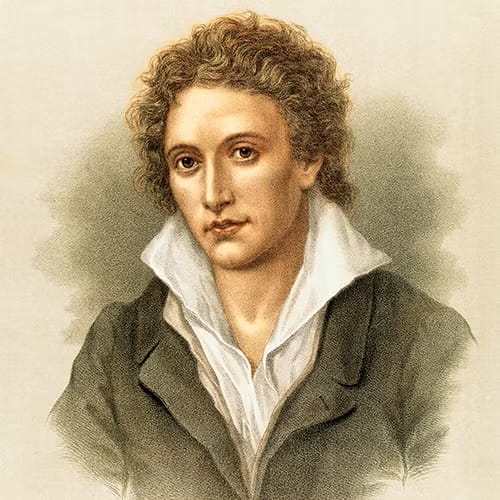
It is just this situation which Shelley adverts to when he says that the truly poetic activity actually ‘creates the taste by which it is enjoyed’. This doesn’t mean poetry carries the faddish infectiousness of mere novelty, which is what most critics in the academic humanities have taken it to mean. It means that Shelley was quite explicit about the direct relationship, living as if connected in the bloodstream, between imagination and compassion. He means that “aesthetic education” (Schiller’s term) is none other than a form of esoteric education, and so makes possible a human development whose other main sources are healing, prayer and meditation. As in all cases of genuine esoteric opportunity, the outcome cannot by human means be totally insured against ‘straying’; the benefit is always potential, never certain or guaranteed, and rarely predictable. This is owing to the future-orientation of all creativity, its availability to the impulses incoming from the future unknown to the ‘preparedness’ (istidad)[[9]] of the seeker. This creation of taste, aesthetic education, teaches what I would venture to call literacy in the bandwidth of soul.
It is a grave misfortune if the best speakers for the philosophia perennis suspect or condemn art and the language of soul proper to art as being risky, profanizing influences. At the very least, such condemnation would result in missed opportunities for contacting the language of soul in the modern world. At the worst it could put up futile defiance to the unqualified Mercy of theophany itself.
A case in point, in my view, is represented to some extent by Titus Burckhardt’s strictures on Jung[[10]], in which often the tone of condemnation is more strongly and rhetorically pressed than is ever quite explained by the evidence brought in support. The loss on both sides in this scene is regrettable, both in terms of sharing an interest in Jung, which many of the century’s greatest esoteric thinkers have no trouble acknowledging, and in terms of respect for Burckhardt, whose expositions of Tradition and esotericism are nearly always so radiant. At least, if doubts were a little less censoriously expressed, then the inevitable blind-spot in any human judge would not show up so painfully.
[[9]]: For a further clarification of istidad, see William Chittick, “A Sufi Approach to Religious Diversity” in S. H. Nasr and W. Stoddart (eds.), Religion of the Heart, (Washington: Kazi, 1991), pp. 53-60
[[10]]: Burckhardt, Mirror of the Intellect (New York, SUNY Press, 1985), pp. 56-66
It is this double-bind which I think, on the evidence of her writing, critical, poetic and memoir, most strongly pressed Kathleen Raine, an artist of the Imagination living in modern times, in the direction of Guénon and Coomaraswamy, and also compelled her to voice a reservation about some of the characteristic manners and limitations of the Traditionalist movement as it was then composed.
The Imaginative Arts and Esoterism
Earlier I suggested the threshold to the esoteric in the arts is their refractive and metaphorical character. This refractive character is, in turn, the key to the metaphysical dimension of the arts as well as of the apparent created world:
The One remains, the Many change and pass;
Heaven’s light forever shines, Earth’s shadows fly;
Life, like a dome of many-coloured glass,
stains the white radiance of eternity.
(Shelley, Adonais)
The risk of some Traditionalists’ guarded (in extreme cases dismissive) attitude towards the modern arts is the risk of misinterpreting the esoteric meaning of Shelley’s use of ‘stain’ in the quotation just given.
If we take seriously the idea of ‘literacy in the bandwidth of soul’, I think we will immediately be able to accept that in esoteric tradition soul (nafs) has multiple levels (or, differently put, it lives in several ‘worlds’ (alam)), and that thinking about these levels of nafs, and esoteric training in relation to them, has never been thought a polytheistic contradiction of the basic statement and affirmation of Unity.[[11]]
I think Raine’s doubt about the tone of Traditionalism in relation to art is in one sense no more than the doubt one would feel towards any language that bore hints of exclusiveness. As Ibn ‘Arabi’s teaching makes abundantly clear, the real answer to the danger of equating diversity with polytheism is to acknowledge that Reality is immanent and transcendent, that the apparent necessity to decide between the immanent and the transcendent is an adventitiously grafted dualistic need, in itself at odds with the non-dual awareness, Union, toward which tawhid, the path of Union, is directed and from which, at the inner level, it proceeds.
The risk of some Traditionalists’ guarded (in extreme cases dismissive) attitude towards the modern arts is the risk of misinterpreting the esoteric meaning of Shelley’s use of stain in the quotation just given. If we take the word to mean “taint” or “corruption” and then denounce it, we are effectively trying to interfere with the fuel supply of creativity, Beauty itself. Beauty lights, combusts, blazes, creates, in colour—the word being intended in esoteric and exoteric significations—it generates the spectrum of soul, the amplitude or play of all levels of nafs. On the other hand, if the coloured glass is taken as Beauty itself, then we commit the idolatrous or polytheistic error of ascribing directly to beauty’s vehicle, or its incandescence, the existence of Beauty. This cannot be done, because there is only one existence: ‘the Alone is with the Alone (there is not with Him a thing)’.[[12]]
it is not the living spirit of the esoteric tradition which is being doubted, but a certain manner of guardianship concerning it.
[[11]]: See Davies, Romanticism and Esoteric Tradition: Studies in Imagination (New York: Lindisfarne Books, 1998), chapters 5 and 6
[[12]]: Ibn Arabi, Kernel of the Kernel (Ismail Hakki Bursevi’s Translation), (Sherborne: Beshara Publications, 1979), p. 33
It is vital to keep in mind that such reservations as those Kathleen Raine expressed about the Traditional school are made with full acknowledgement that it is not the living spirit of the esoteric tradition which is being doubted, but a certain manner of guardianship concerning it. Whereas she doubted Guénon as an expositor of the one Teaching, she found that Seyyed Hossein Nasr’s book Knowledge and the Sacred embodied the principles of the Tradition without the dismissiveness that worried her elsewhere: “Dr Nasr never loses sight of the truth that principial knowledge is always accessible… Where others have seemed to slam doors, virtually denying the possibility, in the absence of normal supports (liturgy, crafts, arts and mores) of more than a token adherence to principles it is not possible to put into practice,”[[13]] Raine obviously sees in Nasr’s work a different understanding of revelation, perhaps one more consonant with Bernard Shaw’s declaration that “He who does not believe that revelation is continuous does not believe in revelation at all.”[[14]]
[[13]]: Raine, “Resacralisation”, Temenos 4 (1983), p. 194
[[14]]: Shaw, The Quintessence of Ibsenism, (London: Constable, 1926), p. 207
Raine’s affiliation, if there is one to be found, is much less toward orthodox contents and more towards the prophetic function of the creative arts.
Here Raine’s own unaffiliated position, and her sympathy for the ‘fellow-travellers who have inherited no tradition’ is clear though implicit. One might compare her poetic, visionary but non-orthodox pathway to that of the Uwaysi Sufis, who acknowledge no apparent master or tariqa, but whose potential nearness to spiritual reality is no less than for the affiliated, and who are traditionally said to be under the direct mastership of Khidr. According to Henry Corbin, [[15]]
those among the Sufis who had no visible murshid (guide), that is, an earthly man like themselves and a contemporary, called themselves Uwaysis. Abu’l-Hasan Kharraqani left us the saying: ‘I am amazed at those disciples who declare that they require this or that master. You are perfectly well aware that I have never been taught by any man. God was my guide, though I have the greatest respect for all the masters.’ …Such a relationship presupposes an ability to experience events which are enacted in a reality other than the physical reality of daily life, events which spontaneously transmute themselves into symbols.
[[15]]: Henry Corbin, Creative Imagination in the Sufism of Ibn Arabi (Princeton, N.J.: Princeton University Press, 1969, pp. 32-3, 54
To mention this direct affinity between revelation and symbolism is particularly important in relation to our discussion of the arts and the principle of soul—what I have elsewhere called the ‘optics of spiritual imagination’—because Raine’s affiliation, if there is one to be found, is much less toward orthodox contents and more towards the prophetic function of the creative arts; this term creative arts understood in a wider sense than the compass implied in the phrase ‘liturgy, arts, crafts and mores’.
It is this steadfast and ineluctable loneliness of the unaffiliated spiritual traveller that inspired Raine to acknowledge William Blake as the nearest thing to her spiritual master. Blake was a poet and artist-craftsman rather than an exponent of any one tradition. And while he acknowledged no tradition as an authority, he was deeply versed, like Raine, in many of them. And this constancy of awareness and trust in the workings of the Holy Spirit was shared not only by Blake, and Kathleen Raine in our day, but also by earlier supreme masters of the tradition in its pure forms, such as Ibn ‘Arabi, to whom is attributed the saying that the man of wisdom is not bound by any one form of belief. Thus, Ibn ‘Arabi states, [[16]]
Had the gnostic known himself thoroughly, he would not have been trapped by any particular belief… The man who has started on this journey (salik) has thrown into the ocean the atom of existence in himself… from this moment on he cannot take refuge in any one part of religious belief and cannot subject himself to the regulation of any dogma. But he must not loiter in this state—it is absolutely essential he must go forward.
[[16]]: Ibn Arabi, Kernel of the Kernel, p. 18; ibid., pp. 22-3
It is a mystery why Frithjof Schuon, the author of the Transcendent Unity of Religions, could inspire in some of his followers such narrow and censorious adherence to the idea that one must belong to one religion only. Bernard Shaw had the feeling that the plays of Ibsen were prophetic, which is to say truly religious, for just the same reason as the contemporary critics thought them immoral—precisely because they exposed the mediocre tenacity of humanist moralism and its corrupting results, alongside the living spirit of the human will, indistinguishable, in its capacity for true creation, from the Divine Will. That indistinguishability is what Ibn ‘Arabi takes from the traditional saying attributed to Allah, that ‘when I love [my servant], I am the eye with which he sees and the ear with which he hears’.[[17]]
[[17]]: op. cit., pp ii, 37
While rejecting syncretism, they also exhibited it.
From her wide experience of various Traditionalist sources, some of them known to her personally, such as Marco Pallis whose advice she sought on more than one occasion in relation to spiritual work and direction, Kathleen Raine also noted something interesting about the undeniable ‘modernity’, both personal and cultural-historical, of most of the major writers of the Traditionalist school. [[18]]
Not one of the principal exponents of that school was in fact living within the tradition to which they themselves were native. Coomaraswamy, praising Hinduism, was educated in England and lived his adult life in America. Of all their writings, those of Schuon most illuminate Christianity, but their author is a Muslim convert. Several members of the group are, as was Guénon himself, Muslims; Marco [Pallis], born into a Greek Orthodox family, a Buddhist. Were they not all, under the disguise of strict adherence to tradition, in fact refugees, or rebels, and by the very assumption of Islam, or Mahayana Buddhism, as the case might be, changing the nature of the tradition assumed? Even while denouncing the confusion of the different traditions, were they not all carried on an interfusing tide? How could Marco’s Buddhism not be coloured by Greek Orthodox Christianity? Or Philip Sherrard’s Greek Orthodoxy by his Bloomsbury background and his training as a Cambridge historian? Was not Guénon’s Islam that of an embittered French intellectual? Eclecticism, whether or not desirable, is in practice unavoidable, and its implicit syncretism may even be the best contribution of this school.
[[18]]: Raine, Autobiographies, p. 353
One wonders, reading this and reflecting on it and the massive burgeoning of what is perplexingly known as the ‘spiritual marketplace’ in modern culture, whether the true Esoteric School is not far more widely and diversely seeded than the Traditionalist school thought? For, as she points out, the most vehement proponents of adherence to one established religion were themselves, by heredity and culture, not of the religions they later adopted. While rejecting syncretism, they also exhibited it. And if they were rebels and refugees, as Raine thinks they might have been, then they bear more than a passing resemblance to such pioneers of modern art as Rimbaud, Gauguin, and Isabelle Eberhardt.
While syncretism itself is less likely to bother artists than exponents of the spiritual ways, it has been my experience that the most committed practitioners of those ways, and those with the deepest knowledge, have readily perceived the true esoteric impulse in art of all sorts, and in much psychiatric work, and do not rush to dismiss—any more than to unthinkingly endorse—new, unexplored sites over which the wings of inspiration nevertheless seem to hover for a moment or an hour or longer.
If Kathleen Raine gave me the first inspiration to recognize the workings of the Holy Spirit in artistic as well as mystical and spiritual disciplines, then the autonomous development of that initial suggestion has since given me and many others the courage to continue seeking and to attest its presence in such diverse and (it may seem) unlikely places as the writings of Samuel Beckett, the paintings of Mark Rothko, the esoteric school of such as J. G. Bennett and Hasan Lutfi Shushud, and the music of Neil Young (none in any particular order).
Concluding Remarks and a Suggestion
In conclusion I’d like to make a proposition and suggest a development. The proposition is this. Esoteric studies properly regards art, myth and poetry as basically the same, and while not strictly equivalent to spiritual practice, nevertheless in direct relationship to it through the agency of the barzakh. And none of these soul-oriented artistic practices has lapsed irretrievably with the advent of the modern age. Poetry and myth, and much figurative and abstract art, are areas on the spectrum of isthmuseity, the barzakh being the intermediary realm between the veil and the quintessence. And while the gnostic is unconditionally exhorted not to “stay with the in-between”,[[19]] it is very likely that in many cases the first messages from the ‘beyond’ (ghaib) are to be received here in the barzakh.
Anyone familiar with Traditionalist principles acknowledges the challenge to the ordinary humanist self presented by the esoteric view of self, and of the life-changing consequences of this for the Western practitioner of this reorientation. What is less often suggested is that Post-Romantic art, as well as Traditional art, carries this radical transformation of ego implicitly in its own message, indeed in its very constitution as art.
If the Teaching corresponding to the Unique Reality is for all time, it necessarily manifests in all ages, and potentially to all persuasions. It was easier in the past to comprehend the iconicity of art, especially traditional art. The esoteric is hidden in modern art, and needs an act of ‘uncovering’ or ta’wil[[20]] to be invoked.
[[19]]: Ibn Arabi, Kernel of the Kernel, p. 38.
[[20]]: Further on the concept of ta’wil can be found in Henry Corbin, Avicenna and the Visionary Recital (Princeton: Princeton University Press, 1960 [1988]), pp. 28-35, 165-7
there is abundant precedent in esoteric language for the imagery of the spiritual battle. Yet... solely in that esoteric meaning.
The development would be that, in view of the matters raised by artistic creativity generally, and by such an example as Kathleen Raine’s work in particular, Traditional Studies cease to use and occupy the imagery of the battleground. The rise of the Traditionalist School might have had its basis in this imagery, and indeed there is abundant precedent in esoteric language for the imagery of the spiritual battle. Yet the ultimate significance of the Teaching is solely in that esoteric meaning. The exoteric meaning of the battle image is merely a dispensable cover. With the secession of this outer image might fade also the tendency to dismiss the artistic soul-picture, a dismissal which troubles one as much from its suggested hint of hidden anxiety as from its stern exclusiveness.
In closing, I hope it is needless to say that what I have advanced in this discussion is in no way whatsoever intended to be an apology for the indiscriminate pluralism which tries to see inspiration in the slightest and most trivial of artistic expressions. At the same time, on many occasions on which examples of creative art have been highhandedly dismissed from one esoteric quarter or another, the Traditional verse of Sufism, Whithersoever you turn, there you see His Face, has come to mind. “The rest cannot be explained by writing.”[[21]]
[[21]]: Ibn Arabi, Kernel of the Kernel, p. 48

