A perennial problem for Buddhists has always been the question of how to articulate the relationship that obtains between the Absolute and the Relative orders of reality, namely, between Nirvana and Samsara. Although conceptions of Nirvana within the Buddhist tradition have changed over the centuries, it is safe to say that some of its features have remained constant throughout the doctrinal permutations of its different schools. Indeed, some modern scholars of Buddhism in the West have even questioned whether it is meaningful to speak of an Absolute in Buddhism at all claiming that such a notion is an illegitimate transposition of certain ‘substantialist’ notions relating to the highest reality as found in its parent tradition, Hinduism. This paper will attempt to address the question of whether one can meaningfully speak of an Absolute in Buddhism, in what such a reality consists and what its implications are for understanding the highest goal of the Buddhist path. In doing so, this paper will be focussing chiefly on the Mahayana tradition and, in particular, on one of its principal metaphysical texts—The Awakening of Faith—in which we arguably find one of the most comprehensive treatments of the Ultimate Reality in the history of Buddhism. The paper will then address some of the implications of this discussion for understanding the Pure Land way—a spiritual path pre-eminently suited to the exigencies of the Decadent Age of the Dharma (Jp: mappō) in which we currently find ourselves.
In one of his early seminal works on Buddhism[[1]], Edward Conze in discussing the question of whether early Buddhism can be considered atheistic, summarises the earlier, Hinayana view, of Nirvana as follows:
[[1]]: Edward Conze, Buddhism: its Essence and Development (Harper & Row, 1975), p. 40
We are told that Nirvana is permanent, stable, imperishable, immovable, ageless, deathless, unborn, and unbecome, that it is power, bliss and happiness, the secure refuge, the shelter, and the place of unassailable safety; that it is the real Truth and the supreme Reality; that it is the Good, the supreme goal and the one and only consummation of our life, the eternal, hidden and incomprehensible Peace.
—which is contrasted with this world, ‘i.e., everything conditioned and impermanent, which is emphatically regarded as wholly ill, as wholly pervaded with suffering, as something to be rejected totally, abandoned totally for the one goal of Nirvana.’[[2]]
In this sense, early Buddhism was radically dualistic in how it perceived these two realms—there was simply no connection between them. In other words, the individual can only attain Nirvana through the dissolution of this very individuality—hence the doctrine of anatta or ‘no-self’. Furthermore, there was also the tendency to view Nirvana as more of a state of realization than any kind of ‘being’ given the apophatic reticence of early Buddhism to commit itself to any definitive declarations regarding this ineffable Reality and, to some extent at least, its conscious desire to demarcate itself from the metaphysics of the Upanishads. However, to what extent the polemics between these two camps was simply an outcome of a mutual misunderstanding over the meaning and implications of the concept of ātman is a moot point that warrants an entire treatise in itself.
[[2]]: Conze, p. 21
The Mahayana perspective
one witnesses a growing tendency to universalize the concept of Buddhahood as a spiritual principle
With the arising of the Mahayana as a discrete vehicle of the Dharma in its own right, one witnesses a growing tendency to universalize the concept of Buddhahood as a spiritual principle transcending the human personality of Shakyamuni (Gautama) Buddha and embodying a higher and permanent reality. Hence the concept of the ‘eternal’ Buddha which we see promulgated in such central scriptures as the Lotus Sutra and in such fundamental doctrines as that of the trikāya or the Three Bodies of the Buddha with the Dharmakāya (Body of Dharma) effectively becoming tantamount to the Buddhist Absolute. Other currents of thought within the Mahayana developed this notion further preferring to view Buddha or Nirvana as an all-pervasive reality embracing all things including the totality of samsara. In time, this growing tendency of attenuating the distinction between the two realms led eventually, especially in the Mādhyamika school, to a full-blown identification which we find explicitly formulated in the famous dictum, ‘Samsara is Nirvana’. From the fairly unqualified dualism of the Hinayana we now find a radical non-dualism at the apex of Mahayana thinking—and all this under the umbrella of ‘Buddhism.’ Such a revolution in thinking clearly serves to demonstrate the complexity and controversy inherent in the tradition’s struggle to understand the reality of enlightenment.
Having very briefly charted the rudimentary outlines of the transition from the early Buddhist view of Nirvana to the more developed and comprehensive conception of the Dharmakāya developed by the Mahayanists, let us now delve a little deeper in to the nature of this Absolute.
In one of his earliest works, D.T. Suzuki quotes the following passage on the Dharmakāya from the great Avatamsaka Sutra:[[3]]
[[3]]: D.T.Suzuki, Outlines of Mahayana Buddhism (Schocken: New York, 1963), pp. 223-224
The Dharmakāya, though manifesting itself in the triple world, is free from impurities and desires. It unfolds itself here, there and everywhere responding to the call of karma. It is not an individual reality, it is not a false existence, but is universal and pure. It comes from nowhere, it goes to nowhere; it does not assert itself, nor is it subject to annihilation. It is forever serene and eternal. It is the One, devoid of all determinations. This body of Dharma has no boundary, no quarters, but is embodied in all bodies. Its freedom or spontaneity is incomprehensible, its spiritual presence in things corporeal is incomprehensible. All forms of corporeality are involved therein, it is able to create all things. Assuming any concrete material body as required by the nature and condition of karma, it illuminates all creations. Though it is the treasure of intelligence, it is void of particularity. There is no place in the universe where this Body does not prevail. The universe becomes but this Body forever remains. It is free from all opposites and contraries, yet it is working in all things to lead them to Nirvana.
by ‘personifying’ the Absolute... Mahayana opened the gates of the Dharma to all people
At once, we see a more dynamic and all-encompassing view of ultimate reality possessed of personality, compassion and intelligence which takes the initiative in the liberation of sentient beings. This is in quite stark contrast to the Hinayanistic Nirvana which is more of a static, indifferent and dispassionate reality with no intimate connection to the world of birth-and-death. Nevertheless, both Buddhist traditions would agree that however conceived, Nirvana (which is really none other than the experiential dimension of the Dharmakāya) remains the ultimate goal of human endeavour and the only real source of human fulfillment and felicity. In any case, by ‘personifying’ the Absolute and in forging a non-monastic path to its attainment, the Mahayana opened the gates of the Dharma to all people, especially the laity who had hitherto played a largely peripheral role in the spiritual life.
The Awakening of Faith
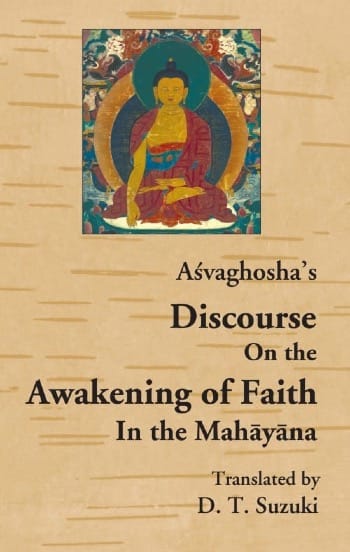
In many respects, the culmination of this cataphatic conception of the Absolute is to be found in a very short yet profoundly influential treatise known as the Awakening of Faith in the Mahayana traditionally attributed to Ásvaghosha although only extant in Chinese. This work, which is often considered as a synthesis of the Mādhyamika, Vijñānavāda and Tathāgata-garbha traditions, has exercised its influence on the founders of all the major schools of the Mahayana who have venerated the text as an unimpeachable authority on the questions with which it deals. In that respect, it serves as a very useful and reliable compendium of Mahayana metaphysics containing, as it does in a small but terse compass, a range of sophisticated and subtle teaching which one would only come across elsewhere by consulting numerous other sutras and shastras where the same points are often made only obliquely.
‘Suchness’ (tathatā)... the supreme reality...
is both transcendent and immanent
The fundamental standpoint of the Awakening of Faith is its belief in the Absolute which it calls ‘Suchness’ (tathatā). As we have already seen, this reality has been called by many other names according to the perspective by which it is envisaged, namely, Dharmakāya, Nirvana, Buddha, Śunyatā, Bodhi, etc. Now Suchness, the supreme reality according to this text is both transcendent and immanent. In other words, it is completely beyond anything that we can imagine or conceive in our world of relativity and delusion with all its manifold limitations and yet, at the same time, it constitutes the very core of everything that exists—the deepest centre and ‘Ultimate Source’[[4]] of samsara itself.
A corollary of this is to say that the Absolute, which is formless, manifests itself through forms which, although finite and limited, are none other than the Absolute of which they are its reflections. This is one way of understanding the meaning of ‘Samsara is Nirvana’. It is not, of course, to say that they are identical but rather that they are ultimately non-dual. In this way, the world around us is then seen as an admixture of the conditioned and the unconditioned.
like the gold which has become the ring, the immutable absolute remains the immutable absolute
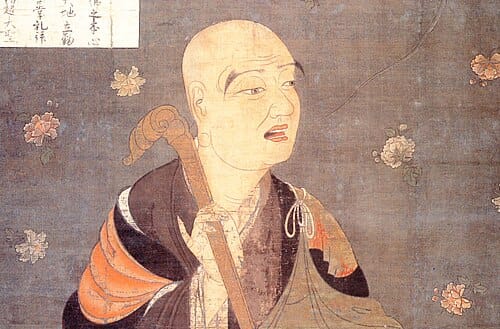
The most illustrious master of the Hua-yen school, Fa-tsang, was a great devotee of the Awakening of Faith on which he has written the most authoritative commentary. His own thought was deeply influenced by this text as is evidenced by the following passage from Francis Cook’s book on Hua-yen Buddhism which is cited for the purpose of clarifying what was said earlier about the relationship between samsara and Nirvana:[[5]]
The very basis of Hua-yen thought seems to be a view of an Absolute which existed prior in time to a concrete world of things which it became. There it was said that any phenomenal object is a mixture of the True and the false, or the Unconditioned and conditioned (of course, the sum total of all things is this same mixture). Taking up the absolute side of things first, Fa-tsang says that it itself has two aspects. First, he says, it is immutable. This is not surprising because all religions claim immutability as the nature of the absolute. What kind of absolute would it be which changed like the ordinary things of the world? Being immutable, the absolute is forever unmoved, pure, eternal, still and serene. This is, in fact, a common description of the absolute in all Mahayana forms of Buddhism. However, Fa-tsang next says something which not only seems to contradict this statement but which also is very unusual in Buddhism; he says that moved by certain conditions, this pure, unmoved eternal Reality changes and appears as the universe of phenomenal objects. However, like the gold which has become the ring, the immutable absolute remains the immutable absolute. Here the picture is apparently one of the emanation of the concrete universe from an immutable absolute with the result that things are a mixture of the absolute and the phenomenal.
[[4]]: The Awakening of Faith: Attributed to Aśvaghosha Ásvaghosha—translated, with commentary, by Yoshito S. Hakeda (Columbia University Press: New York, 1967), p.92
[[5]]: Francis H. Cook, Hua-yen Buddhism: The Jewel Net of Indra (Pennsylvania State University, 1977), p.94
This passage has been quoted at length to show the influence the Awakening of Faith had on a major school of Buddhism which although no longer extant continues to live through the doctrines and practices of the Zen school of which it is the intellectual complement. When Cook talks about this ‘very unusual’ statement by Fa-tsang he is referring to none other than the central thesis of the Awakening of Faith by which this eminent Hua-yen master was so greatly influenced. The important thing to note, however, is that it is not so much that this perspective is unusual as it is that it has been rendered so explicitly since it is a doctrinal position which must logically follow from the other fundamental tenets of Mahayana Buddhism.
‘emptiness’ should not be considered as ‘non-existent’… there is room to present Suchness, if it is done symbolically, as replete with attributes
Another distinctive feature of this text is its stress on the Absolute being both śunya (‘empty’) and a-śunya (‘not empty’). Firstly, “Suchness is empty because from the very beginning it has never been related to any defiled states of existence, it is free from all marks of individual distinction of things and it has nothing to do with thoughts conceived by a deluded mind.”[[6]] Considered in this way, ‘emptiness’ should not be considered as ‘non-existent’ but simply (as Yoshito Hakeda, in his commentary, notes) ‘devoid of a distinct, absolute, independent, permanent, individual entity or being as an irreducible component in a pluralistic world.... However, this negation does not exclude the possibility of Suchness being seen from a different viewpoint or order with which one is not accustomed. Hence, there is room to present Suchness, if it is done symbolically, as replete with attributes.”[[7]] Aśvaghosha, after pointing out that Suchness “was not brought into existence in the beginning nor will it cease to be at the end of time; it is eternal through and through” goes on to say[[8]] as follows:
From the beginning, Suchness in its nature is fully provided with all excellent qualities; namely, it is endowed with the light of great wisdom, the qualities of illuminating the entire universe, of true cognition and mind pure in its self-nature; of eternity, bliss, Self and purity; of refreshing coolness, immutability and freedom....these qualities are not independent from the essence of Suchness and are suprarational attributes of Buddhahood. Since it is endowed completely with all these and is not lacking anything, it is called the Tathāgata-garbha (when latent) and also the Dharmakāya of the Tathāgata....Though it has, in reality, all these excellent qualities, it does not have any characteristics of differentiation; it retains its identity and is of one flavour; Suchness is solely one… it is one without a Second.
[[6]]: Hakeda, p. 34
[[7]]: Hakeda, p. 36
[[8]]: Hakeda, p. 65
These are critical passages in helping us to understand the nature and function of Suchness. What we see is a concept of the Absolute as not only the fountainhead of all the happiness, joy and beauty of which we only experience the pale shadows in this world but the source of enlightenment and saving activity of all Buddhas and Bodhisattvas directed towards suffering sentient beings in samsara. It is therefore crucial to a proper understanding of Suchness not to view it under its other synonym, namely Emptiness or the Void, as meaning a mere nullity or non-existence—this would be to fall prey to the pitfalls of nihilism which the great Mahayana masters always warned us against. To be sure, Suchness is not the kind of existence which can be considered analogous to the realities with which we are familiar in this transitory world but rather is far more real than anything within the purview of our limited empirical existence. There is a great danger, especially when one reads certain modern studies of Buddhism in the West, in failing to recognise that the notion of ‘emptiness’ about which one hears so much is not an emptiness or lack of reality as is sometimes curiously supposed but an emptiness of limitations, relativity and delusion. In this respect, emptiness serves as an upāya to help rid people of misguided and blinkered views concerning the highest reality rather than being some kind of comprehensive statement regarding it. One is inclined to consider the punishing dialectics of Nagarjuna and his Mādhyamika system as simply a form of intellectual therapy designed to remove the obstacles to a clearer understanding of Suchness—breaking through the ratiocinative and conventional ways in which we artificially construct what we believe to be reality and to promote a more direct and intuitive mode of awareness through prajñā or ‘transcendental’ wisdom.
But such an exercise only stops half-way, otherwise the history of Buddhism would not have witnessed the rise of subsequent schools which endeavoured to fill the gaps, so to speak, left by the purely negative and apophatic approach of the śunyata perspective. There was a growing need for a more positive conception of the ultimate reality, a conception that addressed the fundamental needs of both the intelligence and the will in response to which arose, firstly, the Vijñānavāda (also known as Yogācāra) followed by the Tathāgata-garbha schools of thought with their emphasis on the cataphatic dimension of the Absolute. Tantric Buddhism can also be considered a response to some of the perceived limitations with the early Mādhyamika perspective. In any event, we now find a richer and more complex ontology which sought to integrate existence in its entirety—and at all its levels—with Suchness.
all reality was suffused with the presence of the Buddha—a notion unthinkable to the Hinayana
No dharma or element of existence was considered to be outside its embrace or influence such that all reality was suffused with the presence of the Buddha—a notion unthinkable to the Hinayana which was in no real position to reconcile this world of suffering and delusion with the realm which delivered one from all such sorrow. Nevertheless, despite the paradoxical nature of the Mahayana’s preferred way of viewing the Absolute, it felt that its more difficult perspective was thoroughly justified in view of what it considered to be a deeper awareness of the omnipresent activity of Suchness in our everyday world of samsaric existence.
The Pure Land Tradition
the inexhaustible font of all merits, virtues, wisdom and compassion—an archetypal realm of perfection and beatitude
The rise of the Pure Land school of Mahayana Buddhism was largely contemporaneous with the flowering of the Mahayana itself and constituting one of its earliest manifestations. In one sense, it can be argued that the Pure Land way represented the most explicit example of the attempt to render the Buddhist Absolute as accessible as possible to ordinary people through the use of a wealth of rich and positive symbolism designed to heighten the aspiration for enlightenment. In this way, the Pure Land path can also be viewed as the best example of the a-śunya view of absolute reality, that is in contrast to the Madhyamikan view of Suchness as empty (śunya) or the ‘Void’, it is seen in its fullness and plenitude as the inexhaustible font of all merits, virtues, wisdom and compassion—an archetypal realm of perfection and beatitude. Hence the traditional descriptions of the Pure Land as being replete with the attributes of enlightenment through the evocative symbolism of jewels, music, colours, fragrances etc. By employing ostensibly sensual imagery, the sutras are attempting to convey, in terms that could be readily understood, a sense of the blissfulness of Nirvana—in contrast, no doubt, to the imperfection that would have dominated the ordinary world-view of the average devotee.
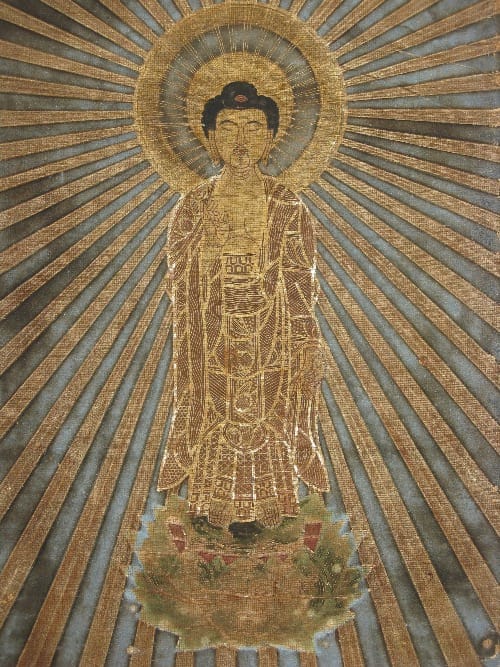
The Pure Land patriarch, T’an-luan, claimed that what distinguished Pure Land Buddhism from other schools is that the ‘Dharmakāya of Dharma-nature’ (i.e. the formless Absolute) takes the initiative in relation to deluded and suffering beings manifesting itself as ‘Dharmakāya of Expediency’ in the form of various Buddhas, Bodhisattvas and Pure Lands but, in particular, the pre-eminent Buddha Amitābha (‘Infinite Light’). This is the ultimate act of compassion for without this initiative, ordinary beings would remain stranded in samsara with no hope of deliverance seeing as the clutches of ignorance and delusion in the Decadent Age of the Dharma are considered too strong to allow for individual effort and initiative to suffice for the attainment of enlightenment.
The Decadent Age of the Dharma
humanity’s increasing darkness, turmoil and spiritual incapacity
The above reference to the ‘Decadent Age of the Dharma’ calls for a short digression. Mahayana Buddhists entertain a qualitative view of time that is envisaged in relation to the lifetime of Shakyamuni Buddha. In other words, the spiritual, moral and physical conditions on earth are seen to progressively deteriorate in direct proportion to the time that has elapsed since the Buddha’s entry into the Great Nirvana. A number of distinct ages, since that time, are seen to reflect the successive stages in humanity’s increasing darkness, turmoil and spiritual incapacity. The Pure Land tradition considers the present period as the ‘Decadent Age’ of the Dharma where—to quote the Great Collection Sutra—“out of billions of sentient beings who seek to perform practices and cultivate the way… not one will gain realization.” Another quotation from this sutra serves to clarify this situation further:
During the first five hundred-year period after the Buddha’s parinirvāna, my disciples will be resolute in acquiring wisdom. During the second five hundred-year period, they will be resolute in cultivating meditation. During the third five hundred-year period, they will be resolute in listening to the teaching and sutra-recitation. During the fourth five hundred-year period, they will be resolute in constructing towers and temples, practicing meritorious conduct and performing penance. During the fifth five hundred-year period, they will be resolute in conflict and strife, which will become widespread with the good dharma being diminished… This is now the last dharma-age; it is the evil world of the five defilements. This one gate—the Pure Land way—is the only path that affords passage.
The ‘five defilements’ referred to above constitute the distinguishing characteristics of the age in which we currently live. They are (i) the impure or turbid age in which calamities occur incessantly; (ii) impurity of the view that ignores the principle of cause and effect; (iii) the impurity and defiling nature of evil passions; (iv) the degeneration of the minds and bodies of sentient beings; and (v) the shortening of the span of life of sentient beings as the result of prevailing evil passions and wrong views.
The famous Lotus Sutra also contains a description of this age which, in hindsight, has proven to be disturbingly prophetic:
At the horrible time of the end, men will be malevolent, false, evil and obtuse and they will imagine that they have reached perfection when it will be nothing of the sort.
The Pure Land masters considered that, under such conditions, the degree of spiritual attainment prevalent at the time of Shakyamuni was no longer considered possible in this age which is so far removed from his immediate presence and influence. Accordingly, they exhort us to take refuge in Amitābha Buddha (Jp. Amida) who compensates for our shortcomings by enabling us to reach Nirvana solely through the power of his Name.
The Name of Amitabha Buddha
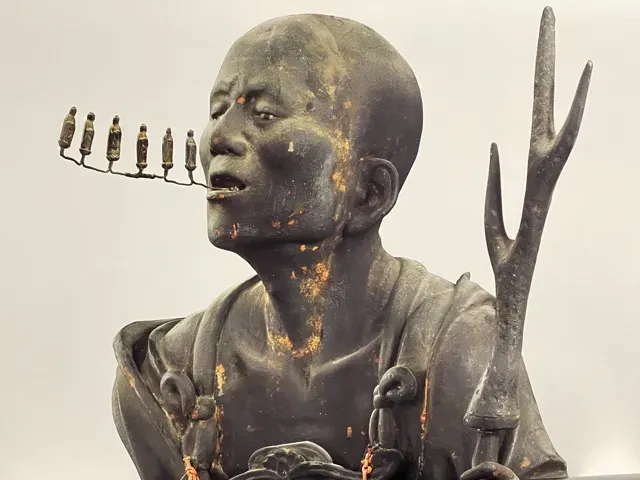
Of all the forty-eight vows made by Amitabha Buddha, the eighteenth—the Primal Vow—is considered by far the most significant. It is to be found in the Larger Sutra on the Buddha of Immeasurable Life as follows:
When I attain Buddhahood, sentient beings in the lands of the ten directions who sincerely and joyfully entrust themselves to me, desire to be born in my land, and call my Name even ten times, should not be born there, may I not attain perfect Enlightenment. Excluded, however, are those who commit the five gravest offences and abuse the right Dharma.
the actual invocation of his Name...(the nembutsu)…was considered a natural corollary of one’s remembrance of the Buddha
The phrase ‘call my Name even ten times’ referred to thinking on the Buddha in a general sense (Buddhānusmriti in Sanskrit). This gradually developed into the actual invocation of his Name (Namo ‘mitābhaya Buddhāya or Namu Amida Butsu in Japanese)—the nembutsu—which was considered a natural corollary of one’s remembrance of the Buddha. As the Sacred Name of Amitabha Buddha was thought to contain the perfection and virtue of Enlightenment itself, its mere recitation was seen to have the power to bring to Nirvana all those who had complete faith in it.
In the age of mappō, the practice of nembutsu was considered easier to accomplish for ordinary lay people whose weak capacities prevented them from engaging in the more difficult and austere practices of traditional monastic Buddhism. Unlike such practices, the nembutsu was open to everyone because the Name is both easy to say and keep in mind, providing a more universally accessible means by which mindfulness of the Buddha can be maintained by those incapable of the rigours of monastic life.

As the Name was considered to have this great power to effect total liberation from the snares of samsara, Pure Land adepts in both China and Japan would commit themselves to tens of thousands of recitations of nembutsu each day with a view to ensuring that their eventual salvation would be guaranteed.
Shinran, the founder of the Jōdo Shinshū school of Pure Land Buddhism, came to regard this attitude to the nembutsu as unsatisfactory and inconsistent with the intention of Amitābha Buddha’s Primal Vow as he saw it as yet another form of ‘self-power’ along the lines practiced by the older schools. After twenty years of monastic discipline at Mount Hiei, stronghold of the Tendai sect, Shinran abandoned this life in frustration, seeing that it could not help one so blinded by evil passions and ignorance as himself. As he considered his own ‘self’ thoroughly polluted by the incessant cravings of his ego, Shinran sought refuge in the teaching of ‘Other-Power’—namely that of Amitābha Buddha, in whom he saw as the only hope for his salvation.
It was Shinran’s view that to practice the nembutsu as a means of gaining reward was to fall prey to the same limitations that afflicted the traditional ‘self-power’ schools which advocated taxing meditation, difficult austerities and strict adherence to the monastic precepts. In other words, he did not believe that our limited and conditioned egos could bridge the vast gulf separating the finite self from the Infinite. After all, it would not be in the ego’s own interests to want to contribute to its own destruction, which is why recourse to a power that transcends it is required. Therefore, to want to amass innumerable invocations of the nembutsu with a view to attaining birth into the Pure Land is, according to Shinran, to believe that our self-interested acts are actually capable of attaining the same level of enlightenment as the Buddha. To think thus is to harbour the worst of self-delusions since there is absolutely no common measure between the absolute perfection of Amitābha’s Nirvana and the blind, misguided gropings of our impure selves.
the manifestation of true faith (shinjin)...is a pure grace which no merely human act can contrive
The real significance of the nembutsu for Shinran was that its invocation—and the mindfulness of Amitābha that it expressed—was none other than the manifestation of true faith (shinjin) in the hearts of devotees. As shinjin can only be conferred by Amitābha, to practice nembutsu in the hope of ‘producing’ it for oneself is futile. Amitābha’s mind is incomparable, inconceivable and inimitable, and its arising in the hearts of deluded beings is a pure grace which no merely human act can contrive. Similarly, no amount of bad karma can thwart the power of the Name as there is no good that surpasses it. To recite the nembutsu in a spontaneous and uncalculating way is to be imbued with Amitābha’s pure mind of shinjin. It is a natural expression of our being embraced by his Light, despite our grave karmic defilements, and of our complete assurance of the eternal bliss of Nirvana when our time comes to leave this world of tribulation and sorrow.
To simply recite the nembutsu...to attain blissful entry into Nirvana for oneself is doomed to failure. As the nembutsu is not our good but that of the Buddha, it cannot possibly form the foundation for any meritorious act of our own
When Shinran declared that the nembutsu was a manifestation of shinjin rather than simply a means of procuring spiritual benefits, he did not mean to suggest that the Name could no longer be regarded as having the power attributed to it by his Pure Land predecessors. The Sacred Name of Amitābha Buddha is the vehicle by which we are able to transcend the world of samsara and attain perfect enlightenment in the Pure Land. This capacity, seemingly incredible at first sight, is made possible by the fact that the power of the Absolute itself is fully invested in the Name and conferred to those who hear it, believe in it and invoke it with complete faith in its saving power. To simply recite the nembutsu with no other motive than to attain blissful entry into Nirvana for oneself is doomed to failure because the incentive then appears to be solely one of self-gain uninformed by either gratitude to the Buddha or compassion for one’s suffering fellow beings. As the nembutsu is not our good but that of the Buddha, it cannot possibly form the foundation for any meritorious act of our own.
When viewed in this way, the number of recitations of nembutsu is not relevant as it is the quality of the faith behind them that is important. Some will feel impelled to say the nembutsu constantly, others again only seldom. It should be noted, however, that invoking the Name, although a very important feature of Pure Land practice, is not the only way in which the nembutsu can be expressed. Chanting the sutras, worshipping and contemplating the Buddha, making offerings to Him etc., can also be considered as forms of nembutsu in which the mind of shinjin may find its expression. In any event, regardless of the form that nembutsu may take, it is always the working of Amitābha Buddha in us that is the true source of such practice and the ultimate guarantee of its efficacy.
The Activity of Suchness
Although the Pure Land school claims the dynamic and compassionate nature of Suchness as a major advance in Mahayana thinking, it is possible to find the seeds of this conception in the Awakening of Faith itself in its doctrine of ‘permeation’ (vāsanā). Hence we find:[[9]]
The essence of Suchness is, from the beginningless beginning, endowed with the perfect state of purity. It is provided with suprarational functions and the nature of manifesting itself. Because of these two reasons, it per- meates perpetually into ignorance. Through the force of this permeation, it induces a man to loathe the suffering of samsara, to seek bliss in Nirvana and, believing that he has the principle of Suchness within him, to make up his mind to exert himself… The Buddhas and Bodhisattvas all desire to liberate all men, spontaneously permeating them with their spiritual influ- ences and never forsaking them. Through the power of the wisdom which is one with Suchness, they manifest activities in response to the needs of men as they see and hear them.
[[9]]: Hakeda, p. 59 & p. 63
there is only one power—that of the Absolute—that pervades and supports all things
This passage clearly shows the omnipresent activity of Suchness functioning as the immanent Absolute working in all things to bring them to enlightenment, to the extent that even an individual’s aspiration to seek Buddhahood is brought about by the compassionate working of the Tathagatas irrespective of whether the aspirant is aware of this influence or not. In this respect, the ‘self-power’ and ‘other-power’ debate can be resolved if it is recognised that there is only one power—that of the Absolute—that pervades and supports all things and that one can either recognise and collaborate with it (which is to conform to the Dharma) or allow it to operate unnoticed (which is to continue living in a state of nescience)—either way, the working of Suchness, according to the Mahayana, will eventually bring all sentient beings to nirvanic fulfilment as there is no thing which does not constitute the Body of Dharma (Dharmakāya) and is thereby not fully embraced by its wisdom and compassion.
The Significance of Shinran
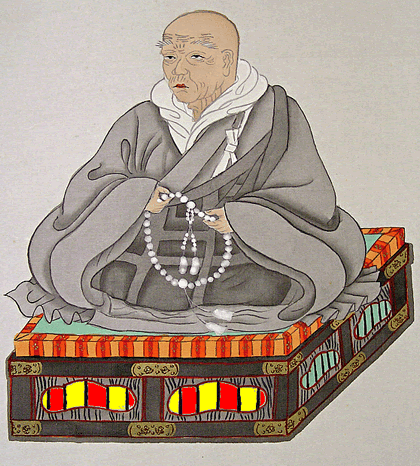
Finally, I would like to give some brief consideration to the thought of Shinran, founder of the Jōdo Shinshū sect of Pure Land Buddhism, and his attempts to reconcile the traditional Pure Land teaching which he had inherited with the sapiential perspective of the Mahayana which he would have doubtlessly imbued as a Tendai monk for twenty years on Mt Hiei. The long-established view of the Pure Land school was that the principal object of devotion was not the formless Dharmakāya Dharmakāra itself but the Buddha of Infinite Light (Amitābha) who had formerly been a bodhisattva called Dharmakāra who, out of compassion for the multitudes of suffering sentient beings, underwent aeons of self-sacrificing practice and austerities which enabled him to accrue sufficient merit to attain Buddhahood and establish a Pure Land, over which he presides, and which provides aspirants with an ideal environment in which to pursue the Dharma and attain enlightenment. For a long time, Amitābha was recognised as one of one of many Buddhas existing throughout the universe each with their own Pure Lands which have been generated from their practices and vows. Devotion to Amitābha, however, was considered particularly efficacious owing to the fact that his vows were intended specifically for ordinary beings with little or no spiritual capacity whereas other Buddhas had established certain difficult preconditions for admission to their Pure Lands.
jinen or ‘as-it-isness’ is the Suchness which ‘fills the hearts and minds of the ocean of all beings’
Shinran, while not explicitly repudiating this traditional view, chose rather to universalize what he may have considered the mythological symbolism behind the Dharmakāra story by grounding it in fundamental Mahayana principles partly in order to address strong criticisms by other sects which considered the Pure Land way un-Buddhistic and partly, no doubt, because he had a profound awareness of a higher reality (which he often refers to as jinen or ‘as-it-isness’) which he saw as working in all things and manifesting itself through innumerable compassionate guises such as Amitābha ’s Vows and his Pure Land. For Shinran, jinen signifies that which is beyond form and time and beyond the domain of human intellect and will. It is the Dharma-body as Suchness which ‘fills the hearts and minds of the ocean of all beings’.[[10]] In one of his famous letters, Shinran makes the following observation:[[11]]
[[10]]: The Collected Works of Shinran: Volume II (Jodo Shinshu Hongwanji-ha, 1997), p. 191
[[11]]: Letters of Shinran: A Translation of Mattosho, Shin Buddhism Translation Series, ed. Yoshifumi Ueda (Hongwanji International Centre: Kyoto, 1978), p. 30
The Supreme Buddha is formless and because of being formless is called ‘jinen’. When this Buddha is shown as being with form, it is not called the supreme nirvana (Buddha). In order to make us realize that the true Buddha is formless, it is expressly called Amida Buddha; so I have been taught. Amida Buddha is the medium through which we are made to realize ‘jinen.’
This passage was written towards the end of Shinran’s life and signals a revolutionary attitude in thinking about the Buddha within the Pure Land tradition. It is as if Shinran has stripped the complex and rich edifice of Pure Land spirituality down to its bare principles. This, however, is not reductionism on Shinran’s part but an attempt to rehabilitate the ‘wisdom’ aspect of the Mahayana which was in danger of possibly being overlooked by the rich upayas offered by the great message of compassion which, in many ways, formed the centerpiece of the Pure Land message. One also finds in Shinran, and to a far greater extent than his own illustrious teacher Honen, a deep appreciation of the multifaceted nature of Nirvana and its activity:[[12]]
[[12]]: The Collected Works of Shinran: Volume I (Jodo Shinshu Hongwanji-ha, 1997), p. 461
Nirvana has innumerable names. It is impossible to give them in detail; I will list only a few. Nirvana is called extinction of passions, the uncreated, peaceful happiness, eternal bliss, true reality, Dharmakāya, dharma-nature, suchness, oneness and Buddha-nature. Buddha-nature is none other than Tathāgata. This Tathāgata pervades the countless worlds; it fills the hearts and minds of the ocean of all beings. Thus, plants, trees and land all attain Buddhahood. Since it is with these hearts and minds of all sentient beings that they entrust themselves to the Vow of the dharma-body as compassionate means, this shinjin (faith) is none other than Buddha-nature. This Buddha-nature is dharma-nature. Dharma-nature is the Dharmakāya.
Shinran takes the radical step of equating the Pure Land with Nirvana itself
Shinran here is advocating a broader grasp of Nirvana than we see in any of his predecessors even though he was greatly influenced by them in arriving at his developed position. Amitābha, therefore, becomes the compassionate personification of Suchness itself and not the outcome of the innumerable practices of a particular quasi-historical individual over many kalpas. Even Dharmakāra himself, according to Shinran, emerges from the ocean of Suchness to make known the vows of the Buddha of Infinite Light through the sutras of the Pure Land school. Furthermore, he takes the radical step of equating the Pure Land with Nirvana itself rather than treating it as a more favourable abode for Buddhist practice, so that to attain birth in the Pure Land is tantamount to attaining enlightenment. Similarly, in relation to the central experience of the religious life according to Shinran, ie. shinjin or faith, we no longer find just a rudimentary faith in the Buddha and his power to save but a recognition that this very experience has its source in the very heart of reality itself—another way of saying that awareness of the Buddha’s working through the experience of shinjin is none other than the activity of the Buddha himself in sentient beings.
a wonderful synthesis between the respective demands of wisdom and compassion
Shinran was very conscious not to be seen as indulging in unorthodox innovations which is why he goes to such pains to cite authoritative scriptures in support of his views. On the one hand, he needed to convince the other Mahayana sects that his teaching was not an aberration of the Dharma and, on the other, he had to assure those within the Pure Land tradition that he was not being unfaithful to its perspective either. The extent to which he succeeded in accomplishing this difficult and challenging task is evidenced by the extraordinary flourishing of the Jōdo Shinshū over the past seven hundred years. One of the principal texts that Shinran used in support of his views regarding the ultimate reality was the famous Nirvana Sutra which he practically quotes in its entirety in his magnum opus, Kyōgyōshinshō. In order to reinforce the point about the unanimity between Shinran and the great Mahayana metaphysical tradition which he deeply venerated, a few important passages from the Nirvana Sutra will be quoted[[13]] —passages which Shinran cites with approval in the Kyōgyōshinshō and which serve to demonstrate that not only is he thoroughly Mahayanistic in his view of the Absolute but that he accomplished a wonderful synthesis between the respective demands of wisdom and compassion in his propagation of the Pure Land faith:
[[13]]: Collected Works: Volume I, p. 181, p. 184, p. 185 & p. 188
Tathāgata is also thus—nonarising, nonperishing, unaging, undying, indestructible and incorruptible; it is not a created existence… All created things are impermanent… Buddha nature is the uncreated; hence it is eternal.
The Tathāgatas are eternal and never changing; hence they are termed true reality.
Although sentient beings are impermanent, still their Buddha-nature is eternal and unchanging.
The dharma-body (of the Tathāgata) is eternity, bliss, self and purity.
Conclusion
a true and existing reality which both transcends and suffuses all things
In closing, I would like to reiterate the great importance of an adequate and satisfying conception of the Absolute as being indispensable to the Buddhist path. In a climate of increasing scepticism and reductionism, especially in certain Buddhist scholarly circles in the West, it is imperative that one does not lose sight of the fact that without such concepts as Dharmakāya, Suchness, Nirvana, Śunyatā, etc., being grounded in a true and existing reality which both transcends and suffuses all things, Buddhism is left without any foundations and stands on nothing, thereby losing all sapiential and soteriological efficacy.
In the attempt by some to make Buddhism more fashionable by denying that it has anything much in common with views of ultimate reality in other spiritual traditions, it does itself a great disservice in failing to recognize clear parallels where they exist—parallels, indeed, which should not surprise anyone.
To speak of all these terms to describe the Absolute as ‘symbolic’ in an attempt to somehow downgrade the reality of the ultimate object of aspiration is sheer folly—of what exactly are they symbols ? To be sure, these terms do not exhaust the fathomless depth of the reality to which they refer but, on the other hand, neither are they empty symbols created by us in order to fulfill some kind of nostalgic and delusory quest for the Infinite which has no basis in the true nature of things.
A spiritual path which cannot secure deliverance from that which is finite, imperfect and illusory, to that which affords eternal blessedness and liberation from suffering and the painful clutches of samsaric existence, is simply not worthy of the name.