
Reification is a comprehensive concept (more on this later), one that is present in the vocabulary of one of Bosnia’s most influential voices.
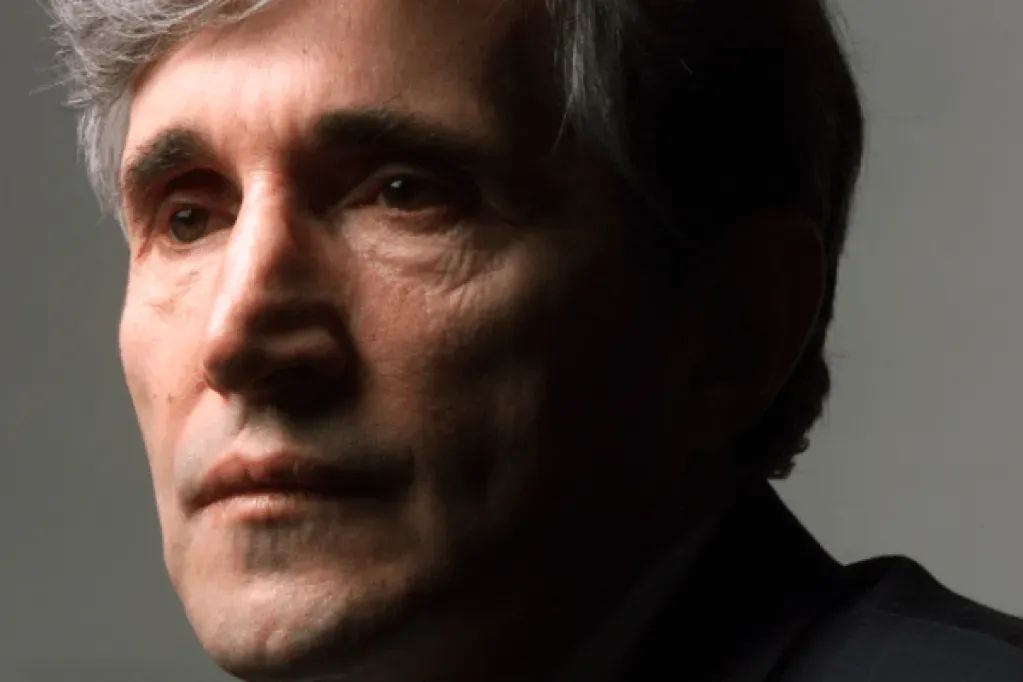
Born in 1948, in the traditional town of Stolac, in Southern Bosnia, Rusmir Mahmutćehajić graduated from Sarajevo University as an electrical engineer, in 1973, and has been for many years professor there of both this discipline and of Islamic phenomenology.
A prolific writer, he authored more than twenty books on philosophy, comparative religion, and the history of his country, several of which have been translated into English; these include Bosnia the Good: Tolerance and Tradition (Central European University Press, 2000), Sarajevo Essays: Politics, Ideology and Tradition (SUNY, 2003), Learning from Bosnia: Approaching Tradition (Fordham University Press, 2005), On Love: In the Muslim Tradition (Fordham University Press, 2007), and Maintaining the Sacred Center: The Bosnian City of Stolac (World Wisdom, Indiana, 2011). He is also a regular contributor to traditionalist journals such as Sacred Web: A Journal of Tradition and Modernity and Sophia.
Professor Mahmutćehajić served, without being attached to any political party, as a vice‑president and energy minister of his country during the tragic Balkan war (1991‑95).
Today, having abandoned any direct political activism, he chairs the International Forum Bosnia, an institution founded after the war and dedicated to the promotion of, in general terms, the “transcendent unity of religions”.
A Slavic of Muslim religion, Mahmutćehajić condemns the “reification” of religion and the disruptive role of fundamentalism. He believes that the unique plural character of Bosnia can be a model for the coexistence in contemporary Europe, which he envisions as embracing a tolerant and inclusive Islam, and he is focused on building a common space for the plurality of beliefs and opinions. Mahmutćehajić dreams and works towards the goal of returning Bosnia to a privileged space of diverse cultures whose inhabitants live together and reap the fruits of their rich exchange.
Contrary to the events of neighboring countries that have adopted strong nationalist and exclusivist policies since the collapse of Yugoslavia, Mahmutćehajić defends a pluralistic and inclusive Bosnia, where Muslims (about half the population), Orthodox Serbs (30%), Catholic Croats (16%), Jews and other communities (4%) can live together harmoniously. In his view, Bosnia has been a locus of an autochthonous and original European Islamic tradition for several centuries, and he sees his country’s diversity as a font of vigor, not of frailty, of entente, not of collision, of creative interaction, not of bigotry.
The Reification of Religion
Reification is a term that is much present in the vocabulary of Professor Mahmutćehajić. It conveys for him a broad concept, taking different forms and metamorphosing according to the different intellectual environments in which it is used, ranging from philosophy to anthropology, literature, the arts, and politics. The term derives from the Latin word res, or “thing”. Reification is the reduction into material things of those realities that pertain to a higher order. It is the reductive transformation of ideas and beings into “things”.
Reification, the reduction of a complex and hierarchical reality to the more material and basic levels, is also a form of ‘alienation’—the latter being an idea much employed in Marxist discourse, though not only by Marxists. Marxism is of course a materialistic ideology, a brute reduction of the spiritual to the level of the human animal, and as such it is opposed by traditionalists because of the nefarious character of its doctrine and praxis. Paradoxically, Marxism itself is an instance of reification, because of its materialistic reductionist bias. Nevertheless, one can find in its analyses, as a relative truth, useful critiques of certain forms of reductionism.Were this not so, Marxist ideologies would never have been able to gain a hold on almost half of the globe. Error can always transmit partial truth, on pain that otherwise it would not exist at all. The concept of reification is one such useful idea, one worth reflecting upon in an age when religion in general, and not only Islam, is under attack by its influence.
For many Muslims today, scripture and religion itself have become idols, things that covertly replace God Himself.
In the process of reification, relations among human beings, and between them and the Divinity, assume the character of relations between “things”. Reification promotes the loss of the total vision of the Real, reducing religion to a mechanism of repetition and copy. In this way, the faithful is transformed into a mere “spectator”, one who sees religion as alien from himself, independent from his will. By contrast, true religion is never separated from what one knows, believes, does, and abstains from doing. It is not alien from being. Reified religion, however, becomes merely a “commodity”—one among many—and the faithful too become commodified. The transparency of the relations that exist among men, and between men and God, becomes obscured, opaque, alienated, hindered by the veil of reification. During this process, increasingly quantity takes the place of quality; the quantitative weight of material things replaces qualitative discernment and virtue. It is for this reason that “fundamentalism”—one of the main expressions of reification in religion—despises the qualitative dimensions of religion, such as metaphysics, sacred art, and esoterism.
Explaining his views regarding the reification of religion, Professor Mahmutćehajić notes:
For many Muslims today, scripture and religion itself have become idols, things that covertly replace God Himself. Many today regard Islam as the object of worship, instead of God. It is a reified form of Islam. But, according to Islamic theology itself, God alone has the prerogative of worship, religion is no more than a means to an end. Islam does not have the property of God. It has become a victim of a reified and ideologized vision, being transformed into an idol. Just the opposite of what the rich Islamic intellectual tradition always taught.
Fundamentalism and the Intellectual Decline of Religion
In view of the challenge of reified religion, Mahmutćehajić believes the most important antidote is to revive the Islamic intellectual and spiritual tradition. Philosophers, Sufis, scholars, and especially traditionalist authors such as René Guénon, Frithjof Schuon, Titus Burckhardt, and Martin Lings—who are known in his country, in part because of Mahmutćehajić’s translations of their writings into the Bosnian‑Croatian-Serbian language—have drawn attention for decades to the problem of the intellectual decline of religion and to a malaise within Dar el Islam.
what good can one derive from fundamentalism if it opposes modern secularism outwardly while capitulating to it inwardly?
According to Mahmutćehajić, fundamentalism’s reification of religion deflects from God, and alienates man from Him. He emphasizes that fundamentalism is a form of idolatry. As he rhetorically asks, what good can one derive from fundamentalism if it opposes modern secularism outwardly while capitulating to it inwardly?
In our conversation at the International Bosnia Forum’s headquarters, in Sarajevo, in September of 2015, Mahmutćehajić spoke of the rich historical legacy of his country, a product of several civilizations, spanning the civilizations of the Greeks, Romans, Byzantines and Slavs of the past, to the Ottomans (from the fifteenth century until 1879) and Austro‑Hungarians (from 1879 to World War I).
The following passages are selected excerpts from our conversation.
On Bosnia as Bridge between Traditional Islam and the West
It is no coincidence that there has been a growing interest in Bosnia and Herzegovina (or simply Bosnia) for several years now. A unique nation in the European context, it is the easternmost frontier of Catholicism, the westernmost border of Eastern Christianity, and an outpost of traditional and non-extremist Islam in the contemporary world.
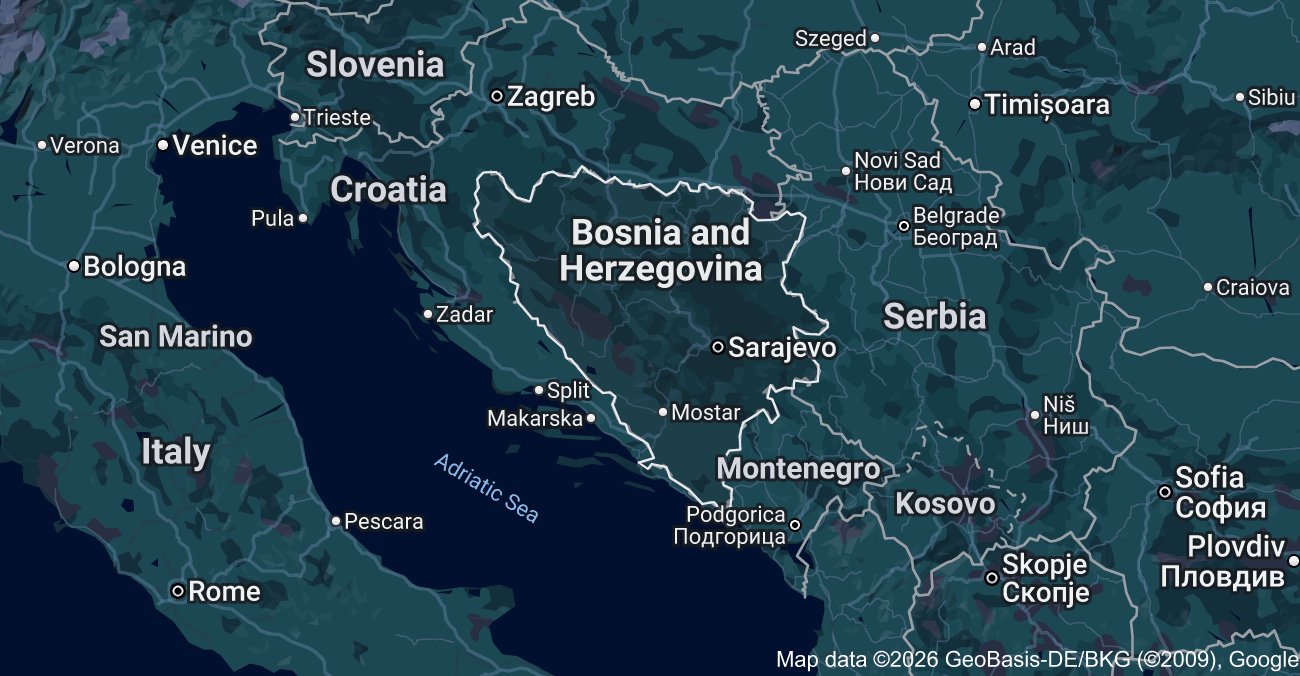
Despite the destruction and suffering caused by the Balkan War (1991-95), this small country in the heart of Europe is a natural bridge between Islam and the West, and has been for centuries a place of coexistence between Muslims, Catholics, Orthodox Christians, and Jews.
On the War (1991-95)
Bosnia now has a population of 4 million. In addition, about one million people fled abroad or were driven from their homes because of the war. 200,000 people were killed during the conflict. It was the most prolonged and violent armed conflict in Europe since World War II. Of all the victims, 65% were Bosnian Muslims, 25% Serbs, and 8% Croats. Nearly two million people suffered the consequences of ‘ethnic cleansing’. About a thousand mosques were destroyed. Sarajevo, Bosnia’s capital, suffered the longest siege of a city in the history of modern warfare: nearly four years of siege by Serbian forces, from April 5, 1992 to February 29, 1996.
The peace agreement reached in 1996, in Dayton, Ohio, with American mediation, is far from perfect or fair; it left the country with a back-broken constitution and allowed the ethnic cleansing gains to be preserved and the injustices it imposed to be perpetuated. However, it allowed the beginning of the country’s reconstruction.
Bosnia has a centuries-old experience of peaceful coexistence between different communities. Since the formation of the nation in the Middle Ages, its cities have exhibited an enviable tolerance, based on the concept of ‘convergence in difference’. This was already an intuitive knowledge of the ‘transcendent unity of religions’. In Bosnia’s long history, one will not find a single instance of persecution against Christians or Jews. Bosnians Muslims have lived this last century and half almost with no political protection. And yet they never persecuted Christians or Jews—occasional harassment against those communities always came from external powers. But the war has undermined this living environment and the Bosnian cities were, against the will of most of its Catholic, Orthodox, Jewish and Muslim inhabitants, transformed into spaces where the ‘other’ and the ‘different’ were forced to choose one option: conversion, escape, or death—fatalities that have their roots in the ignorance of the other’s patrimony.
On Bosnia’s Pluralist Heritage
In its history, Bosnia has always belonged to the European ambiance, but with a unique confessional pluralism, different from the rest of the continent. The aspirations of the communities of the Bosnian space initially assumed three main forms: the Orthodox Christian, the Catholic, and the Bosnian autocephalous church. This latter virtually ceased to exist in the 15th century, with the arrival of Islam, which absorbed many former Bosnian ‘krstjanos’ that were neither Catholics, nor Orthodox.
By the way, the opinion that Ottoman rule was a despotic one is wrong; for Bosnia, the Turks provided a four century period of peace and prosperity. During the first half of this long period of Ottoman government, Bosnia benefited from an administration that was as good as any in the Europe of then and Christian subjects were not worse off than serfs in other lands of Eastern Europe.
In the beginning of the 20th century, my grandfather, a very pious man and proud of Islam, father of seven children, considered leaving the country; he was planning to settle in Turkey, due to the difficulties experienced by Muslims here. It was not an isolated case. Today, only a quarter of Bosnians live in the country, while about three-quarters are now in Turkey. But my uncle persuaded my grandfather to stay. “Here is your country,” he said. And he stayed, together with my father.
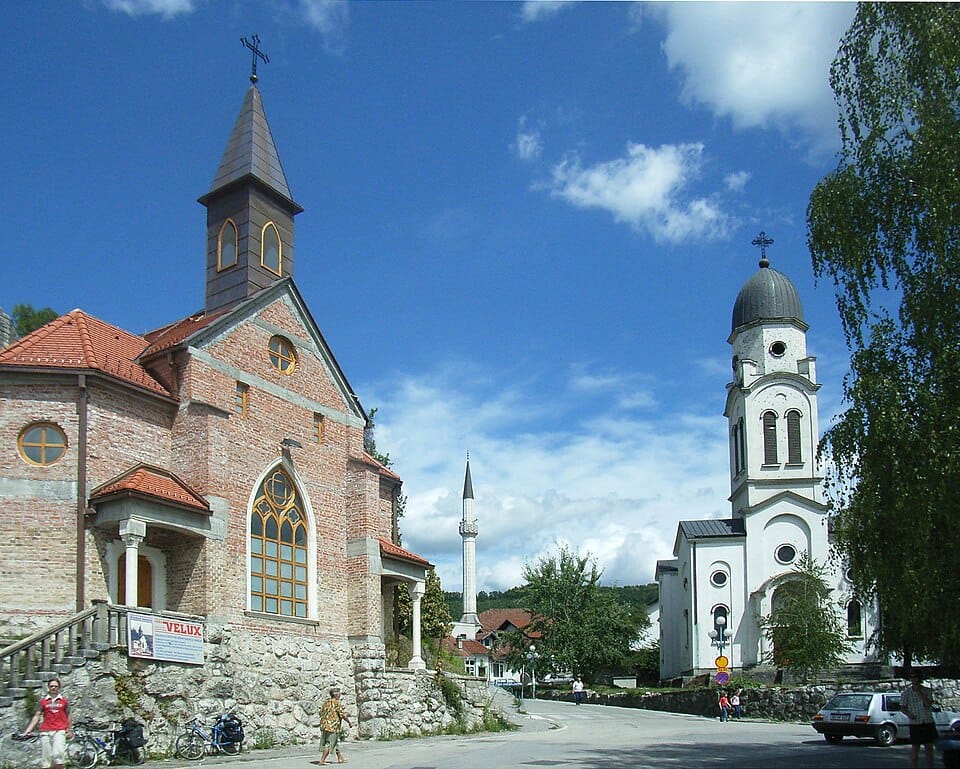
Today, Sarajevo is one of the more plural and open cities in the world. Perhaps one will encounter the most diverse society of today in the United States; in many American cities today one will find Buddhist pagodas, Sikh temples, mosques, synagogues, churches of various Christian denominations. But plurality is a matter still more alive here in Sarajevo, where any Catholic, Jew, or Orthodox Christian can freely attend his church or synagogue, can organize debates and seminars, and publish his newspapers and books. Notwithstanding this confessional pluralism, the entire Bosnian population speaks a single language (Bosnian‑Croation‑Serbian language), which is also spoken outside its borders. There are very few European societies in which one will find such a diverse society and yet so integrated and cohesive one as Bosnia.
On the Challenges of the 21st century
Bosnia entered the 20th century divided between Serbia and two empires, the Austro-Hungarian and the Ottoman. After World War I, the Kingdom of Serbs, Croats, and Slovenes came into being, and Bosnia was almost erased from the map, with the national identity deleted from the political horizon. After World War II, socialist Yugoslavia was established, according to Marxist-Leninist principles, and the Bosnian Muslims became second-class citizens, without the same rights as Serbs and Croats. We were a unique situation in Europe, a phenomenon without comparison. For Yugoslav Marxism, confessional and national identities were a mere transitional phase towards the perfect society, without classes and without religion, so that such identities were seen as resulting from a lower level of social development.
it is a living laboratory for many nations of the world
Finally, in the last decade of the 20th century, during the process of disintegration of Yugoslavia between 1991 and 1995, the social and confessional pluralism in Bosnia was an object of deep suspicion and distrust, and its more powerful neighbors invested full force against it, to the point that one can speak of genocide. Despite all these threats to our religious diversity and the trauma of persecution, Bosnia managed to survive the 20th century, and entered the 21st century as an independent state, in which adherents of different faiths continued to live together.
But the subject of pluralism remains a real issue, because the present condition is still one of an impasse as regards a truly sustainable political order in the face of threats from ultra-nationalist neighbors. The dominant tendency is to territorialize confessional and ethnic distinctions, which conflicts with the cultural uniqueness and confessional plurality in Bosnia. But I see no other future for Bosnia, as it is not an exclusively Muslim society but is also Christian and Jewish. In this sense, it is a living laboratory for many nations of the world.