We have bestowed dignity on the progeny of Adam.
— Holy Quran, 17:70
Is Islam opposed to free speech? It may certainly seem so when someone in the name of Islam kills another for publishing material deemed blasphemous or hateful to Muslims. Even more so when the retaliation is as shocking as a public beheading, as in the case of the French teacher, Samuel Paty, who was gruesomely murdered in a Paris suburb in October 2020 by a Muslim assailant for showing his students the incendiary ‘Prophet Cartoons’ which had earlier led to the Charlie Hebdo atrocities in 2015. And the impression was fortified when the Muslim ‘street’ appeared more outraged by President Macron’s defense of Paty’s right of free speech and by the displaying of the offensive Cartoons on French public buildings than by his odious killing.
Islam neither opposes free speech nor humane values.
In the aftermath of the 2015 killings and the recent ones, some have questioned whether there is something inherent in Islam that renders it intolerant of, or fundamentally incompatible with, Western liberal, if not humane, values. The conflating of the despicable killings and false stereotype of an intolerant Islam is particularly dangerous when it exploits ignorance about Islam for political ends. The reality is that Islam neither opposes free speech nor humane values. Those familiar with its teachings know that the religion of ‘peace’ and ‘self-surrender’ (both implied by the etymology of the term islam) respects both freedom and human dignity, seeing these as interconnected and mutually reinforcing values.
As is the case with many other faiths and philosophies, Islam does not regard any freedom as absolute, but as subject to metaphysical norms which we will discuss below. Every freedom is therefore enhanced by a respect for what the late Rabbi Jonathan Sacks has called ‘the dignity of difference’ so that the undermining of dignity erodes freedom, just as transgressive freedom undermines dignity. On this understanding, and without ascribing commensurability to the acts, both the publication of the provocative ‘Cartoons’ which intentionally profaned the Holy Prophet, and the retributive killing which sought to avenge his honor, violated the norms of human dignity.
The term ‘dignity’, denoting ‘value’ or ‘worth’, has deep metaphysical roots, which links it with the notion of the sacred. Something is sacred because it resonates the transcendent wholeness of reality which metaphysics, philosophy and religion term the ‘Absolute’ or ‘Truth’ or ‘God.’ Sacredness contains the idea of what William Blake referred to (in Auguries of Innocence) as seeing ‘a world in a grain of sand’ and ‘a heaven in a wild flower’, or of what Gerard Manley Hopkins (in God’s Grandeur) called ‘the dearest freshness deep down things.’ It is the meeting point of the immanent and the transcendent, a visionary threshold of dignity and compassion found in the innermost core, or ‘Heart’ of Man.
The Holy Quran teaches that humanity, having been created from ‘a single soul’ (an-nafs wahida) (4:1), is endowed with a primordial nature, al fitra, residing in the Heart, and that the true purpose of religion is to conform to this intrinsic nature, ‘the natural disposition which God has instilled into Man’ (30:30), thereby honouring the primordial covenant between God and Man (7:172). This all-embracing sacred nature, which is endowed with moral intelligence (al-furqan) (3:4), is the source of human perfectibility because, as imago Dei, it is a reflection of the Divine Nature, denoted by the Quranic term rahma, Loving and Compassionate Mercy, as affirmed in God’s declaration ‘I have inscribed rahma upon My Self as a law’ (kataba ‘ala nafsihi rahma) (6:12). Man’s primordial disposition is the basis of the Quranic claim that he is created in ‘the best of moulds’ (ahsani taqweemin) (95:4), intrinsically noble, intelligent, loving and humane, and is thereby the bearer of dignity (karama). But Man, who also possesses free will, is ‘created weak’ (4:28) and is susceptible to corruption; through the pursuit of the world and his passions, he can cover up his true nature, and thereby squander this gift of inherent dignity. That is why the Holy Quran repeatedly emphasizes the importance of using one’s free will to cultivate awareness of God (taqwa) (7:201), to call upon God by heart and tongue (dhikr) (2:152), and to conform one’s egoic nature to one’s God-given nature (30:30) through self-surrender to God (islam) (6:125) and through virtuous deeds manifesting as beauty (ihsan) (2:195). Thus, the Holy Quran states, ‘Verily, God is with those who have spiritual awareness and who do what is beautiful’ (16:128). Faith and virtue, then, are the only prerequisites for salvation in Islam (18:88) and one is free either to choose the Straight Path or to reject it (4:79) because faith is not a matter of compulsion but of personal choice.
Freedom exists for a purpose greater than itself: it exists for the sake of love.
Here we see the central purpose in Islam of free will: the ennobling of Man through self-transcendence. While Man is free to follow his own egoic desire (hawa) (30:29) and the biddings of the sinful self (an-nafs al-ammara) (12:53), he is also free to exercise spiritual intelligence (iman) and thereby to come to know and love God. The Holy Quran makes it clear that God did not choose to create humans as automatons (36:66-67), rather He created Man in the Adamic prototype as a morally intelligent creature with the freedom to know and love Him. It is only through freely given love – only through the voluntary submission of the lover to the Beloved – that love and life itself become meaningful.
This is the core teaching of Islam. Hence the famous Quranic adage, ‘no compulsion in matters of faith’ (2:256). Any compulsion would violate not only the soul’s freedom but also the grace of its dignity, for the soul’s true worth lies in its potential to freely love. Freedom exists for a purpose greater than itself: it exists for the sake of love. So, as the Indian sage and Nobel Laureate, Rabindranath Tagore stated in his book, Fireflies, ‘I am able to love my God because He gives me the freedom to deny Him.’
Individuality, and the freedom that goes with it, can never legitimately operate outside this matrix of wholeness.
Freedom and dignity are therefore optimized through love and the natural constraints it implies. These constraints, which are implied not only by the Quranic notion of the human ‘bond with God’ (‘ahd Allah) inscribed in human nature (2:27, 13:25) but also in the ordained limits of the Divine Nature, which is circumscribed by love or rahma (6:12, 6:54), and do not curb, but rather enhance, selfhood. To be true to oneself (as Polonius counsels his son, Laertes, in his farewell homily in Shakespeare’s Hamlet) enables one thereby to be true to all men. To conform to al-fitra, in Quranic terminology, does not demand the erasure of one’s individuality but, to the contrary, it enhances individuality by embracing it within a relationship of wholeness that fosters human dignity. Individuality, and the freedom that goes with it, can never legitimately operate outside this matrix of wholeness. When it overreaches by ignoring the matrix to pursue egoic desires, it inevitably encounters limits. Literature and mythology are filled with examples of overreaching transgressors: Prometheus, Orpheus, Psyche, Icarus, and Faust, to name a few. Religion too teaches of freedom’s limits and the consequences of transgression: the disobedience of Iblis, of Adam and Eve, and of Lot’s wife, are examples. Freedom, therefore, has natural bounds, and the notion of limits is neither capricious nor arbitrary but has metaphysical roots in the substance of love. The threshold is liminal and points to transcendence.
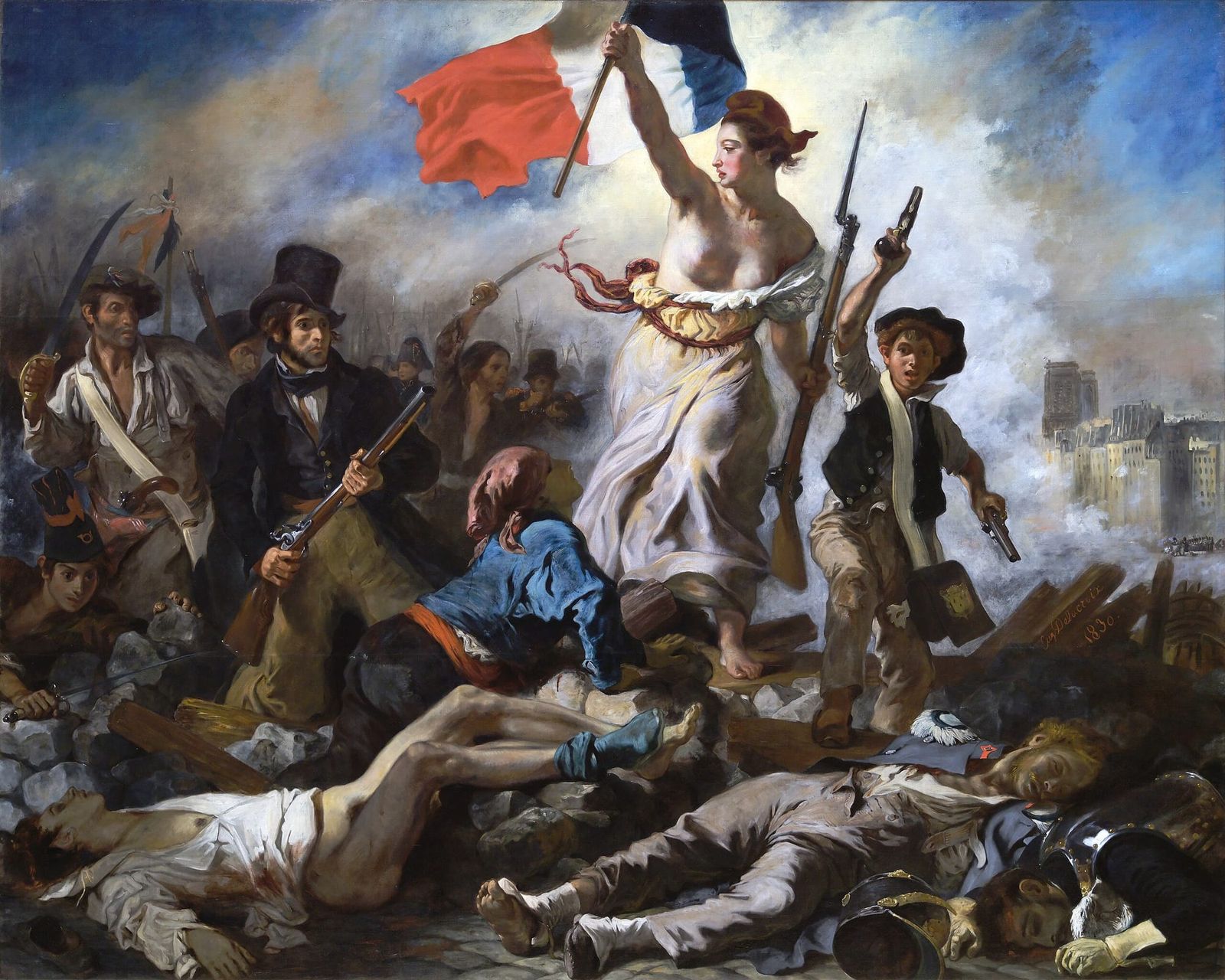
One of the hallmarks of modernism has been its individualism which, in secularist countries such as France, is prized as ‘Liberty’, an element of the Revolutionist’s tripartite motto of ‘Liberté, égalité, fraternité.’
the individual’s Liberty is subject to the dignity inherent in affirming the Equality of others and the relational bonds of Fraternity.
But even here, the other elements of the slogan suggest that Liberty is bounded by certain limits: the individual’s Liberty is subject to the dignity inherent in affirming the Equality of others and the relational bonds of Fraternity. This view of human freedom resonates with Quranic ideas, as we can see. It is only in the absolutizing of freedoms – decoupling Liberty from its relational elements – that individuality becomes transgressive and can be labeled as ‘individualism.’ Similarly, Equality cannot be interpreted in the language of political correctness to suppress individuality, precisely because the dignity of each individual resides in their uniqueness, in their difference; hence, ‘the dignity of difference.’ And so too, Fraternity cannot be emphasized at the cost of individuality; it cannot be reduced to an imposed communalism, rather it has to spring from a fostered sense of genuine community, of serving the common good. These ideas – respecting individuality, human dignity, and our common humanity – are all values which lie at the heart of Islam.
Returning now to the questions which have emerged from the Charlie Hebdo and Paty incidents, it will be apparent that Islam, while not opposed to free speech, does not condone offensive and hurtful expression; as the Holy Quran states, ‘God does not love the public utterance of hurtful speech’ (4:148). The emphasis here is on respecting the natural bounds of human dignity, on not absolutizing the freedom of speech to the point that it becomes transgressive.
the Holy Prophet is clearly on the side of those who would ‘speak truth to power’
Most countries, while respecting free speech in the interests of the rights of individuals to express views critical of the State or its institutions and to engage in the legitimate exchange of ideas, have nevertheless enacted laws to curb hateful or transgressive speech. Admittedly, the curbs can sometimes be heavy-handed, intended to muzzle legitimate dissent by writers and journalists, and while such heavy-handedness is evident today even in certain parts of the Muslim world, this is contrary to the spirit of free expression in Islam. On this score, the Holy Prophet is clearly on the side of those who would ‘speak truth to power’, as can be seen, for example, in the following Hadiths: ‘Tell the truth, even if this be unpleasant’ and ‘Speak truth to a tyrannical ruler.’
In terms of the limits of free expression, there are gray areas, particularly in the domain of what is termed ‘art’, where curbs on expression are often regarded as a form of unwelcome censorship. In the secular West, there is a greater indulgence of ‘art’, particularly though its subjectivist expressions, even where it offends the norms of human dignity. An example of this can be seen in the case of the photograph by Andres Serrano of a crucifix depicting Christ immersed in the artist’s own urine, and titled ‘Immersion (Piss Christ)’, which garnered both awards and controversy when it was displayed in the late 1980s.
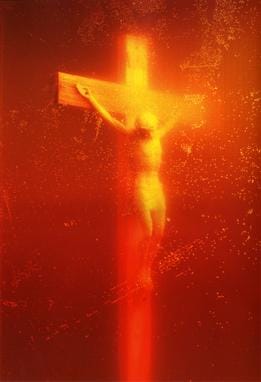
Serrano, a devout Catholic, regarded his work as Christian art, and he was defended by, among others, Sister Wendy Beckett, the Catholic nun and respected art historian. This degree of tolerance to a controversial image of Christ will be contrasted with the Muslim reaction to the satirizing of their Holy Prophet. Underlying the debate about freedom of expression are deeper questions relating to the nature of ‘art’ and about its relationship to the sacred, which are beyond the scope of this essay. However, the ‘Prophet Cartoons’ contained undoubtedly hateful images which, unlike Serrano’s photograph, clearly profaned the Prophet in the eyes of all Muslims, not just the Islamicist terrorists. Slanderous and almost pornographic, the images provoked outrage. While Paty may not have intended the mischief which the originators of the Cartoons may have recklessly, if not intentionally, provoked, his decision to show the images to his students in the name of free speech was ill-advised, to say the least. It was also insensitive to universal norms of decency and the respect for human dignity. So too was the decision of French authorities to later display those images on public buildings in the aftermath of Paty’s killing, in a show of solidarity for French values and for the man who, in President Macron’s words, ‘embodied’ them. Paty’s murder, like the subsequent stabbings at a basilica in Nice, was an indefensible act of terrorism which was justly condemned by Muslim groups, and others, worldwide.
But because of the reaction of the Muslim ‘street’ to President Macron’s purported defense of free speech in this case, and due to the insensitive displaying of the offensive Cartoons subsequently, the false impression has been created that Islam encourages retaliatory killings because it does not tolerate free speech. As will be evident from the earlier part of this essay, this is completely false. The ethos of Islam is founded on compassionate love (rahma) and the sacredness which springs from metaphysical oneness (tawhid).
The Prophet himself is regarded as a model of tolerance and compassion among those who have studied the Seerah. He was an early champion of pluralism (as in the Constitution of Medina) and religious tolerance (as in the Prophet’s Covenants, which guaranteed the protection of religious minorities), and he was also an advocate for social reforms far in advance of the norms of his era, for example, with regard to the rights of women and of slaves. In his personal life, he exemplified the Quranic dictum, ‘Repel evil with conduct that is better’ (41:34), and his character was known to be imbued with tolerance, patience, mildness, consideration and compassion. Those were not qualities displayed by the promoters of free speech beyond the bounds of decency and dignity nor by the vengeful killers in Paris and Nice. To avoid such tragic incidents in the future, it would be best if Muslims and non-Muslims alike reflected on the true ethos of the Holy Quran and the character of its beloved Prophet, focusing on the underpinning of human dignity that in reality unites both Muslims and those who espouse secular liberal values.