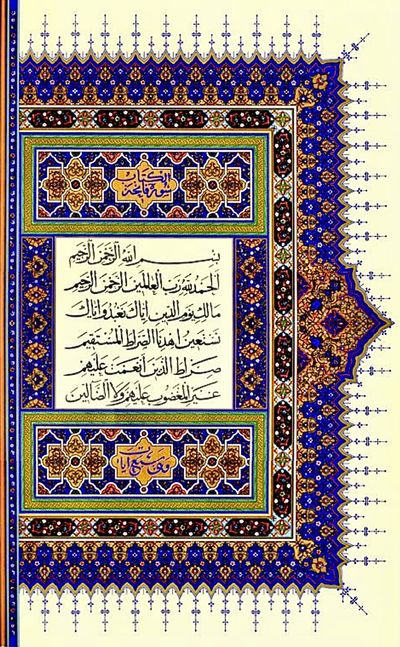
1. "In the Name of Allah, the All-Beneficent, the All-Merciful,"
2. "All praise is due to Allah, the Lord of the worlds,"
3. "The All-Beneficent, the All-Merciful,"
4. "Master of the Day of Judgment,"
5. "You alone do we worship, and You alone do we ask for help,"
6. "Guide us to the Straight Path,"
7. "The Path of those You have blessed—not of those who incur wrath, nor of those who are astray”.
PREFATORY REMARKS
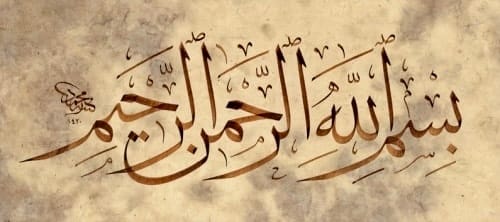
The Sura Al-Fatiha is the opening sura (chapter) of Islam’s Holy Book, the Qur’an (Recitation). It is also its very heart.
The Arabic term ‘fatiha’, literally means ‘opening’, but it also connotes ‘revelation’, ‘explanation’ and ‘achievement’. In its alchemical meaning: what is opened is the inner eye, the eye of the Heart; what is revealed is the all-encompassing sacred Presence; what is explained is the way to the Center of one’s being, to one’s true nature; and what is achieved is self-mastery, the victory of attaining the abode of Peace (dar-as-salaam). The term ‘islam’ thus denotes both ‘submission’ (of the soul to the Spirit) and ‘peace’ (the serenity and beatitude attained by the soul when it is centered, through submission, in the Spirit). The very name ‘fatiha’ therefore is an invitation to enter upon a spiritual pilgrimage to the sanctum of the Heart. This is what the Qur’an refers to as ‘haraman aaminan’, the ‘sanctuary secure’ (28:57, 29:67).
Esoterically, the ‘opening’ denotes the meeting point of the human and the divine in the transcendent space in the soul, known as the ‘Heart’. It is the liminal portal to the Absolutely Real, the sacramental point of convergence between manifest reality and its hidden substance. The Way to the Heart is a ‘Straight Path’ (1:6) by which the soul, infused with awareness of the all-pervasive spiritual reality, conforms herself to the Spirit. This awareness and conformance constitute the ladder leading to the Heart, that transcendent Center which is the soul’s origin and end, her depth (Self) and apex (Spirit), which are intrinsically One, and the basis for her equilibrium (Peace) in the world. The soul’s journey to the Heart is a return (ma’ad) from the peripheral exile of forgetfulness (ghafla) to a spiritual homecoming in the cardial Center, a transformation from the Outer Man to the Inner Man (the term ‘Man’ is used here and elsewhere in this paper, as anthropos, not in a gendered sense). The soul becomes aware of her spiritual nature (fitra), and, being aware of the Spirit in all things (taqwa), develops a natural bond of wholeness and spiritual kinship with the sacred web of creation (the ‘Sacred’ is the imprint of the Absolute Reality in contingency) thereby discovering the peace of being-at-one, in peace and in equilibrium, with all. This spiritual bond implies responsibilities: endowed with the capability of innate spiritual awareness or Intellect (‘aql), the soul is entrusted with stewardship (amanah) of the world, and is impelled by a sense of intrinsic connection to live in harmony with all, as a ‘community’ (umma). To deviate from this is ‘to go astray’ (1:7).
Al-Fatiha’s foundational importance can be seen in its designation by Prophet Muhammad (peace and blessings be upon him) as ‘Umm al-Kitab’, or ‘Mother of the (holy) Book’[[1]]. The Sura was revealed in Mecca early in his mission[[2]], and, as though to underline its central importance, it was reputed by Hadith to have been subsequently retransmitted to the Prophet by an angel descending from a sealed door on the occasion of his Mi’raj or Heavenly Journey.[[3]] The handing down of this divine message after its initial revelation is symbolic of ‘Tradition’ as the hermetic link between Eternity and Time. ‘Tradition’, both by its etymology and special use, is the transmission of eternally revealed truth through time in formally sanctioned ways so as to preserve its principial ‘orthodoxy’ or authentic spiritual content, whose true meaning would otherwise be eroded by time or lost in translation. Inasmuch as the Mi’raj itself symbolizes the potential of the soul to be resurrected and reintegrated into the Spirit, Al-Fatiha can also be regarded as indicating the Way for the soul’s spiritual transformation.
The Sura is of such doctrinal and devotional importance that, according to accepted tradition, no prayer is valid unless preceded by Al-Fatiha.[[4]] Its “seven oft-repeated verses”[[5]] are recited daily as part of every devout Muslim’s canonical prayer, and so it is instructive to reflect on the Sura through the prism of prayer. Prayer is a way for the human to commune with the divine. It is the soul’s remembrance (dhikr) of God, the polishing of the mirror of the Heart through contemplation, the soul herself being the ‘Temple’ of such ‘contemplation’, as she bears the divine imprint of harmony in her very nature (fitra) (30:30). The substance of this primordial nature is universal and One, in keeping with the principle of the Oneness of Reality (tawhid), and it therefore transcends and precedes any formal religious colouring or affiliation.[[6]] This integrating substance constitutes the bond between Man and God, and thereby between soul and Spirit, whose signs (ayat) are immanently present within the world of the ever-renewing theophany (tajalli). The soul is bidden by the Qur’an to cultivate spiritual awareness (taqwa) because the world (dunya) is a place of forgetfulness (ghafla), where the distracted soul is always at risk of losing sight of her true spiritual provenance and noble purpose within the clouds of illusion. Hence, the ordinance, ‘So remember Me; and I will remember you. And be grateful to Me and do not deny Me.’ (2:152). What is to be remembered is the innately spiritual nature of reality, present in the signs of the theophany and in the innermost recesses of the self.
The term used in the Qur’an to denote God is ‘Allah’ (Subhanahu wa ta'ala - glorified and exalted is He), about which more will be said later. The term denotes the quintessential and all-pervasive reality which, in keeping with the principle of tawhid, is beyond all attempts to define it reductively, as radically One and Absolute in a manner that would derogate from its Infinite Presence. Allah can neither be reduced to the conditions of existence nor be excluded from it. The term therefore denotes a reality that is both transcendent and immanent, Absolute and Infinite. As the principle of all-encompassing Infinitude and All-Possibility encompassed in Absoluteness, this core reality is necessarily inscribed in the Heart of the soul as her immanent Self, providing her with a portal to her spiritual substance. Thus, in the words of the Dominican mystic, Meister Eckhart (c.1260-c.1328), ‘The eye with which I see God is the same eye with which God sees me’ (Sermon 12).
Al-Fatiha is a dialogic prayer of invocation, glorification, petition and response
Prayer, in this understanding, is the opening of the inner Eye to the soul’s liminal awareness of her own nature, which, like that of God, in whose image she is created, is profoundly loving. In Arabic, the term ‘fatiha’ is a feminine noun, inviting us to focus on the feminine qualities of the divine substance, present in the Heart, such as compassion and nurture, qualities also indicated by the term Rahma (discussed below). The idea of an ‘opening’ is itself indicative of the feminine inclusiveness of the divine reality, and reminds us that the Infinite is a facet of the Absolute, containing everything in an all-encompassing embrace of Oneness.
The term ‘fatiha’ also suggests the feminine quality of receptivity. Man is by nature intrinsically faithful, receptive to ‘Revelation’, understood in the broadest sense, that is, through the soul’s sensitivity to the spiritual signs of the theophany, in the ‘innermost self’, in the ‘outermost horizons’ (41:53)[[7]], and in the messages conveyed by divine messengers throughout time, including through the revealed scriptures of all the faith traditions.[[8]] This propensity for spiritual sensitivity or ‘witnessing’ is the deeper significance of the Shahada which is the credal affirmation of every Muslim (discussed below). Thus, from the point of view of the one who prays, the term ‘fatiha’ invites an attitude of openness to transcendence, and the receptivity of the devotee in the act of worship. Prayer is to be undertaken piously, devoutly, open-heartedly, and in a manner reverent to the presence of the Sacred. God-consciousness (taqwa), with its corollary of reverence for the Sacred and of compassion, is thus a central quality of faith, and a hallmark of one who is on the Straight Path.[[9]]
In terms of its structure, Al-Fatiha is a division between (in the first half of the text) affirming the transcendent status of the dominion and sovereignty of God as the creative and sustaining matrix of existence, and (in the second half) affirming Man’s dependence on God; and, in view of that dependence, it includes a plea for God’s guidance to help Man be on the Straight Path. God is invoked, as the One reality, whose nature (the model for Man) is goodness and mercy, to whom all gratitude, praise and glory are due. God is acknowledged to be the soul’s origin and end, and her sovereign judge. Man is the petitioning creature, subsisting in a state of privative contingency, a servant dependent on God for guidance, sustenance, bounty and mercy. In this sense, the Sura also resembles The Lord’s Prayer taught by Jesus (peace and blessings be upon him) in his Sermon on the Mount (Matthew 6:9–13). It too follows the structure of Invocation, Exaltation (of God’s sovereign and archetypal status), and Petition.
Al-Fatiha is a dialogic prayer of invocation, glorification, petition and response, offered by the invoking and beseeching servant (Man) to the responding master (God). According to a Hadith, Allah, the Glorious and Exalted said, “I have divided the prayer between Myself and My servant equally and My servant shall be granted what he asked for.” Therefore, when the servant says, 'All praises and thanks are due to Allah, the Lord of the worlds', Allah says, “My servant has praised Me.” When he says, The All-Merciful, the Most Merciful, Allah says, “My servant has extolled Me.” When he says, 'Master of the Day of Judgement,' Allah says, “My servant has glorified Me.” When he says, 'You Alone we worship and Your aid Alone do we seek, Allah says, “This is between Me and My servant and My servant shall have what he requested.” When he says, 'Guide us to the Straight Path, the Path of those whom You have favoured, not [the path] of those who have earned Your anger, nor of those who have gone astray,' Allah says, “This is for My servant and My servant shall have what he asked for.” [[10]]
Through the recitation of Al-Fatiha the devotee not only enters into dialogue with God but also thereby receives the purifying benefit of His gracious response (‘My servant shall be granted what he asked for.’) One can appreciate therefore why Al-Fatiha is also regarded as a healing prayer and why the Prophet called it Al-Ruqya (‘the healing’) [[11]]. Muslims also refer to it as Al-Shifa’ (‘the cure’).
For the prayer to be efficacious, certain necessary preparations are undertaken by the devotee as a condition of entering into the dialogue with God. These are purifications of the body, mind and heart, including bodily ablutions (wudu) (5:6), mental purification (ikhlas) of mind, pledging concentration and sincerity of intention (niyyah), and the recitation of a ritual formula to ward off malign spiritual influences (a'oodhu billahi minash-shaytaanir-rajeem) (‘I seek refuge in Allah from the accursed Satan’). After that preparatory purification, the devotee is ready to begin the recitation of the healing prayer.
THE BASMALAH
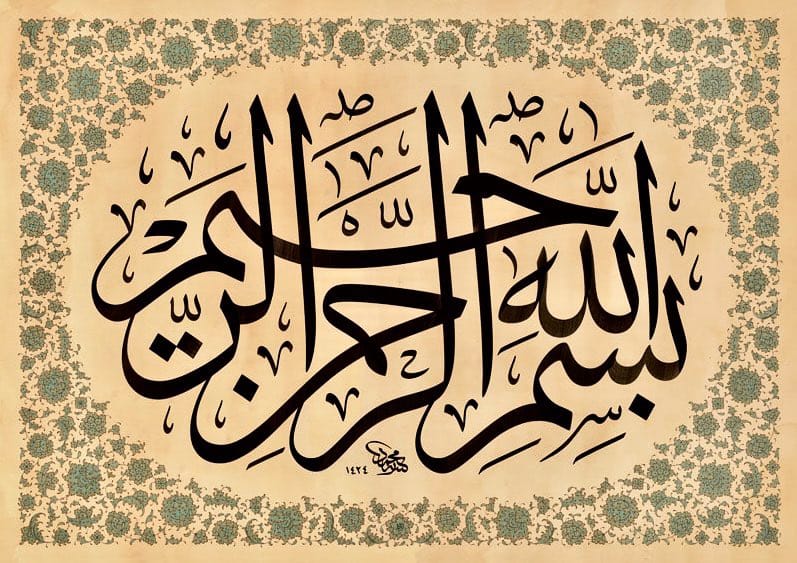
Al-Fatiha begins with the Invocation. The first words of the Sura are ‘Bismillahir Rahmanir Rahim’ (In the Name of Allah, the All-Beneficent, the All-Merciful). This formula, known as the ‘Basmala’, precedes every sura except the ninth chapter of the Qur’an, At-Tawbah [[12]], and is customarily used to inaugurate any new enterprise in a Muslim’s life.[[13]]
The initial phrase ‘Bis‘mi’ (In the Name), begins with the Arabic consonant, Ba, written as follows:

Esoterically, the entire Qur’an is said to be contained within Al-Fatiha, which in turn is said to be contained in the Basmala, which in turn is contained in its first letter, Ba. The ineffable origin of the Ba, moreover, is said to be occulted within the Dot (Nuqta) beneath the Ba, signifying the Hidden Essence of God. One recalls here that creation arises from a primordial point of Origin (the Hidden Treasure[[14]] represented by the punctum or Nuqta) whose Nothingness contains All-Possibility. Mystical interpretation symbolically likens this ‘point vierge’ (to use the expression of Louis Massignon in Hallajian metaphysics, a term later borrowed by the Cistercian monk, Thomas Merton) to the Heart, the meeting-point of Man and God. According to a non-canonical Hadith, accepted in Sufi and other esoteric traditions, ‘Ali Ibn Abi Talib (the Prophet’s cousin and son-in-law, the fourth Caliph of Islam, the first Shi’a Imam, and one of the pre-eminent esoteric interpreters of Islam) is reputed to have said, ‘I am the Dot beneath the Ba.’ [[15]] ‘Ali was also understood, according to a canonical Hadith, to have been proclaimed by the Holy Prophet as ‘the Gate to the City of Knowledge’ [[16]], which gnostic (irfani) traditions equate with the archetype of the Heart and of gnosis.
creation is the descent of Essence into forms, while gnosis reverses the journey transformatively, through a gnostic ascent from forms to Essence
The multi-layered levels involved in this symbology (Qur’an > Fatiha > Basmala > Ba > Nuqta) point to implications for cosmology and hermeneutics. First, reality is planimetric and hierarchical, enfolding layers or levels which emerge through the process of creation, proceeding from the hidden and transcendent Essence to the materially manifest and sensible world of forms. Second, as an epistemological corollary of the Hadith of the Dot beneath the Ba, reality can only be interpreted by those who possess its hermeneutical understanding (ta’wil) and the ability to trace outer appearances back to their principial Source. To restate this differently, creation is the descent of Essence into forms, while gnosis reverses the journey transformatively, through a gnostic ascent from forms to Essence. The passage from the outer to the inner is understood as a return to the realm of the Hidden Treasure, to the mystery of the transcendent Dot beneath the Ba. It is a journey of kenotic self-naughting (fana’ fi’Llah) into the plenitude of the sanctum of the Heart (baqa’ bi’Llah).
The word ‘Ba’, meaning ‘in’ or ‘with’, implies connection with(in) something, and points to the deep bond with the Oneness of Reality. Like terms such as ‘religion’, ‘covenant’, ‘yoga’, ‘sangha’, ‘yantra’, ‘anattā’, ‘dao’, ‘qi’, ‘anam cara’, ‘logos’, henosis’, ‘manitou’, among many other similar terms in all faith traditions, the word Ba relates to a fundamental aspect of faith, namely, the underlying reality of the Spirit’s integrating ‘wholeness’ which characterizes a soul’s potential for holiness, healing and harmony (‘wholeness’ is the basis of ‘holiness’ and wholesomeness, and of being ‘hale and hearty’ – the latter expression denoting ‘being of good Heart’). The connection of the soul is, inwardly and vertically, with God and, outwardly and horizontally, with the created theophany – the latter connection subsisting intrinsically in view of the former, as implied by the symbolism of the Cross. This is the sacred ‘connection’ of love, in accord with the twin Supreme Commandments (love of God and love of neighbour) in the Judeo-Christian traditions. The aim of religion, therefore, is to reconnect the soul with her Spirit, and thereby with the harmonic ‘peace’ which is her natural disposition.
‘Bis‘mi’ (In the Name) derives from ‘ism’, the Arabic for ‘name’. The Invocation is premised on a certain alchemy of naming: the invoker connects with the invoked by ontologically recognizing the nature of the named. Through invocation, the invoker becomes the Invoked (this is the basis for all invocatory prayer practices, such as the Jesus Prayer in Hesychasm, Japa or Mantra practices in Hinduism, or Nembutsu in Buddhism).
Inasmuch as creation is a divine Self-Disclosure, a theophany (tajalli) of qualities radiating from the divine treasuries (khaza'in), each creature is a sign of God (ayat Allah). Nothing in creation can exist without qualities or attributes loaned to it by God from the divine treasuries: ‘And there is not a thing but with Us are the treasuries thereof, and We send it not down except in a known measure.’ (15:21) To know a quality or attribute of a creature is therefore not only to connect with its nature but also with an aspect of God, its Source and Font. One recalls here that Adam, as archetypal Man, was ’taught the names’ (wa-'allama Aadamal asmaaa'a) (2:31), signifying humankind’s innate ability to witness God through his qualities resplendent in the theophany. This witnessing is understood by Muslims to be a covenantal obligation of humanity, and a feature of taqwa. In the pre-existential Covenant of Alast, the Qur’an records (7:172) that humanity was asked by God to attest to the divine reality as a condition of being granted the gift of existence.[[17]] This primordial witnessing of the primacy of spiritual reality, of the Absolute over the contingent, of essence over existence (refuting the basic premise of modernist ‘existentialism’) is replicated in the Muslim’s credal Shahada, and is a central declaration of faith.[[18]]
Al-Fatiha, opens with the Invocation, In the Name of Allah, the All-Beneficent, the All-Merciful, as a way for the invoker to connect with God by remembering the quintessential qualities of the divine nature being invoked.
The fact that Man can connect with God simply by invoking Him in the Heart, particularly through His Most Beautiful Names (asma ul-husna), is therefore a fundamental feature of prayer. Invocation is a form of dhikr. As the Qur’an states, ‘Allah – there is no god except Him. He has the Most Beautiful Names.’ (20:8); ‘Call upon Allah or call upon the Most Compassionate—whichever you call, He has the Most Beautiful Names.’ (17:110) And so, Al-Fatiha, opens with the Invocation, In the Name of Allah, the All-Beneficent, the All-Merciful, as a way for the invoker to connect with God by remembering the quintessential qualities of the divine nature being invoked. The Basmala thereby serves as a formula for both taqwa and dhikr.
The term used to name God is ‘Allah’. This appellation is not unique to Muslims. The Aramaic term for God was ‘Alaha’, the basis of the Hebrew term ‘Alohim’. All Arabic-speaking or Semitic monotheists, including Jews and Christians, have long invoked God by the appellation ‘Allah’. The term had currency before the historic advent of Islam in seventh century Arabia, and is still used by non-Muslims to this day. For example, Jews, Catholics and Copts in Arab cultures refer to God as ‘Allah’ in their own vernacular and prayers. It is sometimes said that the name is a combination of the definite article ‘the’ (al) and the Arabic for ‘god’ (ilah), to emphasize the uniqueness of the single deity of monotheists, but the appellation ‘Allah’ is best regarded as sui generis.
We have referred earlier to the Dot beneath the Ba, the Nuqta, the primordial point representing the Hidden Essence of God. When this Essence expresses itself, its first manifestation is as the letter ‘Alif, symbolizing the Origin. The ‘Alif is, felicitously, the beginning of the Name, ‘Allah’, which is written (‘Alif - lam -lam - ha) as follows, from right to left:

The ‘Alif, is a vertical downward stroke of the Pen (al-Kalam, the figurative instrument of revelation), and represents the metaphysical descent of God from the Hidden Essence into the realm of the manifest. What is veiled in the Essence is thereby revealed in form as Being – the substance of Love. It is unconnected to the letters which follow, denoting the transcendent quality of divine Being. Its detachment does not negate its nature of love, rather it affirms that detachment is the foundation of compassion. The remaining cursive strokes of the Name, the vertical repetitions of ‘lam’ and the terminus of the circular ‘ha’, can also be understood as replicating a spiritual passage – of the Spirit as soul from its emanation into the world, the domain of remembrance and forgetfulness, of ‘ups and downs’ (the two ‘lams’ in upward and downward strokes, respectively), on to its eventual expiration in metaphysical Nothingness (the ‘ha’) and the return to Essence. Similarly, the bodily motions of the salat or Muslim prayer, alternating between standing, bowing, rising and eventual prostration, also resonate with this spiritual journey of the soul. All that is bestowed with life by the inspiring Breath of the All-Merciful (An-Nafas Ar-Rahmani) must inevitably close in a final moment of expiration, returning thereby to the Source whence it emerged.
While Allah is ineffable and beyond human grasp, through manifestation and by the grace of His loving nature, Allah, as the source of love and peace can be known through a return to the soul’s cardial Center for, as Islam teaches, Allah resides in the Heart. And while unmanifest Essence cannot itself be known, its manifest reality can be known. The teaching is consistent with all the faith traditions. For example: ‘I am Atmā, the Self, residing in the heart of all beings’ (Bhagavad Gita, 10:20); ‘This entire cosmic manifestation is pervaded by Me in My unmanifest form. All living beings dwell in Me, but I do not dwell in them.’ (Bhagavad Gita, 9:4) ‘The kingdom of God is within you’ (Luke, 17:21). The non-theistic faith traditions, while they do not expressly speak of God, affirm that the path to peace is inward, to the ontological source of compassion. Thus, for example: ‘Peace comes from within. Do not seek it without.’ (Dhammapada, 39); and: “Attain complete emptiness, Hold fast to stillness. The ten thousand things stir about; I only watch for their going back. Things grow and grow, But each goes back to its root. Going back to the root is stillness. This means returning to what is.” (Tao, 16)
The divine Name ‘Allah’ is invoked in some esoteric practices through an intake of breath (inspiration) followed by a release (expiration), as a reminder not only of the gift of life and dependence of Man on God, but also as a form of awareness of the living Presence of the Spirit as it alternates in expansion (bast) and contraction (qabd) from the innermost Center to the outermost circumference. In some Sufi practices, the Name is also rhythmically chanted: ‘Al-Laah’, with an intake of breath on ‘Al’ and an outward release on ‘Laah’. The rhythmic repetition of these intonations or chants, with their sonorous reminders of, on the one hand, the cataphatic aspects of God (the term ‘al’ is a definite article in Arabic, hence the affirming of God in the theophany) (‘Wheresoever you turn, there is the Face of God’ – 2:115), and, on the other, of the apophatic aspects (the term ‘la’ is a negation in Arabic, hence denying any equivalence between the transcendent God and His creatures) (‘There is none like unto Him’ – 112:4), is a dhikr-Allah. This parallels the first half of the Shahada where the phrase ‘la ilaha’ (‘there is no god’) constitutes the apophatic negation, and the phrase ‘illa Allah’ (‘if not Allah’) is the cataphatic affirmation. These two aspects, the negation of the reductive ‘idol’ and the affirmation of the theophanic ‘icon’, are reminders within the sacred Name itself of the existential condition of Man, and of the primordial connections between Man and God and with the theophany. To invoke the Name is to be mindful not only of this reality but it is also, through the transformative alchemy of invocation, to partake of the divine nature, which is denoted by the terms ‘Rahman’ (All-Beneficent) and ‘Rahim’ (All-Merciful). The epithets in the Basmala are later repeated in the third verse of the Sura, underlining their significance, and it to the meaning of these attributes we turn next.
THE DIVINE NATURE: THE RAHMAN-RAHIM MATRIX
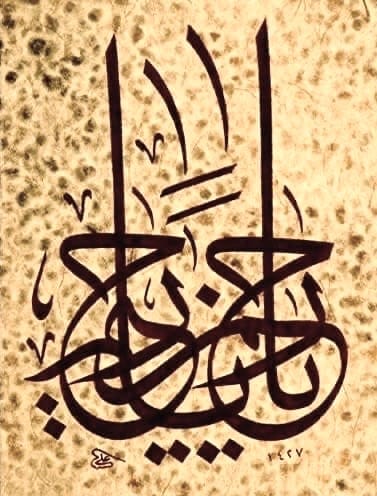
Does God have a nature? If so, is this not to limit His power? The answers are ‘yes’ and ‘no’, respectively. Yes, because the divine nature is founded on radical love, inscribed in the Heart. No, because God loves from a natural internal impulse, and not out of any externally imposed constraint. In William Blake’s controversial formulation (in The Marriage of Heaven and Hell), ‘Jesus was all virtue, and acted from impulse, not from rules.’
Al-Fatiha states that Allah is Rahman and Rahim, which denote God’s beneficent goodness and compassionate mercy, respectively. Rahman refers to the intrinsic nature of a beneficence so intense that it simply overflows in its goodness like a fountain of light. The Sun cannot but be radiant, and its light is universal in its effects, so that its nourishing radiance is not directed to any particular creature, but benefits all alike. Light (as in the Ayat al-Nur or Verse of Light – 24:35) is a simile for the nature of God as Rahman. Rahim, without derogating from the quality of Rahman, refers to the particular directing of God’s goodness, for example towards a suppliant or a deserving servant. God’s mercy (Rahim) is a facet of His intrinsically beneficent nature (Rahman). Some exegetes have therefore distinguished the terms as follows: ‘Al-Rahman’ points to an attribute that is existent in God, and ‘Al-Rahim’ points to its interaction with the recipient of mercy. According to Tabari, Ar-Rahman denotes the One who shows mercy in this world and the Hereafter, while Ar-Rahim denotes the One who shows mercy in the Hereafter (uniquely). The terms are etymologically cognate with the Arabic word for ‘womb’, and the qualities they describe collectively signify the maternal attributes which are the creative and sustaining springs of the theophany. In a word, these qualities denote ‘Love’. Allah is explicitly associated with ‘Love’ by the name ‘Al-Wadud’, but the Rahman-Rahim matrix encompasses the spiritual reality of creation, sustenance, and the reintegration of the soul into the Spirit, all conducted through the operation of Love’s divine alchemy.
Besides the Basmala and Fatiha, several Qur’anic passages affirm the pre-eminence of the beneficent, compassionate and loving nature of God. While Allah undoubtedly possesses the power to act contrary to His Nature, the Qur’an explains, ‘kataba 'alaa nafsihir rahmah’ (‘He has decreed upon Himself mercy (as a law)’) (6:12). In other words, God chooses not to transgress the boundary of his own loving nature — not because He is unable to do so, but because He wills to be loving. He is the prescriber of laws and bounds, which He could revoke at any time. But God chooses, without derogating from His own powers, to be true to His own divine nature. And, without derogating from divine transcendence, since Man is made in the finest of forms (Laqad khalaqnal insaana fee ahsani taqweem; ‘Indeed, We created humans in the best form’) (95:4), human beings are also enjoined to be beneficent, compassionate and loving.
The existence of ‘evil’ in the world is not evidence of any limitation on God’s powers or goodness. Rather, what is termed evil is either the experience of suffering or the consequences of sin. In the first case, Man is a creature and therefore in a state of privation; the privative consequence of creatures not being God is ‘suffering’. In the second case, Man is given the freedom to choose God or to reject Him, but some people choose to do evil or simply ‘go astray’; their ‘sins’ are not willed by God but are ‘allowed’ as a consequence of God allowing Man the freedom to choose good over evil for the sake of Love, and the evil which results from them is the effect of abusing the freedom to conform to the Heart’s archetype of goodness. As we discuss later, the privative conditions of Man, and the entrusting of free will to souls endowed with a conscience, are a test. In the end, Man will be judged by God for his intended deeds and consequences.
Among the many signs of divine goodness and the love of God is the very miracle of sustained creation – in the regenerative renewal of life through the seasons, the healing that occurs physically and spiritually through time, the budding spring of hope after the winter of despair, and, generally, the presence of what the poet Gerard Manley Hopkins calls ‘the dearest freshness deep down things’. Those who possess spiritual humility are gratefully aware that God has endowed all creatures with a variety of attributes from His divine treasuries, and that, beyond all our outward differences there is an underlying commonality sustained by love. Thus, Allah declares in the Qur’an, ‘Wa-rahmatee wasi'at kulla shai' (‘But My mercy [Rahma] encompasses all things.’) (7:156)
To evidence God’s Mercy, no community throughout history has been left without divine guidance. The love of God is not limited by time or by any unjust or Deistic neglect of His creatures. Throughout history, we are reminded, God has sent messengers to guide humanity, and in this context the Qur’an comments ‘Wa-maaa arsalnaaka illaa rahmatal lil'aalameen‘ (We have sent you [O Prophet] only as a mercy [Rahma] for the whole world.’) (21:107). Indeed, the Recitation itself is ‘a healing and mercy’: (‘Wa-nunazzilu minal quraani maa huwa shifaaa'unw Wa-rahmatullil mu'mineena’) (‘We send down the Qur’an as a healing and mercy for the believers.’) (17:82)
So pre-eminent in Islam is the quality of Rahman that an entire sura of the Qur’an is named after it (Sura Ar-Rahman, the 55th chapter), reminding humanity of God’s beneficence and favours. Each poetic verse evokes the wondrous aspects of God’s generosity and goodness, and the sections conclude with a repeated rhetorical refrain addressed to the created communities of both humanity and the jinn, ‘Fabi-ayyi aalaa'i Rabbikumaa tukazzibaan’ (‘Which, then, of your Sustainer's powers can you disavow?’).
Here is an example (55:1-30), in the translation of Muhammad Asad:
THE MOST GRACIOUS (Ar-Rahman) has imparted this Qur'an [unto man].
He has created man: He has imparted unto him articulate thought and speech.
[At His behest] the sun and the moon run their appointed courses; [before Him] prostrate themselves the stars and the trees.
And the skies has He raised high, and has devised [for all things] a measure, so that you [too, O men,] might never transgress the measure [of what is right): weigh, therefore, [your deed] with equity, and cut not the measure short!
And the earth has He spread out for all living beings, with fruit thereon, and palm trees with sheathed clusters [of dates], and grain growing tall on its stalks, and sweet-smelling plants.
Which, then, of your Sustainer's powers can you disavow?
He has created man out of sounding clay, like pottery, whereas the invisible beings He has created out of a confusing flame of fire.
Which, then, of your Sustainer's powers can you disavow?
[He is] the Sustainer of the two farthest points of sunrise, and the Sustainer of the two farthest points of sunset.
Which, then, of your Sustainer's powers can you disavow?
He has given freedom to the two great bodies of water, so that they might meet: [yet] between them is a barrier which they may not transgress.
Which, then, of your Sustainer's powers can you disavow?
Out of these two [bodies of water] come forth pearls, both great and small.
Which, then, of your Sustainer's powers can you disavow?
And His are the lofty ships that sail like [floating] mountains through the seas.
Which, then, of your Sustainer's powers can you disavow?
All that lives on earth or in the heavens is bound to pass away: but forever will abide thy Sustainer's Self, full of majesty and glory.
Which, then, of your Sustainer's powers can you disavow?
On Him depend all creatures in the heavens and on earth; [and] every day He manifests Himself in yet another [wondrous] way.
Which, then, of your Sustainer's powers can you disavow?
These beautiful verses, along with many others in the Recitation, remind Man to look about God’s creations with eyes that do not take the Creator and Sustainer for granted.
God’s benevolence is not only evident in nature but in the differences which distinguish individuals and religions. It is the pre-eminence of the qualities of Rahman-Rahim which are the foundation for religious pluralism. For those who would argue that the deity of Islam is different to that of other faiths, the Qur’an states, ‘Wa-ilaahukum illaahunw waahid(ul); laaa ilaaha illaa Huwar Rahmaanur Raheem’ (And your God is one God. There is no deity except Him, the All-Beneficent, the All-Merciful.’) (2:163) This accords with universal teachings on the subject, as for example in the Vedas: ‘Truth is One; the wise call it by many names.’ (‘Ekam Sat Vipra Bahudha Vadanti’)(Rig Veda, 1:164.46)
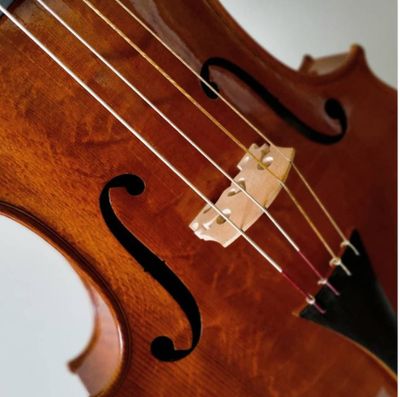
Individual gifts from God are to be shared for the common good through a principle of complementarity, just as different strings of a musical instrument combine to make harmonious music, not discordant sounds
The Qur’an informs us that differences among peoples are ordained so that they might be tested in order to transcend them, and that they may thereby come to know the other (lita'arafu) as intrinsically one. True spiritual kinship transcends outer differences through a pluralistic spirit exemplified in these words from Prophet Muhammad’s celebrated Farewell Sermon: ‘O people! beware! Your God is one, no Arab has any superiority over a non-Arab, and no non-Arab any superiority over an Arab, and no white one has any superiority over a black one, and no black one has any superiority over a white one, except on the basis of taqwa (fear / love of Allah or piety).’ Through knowledge of their underlying spiritual nature, people are not to oppose one other as adversaries but to learn to live harmoniously. Individual gifts from God are to be shared for the common good through a principle of complementarity, just as different strings of a musical instrument combine to make harmonious music, not discordant sounds. Instead of seeking their own good at the expense of others, individuals are to vie with one another in good deeds (yusaari'oona fil khairaat) (2:148, and 3:114). Here are two examples, from the Recitation, of these pluralistic messages:
O mankind, indeed we have created you from male and female and made you peoples and tribes that you may know one another. Indeed, the most noble of you in the sight of Allah is the most righteous of you. Indeed, Allah is Knowing and Acquainted. (49:13)
If Allah had so willed, He would have made you a single community, but (God's plan is) to test you in what He has given you: so, vie with one another in good deeds. You will return to God, and Allah will show you the Truth of the matters in which you dispute. (5:48)
Not only is the Rahman-Rahim matrix the metaphysical bedrock of the divine nature, but its radical love is the foundation of human nature (fitra) too. It is only through spiritual humility that one can value others who are different than oneself for, in the words of the famous hymn about ‘all creatures great and small’, ‘the Lord God made them all.’ The insight of the spiritual vision of underlying harmony, sustained by love, is an invaluable antidote to the corrosive effects of our cynical times. It is the basis for meaning and hope in a world which, lacking this foundation, would otherwise be purposeless and nihilistic.
One can better understand now the significance of the words in the Basmala, and can appreciate why of all His Beautiful Names, the Qur’an states that Allah prefers to be invoked by the name ‘Rahman’: (Qulid 'ul laaha awid 'ur Rahmaana ayyam maa tad'oo falahul Asmaaa'ul Husnaa.) (Say, [O Prophet] 'Call upon Allah or call upon Ar-Rahman; whichever [name] you call – to Him belong the most Beautiful Names.') (17:110)
SPIRITUAL AWARENESS: GRATITUDE, PRAISE, AND PERFECTIBILITY
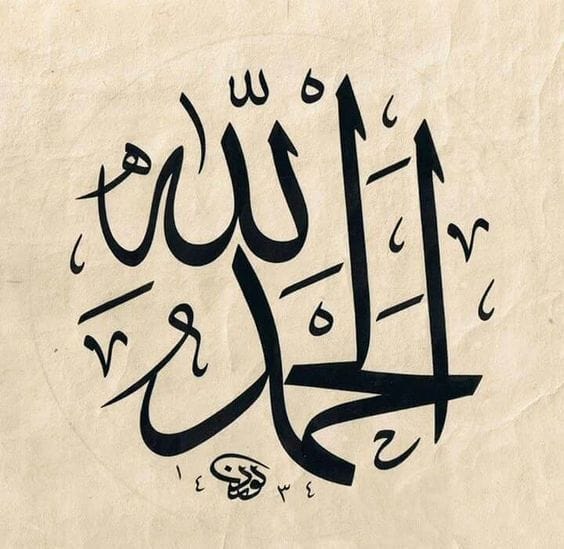
Following the Invocation of the Basmala, the Sura continues with the Verse of Praise (‘Ayah Al-Hamd’): ‘Alhamdu lillaahi Rabbil 'aalameen.’ (All praise is due to Allah—Lord of all worlds) (1:2)
Al-Fatiha is sometimes referred to as ‘Al-Hamd’, and one can understand why this is so: the Sura, beginning with the Basmala which invokes the loving nature of God, and continuing with the verses which remind Man of reasons to be in awe of God, invites, encourages and evokes in the suppliant both thankfulness (shukr) and its concomitant, praise (hamd). Reverence for the sacred dimension, wonder in the face of the ever-replenishing theophany and gratitude for the gifts of creation, develops naturally into praise. The rich religious literatures, from the Vedas through the Psalms and other laudatory devotional literatures in all sacred traditions, emerged from this very impulse of gratitude flowing into praise.
The term ‘kufr’ (veiling the Spirit) is the opposite of ‘shukr’ (gratitude for the blessings of the God because one perceives its sacred reality, and that, as Blake stated, ‘everything that lives is holy’). Both terms relate to aspects of spiritual vision. While ‘shukr’ denotes the natural response of the soul in the face of the Spirit, ‘kufr’ denotes moral blindness and spiritual opacity. While the former is rooted in the soul’s spiritual humility, the latter emerges from the soul’s prideful self-enclosing. In Islam, the disbelievers are referred to as ‘kafirun’, from the word ‘kafir’, meaning to ‘cover’. Their occluded vision is modeled on that of Iblis, who disobeyed the divine command to bow to the Imago Dei (discussed below). Their occlusion results in a loss of spiritual vision, of metaphysical transparency, of the sense of the Sacred, of ‘wholeness’ and thereby of the Heart’s bond of connection with God and the Spirit. What is also veiled by them is the inner eye of fitra, the soul’s ontological center, her moral norm and conscience, and this spiritual blindness opens up the pathways of sin. As the Qur’an states, ‘Indeed, it is not the eyes that are blind, but it is the hearts in the chests that grow blind.’ (22:46) Through prideful self-veiling, the soul substitutes forgetfulness (ghafla) for spiritual awareness (taqwa), so losing the ability to be thankful and to praise. Instead of seeing creation as metaphysically transparent to transcendence, the kafir sees it as opaque. Instead of perceiving the underlying harmony of spiritual connection, the kafir, through idolatry (shirk), reifies the world and deifies the self, thereby perceiving only outward fragmentation and discord upon which the idolator, like the Nietzschean Ubermensch, seeks to tyrannically impose order, bending the world to his own will.
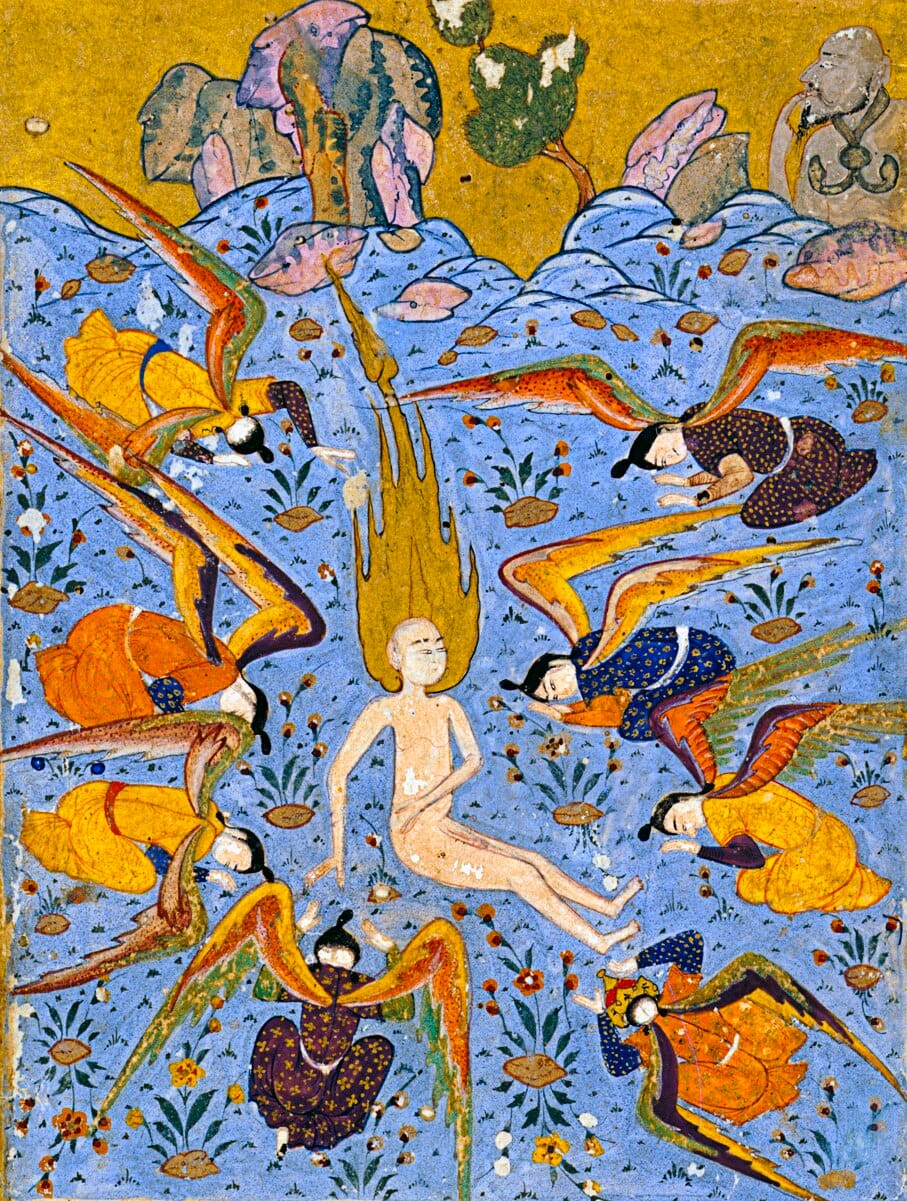
The prototypical Qur’anic model of a kafir is Iblis (the fallen angel who became Shaytan, or Satan). Pridefully covering his inner eye, Iblis refused to bow to Adam (peace and blessings be upon him). The episode is related in the Qur’an as follows: ‘And [mention] when We said to the angels, 'Prostrate to Adam,' and they prostrated, except for Iblis. He refused and was arrogant and became of the disbelievers (al-kafirin).’ (2:34) Iblis would not acknowledge the spiritual reality of Adam, formed in the finest of molds and robed in a garment of flesh, an Imago Dei, but viewed him only as inferior clay (adamah, in Hebrew). His vision was external and his motive was pridefully arrogant: ‘[Allah] said, "What prevented you from prostrating when I commanded you?" [Satan] said, "I am better than him. You created me from fire and created him from clay."’ (7:12) Adam, as a vessel of the Spirit, was being proffered to the angels as a model of perfectibility, but Iblis chose to instead to perceive only his outer garment, not his inner Spirit. Such occluded vision misses the spiritual reality of witnessing the Light of intrinsic and connecting Oneness whose radiance is essential for harmony and peace, and without which there is no basis for gratitude (shukr) or praise (hamd).
By contrast to Iblis, the prototypical model of praiseworthiness is the Holy Prophet, whose very name, ‘Muhammad’, a cognate of ‘Al-Hamd’, denotes ‘the Praised’. As ‘All praise is due to Allah’, it is not Muhammad as a mere human who is being praised but the Nur Muhammadi or spiritual Light vested in him, as in Adam, and indeed in all human beings, though the strength of its radiance may be attenuated in some souls and thereby vary among particular creatures. The second part of the Shahada, ‘Muḥammadun rasūlu llāh’ (‘Muhammad is the Messenger of Allah’), denotes not merely that Muslims accept Muhammad as a Prophet of Allah, but that they affirm the inner reality of the Heart, the Nur Muhammadi (the spirit that the angelic host was affirming when they bowed before Adam). As ‘the Praised’, Muhammad is accepted by Muslims as Logos, as the sign of the Spirit or Imago Dei, and as the Insan al-Kamil or archetype of the Perfect Man. By invoking his example, Muslims are reminded of their own intrinsic nobility of nature, their own perfectibility, and thereby of human dignity. This is one reason why the recitation of the Salawat or Prayer of Blessing, invoking Peace on the Holy Prophet and his progeny (Allahumma salli 'ala Muhammad wa Aali Muhammad), is in effect a blessing upon the Spirit within all beings present in the harmonic communities of the theophany and in all that is worthy of praise.
DIVINE SOVEREIGNTY AND ITS HUMAN IMPLICATIONS
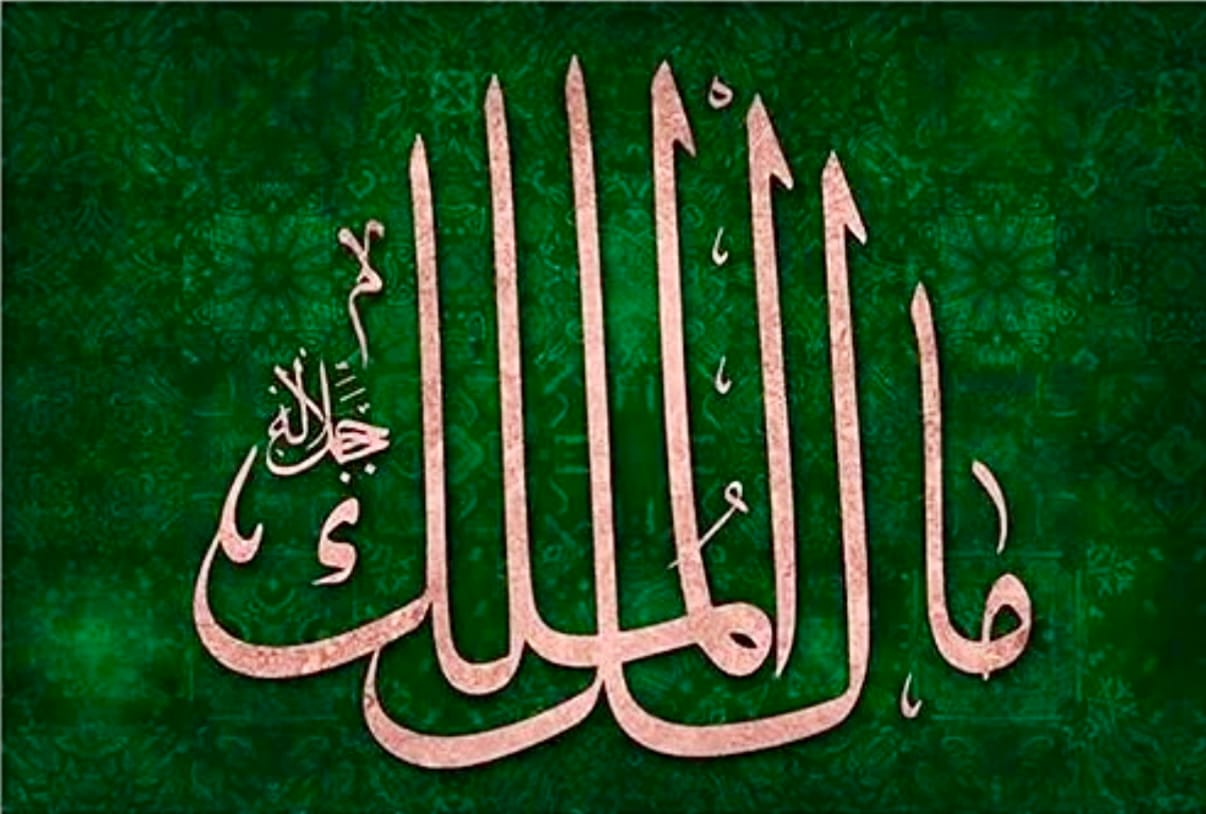
Among the phrases used in Al-Fatiha to describe Allah are Rabbil 'aalameen (‘Lord of all the worlds’) (1:2) and Maaliki Yawmid Deen (‘Master of the Day of Judgment’) (1:4). According to the principle of at-Tawheed ar-Rububiyyah or unitary sovereignty, the Qur’an asserts God to be the sole creator, sustainer and sovereign ruler of the universe and everything in it. Each of the preceding verses (1.1 and 1.3) reminds us that God is also Rahman and Rahim, and so He is a loving Lord and merciful Master. As Lord, Allah has created us from love, and He sustains us with benevolence. As Master, He will judge us, not only justly but with mercy. The first four verses of Al-Fatiha thereby encompass the entire existential trajectory of the human relationship with the divine, with its implied telos and responsibilities, and their grounding in love.
The notion of at-Tawheed ar-Rububiyyah relates to the idea of divine sovereignty and authority, exemplified in the ‘Ayat Al-Kursi’ or ‘Throne Verse’: ‘God is the divine Ruler. Allah! There is no god [worthy of worship] except Him, the Ever-Living, All-Sustaining. Neither drowsiness nor sleep overtakes Him. To Him belongs whatever is in the heavens and whatever is on the earth. Who could possibly intercede with Him without His permission? He [fully] knows what is ahead of them and what is behind them, but no one can grasp any of His knowledge—except what He wills [to reveal]. His Throne encompasses the heavens and the earth, and the preservation of both does not tire Him. For He is the Most High, the Greatest.’ (2:255)
Man, in spite of the illusions of human power, authority and freedom, is a vassal of God, and owes everything to Him. Man’s powers are on loan from God, to whom the soul is accountable as a fiduciary. Humans are workers serving in the vineyards of the Lord, to whom they are ultimately accountable. This is the concept of trusteeship or amanah. They are given dominion over Earth only on condition that they remain stewards over it under the laws of Heaven, inscribed in their souls and in the sacred signs of nature. Inasmuch as God is the sole Creator, Man’s creative genius operates strictly on the basis that Man creates only derivatively, borrowing from the divine qualities and attributes on loan from the divine treasuries. The ‘Most Beautiful Names’ belong to Allah alone, and to the extent any individual is graced with them, they are dispensed only temporarily and in ‘a known measure’, and on condition that they will not be usurped. The departing souls leave these qualities behind, taking no worldly possession with them into the Hereafter, not even the garments of their own bodies, but depart with only the record of the deeds accumulated during their brief lives. Bearing this in mind, human beings are exhorted to act with due discernment, humility and virtue, and not to be transgressors or, in Shakespeare’s words, ‘proud man, drest in a little brief authority’, who tends to forget his heavenly obligations:
…but man, proud man, Drest in a little brief authority, Most ignorant of what he's most assured, His glassy essence, like an angry ape, Plays such fantastic tricks before high heaven As make the angels weep; who, with our spleens, Would all themselves laugh mortal.
[Isabella in Measure for Measure (2:2, 145-151)]
Man is proud because he sees simply what is apparent, not what is real. But those who possess eyes to see know that the cosmos has not appeared on its own. It has a creator, who is its Lord. The Qur’an repeatedly reminds humankind to discern this clear evidence from the wonders of creation, which should not be taken for granted. The Recital contains many beautiful reminders, ‘messages for all who are endowed with insight.’ (3:190); for example:
…Verily, in the creation of the heavens and of the earth, and the succession of night and day: and in the ships that speed through the sea with what is useful to man: and in the waters which God sends down from the sky, giving life thereby to the earth after it had been lifeless, and causing all manner of living creatures to multiply thereon: and in the change of the winds, and the clouds that run their appointed courses between sky and earth: [in all this] there are messages indeed for people who use their reason. (2:163-164)
Behold, in the heavens as well as on earth there are indeed messages for all who [are willing to] believe. And in your own nature, and in [that of] all the animals which He scatters [over the earth] there are messages for people who are endowed with inner certainty. And in the succession of night and day, and in the means of subsistence which God sends down from the skies, giving life thereby to the earth after it had been lifeless, and in the change of the winds: [in all this] there are messages for people who use their reason. (45:3-5)
Do they not look at the sky above them - how We have built it and made it beautiful and free of all faults? And the earth - We have spread it wide, and set upon it mountains firm, and caused it to bring forth plants of all beauteous kinds, thus offering an insight and a reminder unto every human being who willingly turns unto God. And We send down from the skies water rich in blessings, and cause thereby gardens to grow, and fields of grain, and tall palm-trees with their thickly-clustered dates, as sustenance apportioned to men; and by [all] this We bring dead land to life: [and] even so will be [man's] coming-forth from death. (50:6-11)
In a similar vein, Imam ‘Ali (peace and blessings be upon him) eloquently details in his sermons the wonders of creation, the colours of a peacock’s fan (Sermon 165), the intricacies of a bat’s wing (Sermon 153), and other miracles of sustained creation, whose grand architecture speaks to the existence of a Grand Architect. Take, for example, the following descriptions passages by the Imam from his Khutba-e-Ashbah:
‘He knows where and how the smallest living organisms pass their lives.
He knows where ants pass their summers and worms sleep out the winter seasons.
He hears the sorrowful cries of speechless animals and footsteps of persons walking quietly and soundlessly.
He knows how every bud develops under the covering of green folds and how it blooms into a flower.
He is aware of the habitat and the den of every beast in the caves of mountains and in the density of jungles.
He knows under which leaf and inside the bark of which tree, mosquitoes live and multiply.
He knows from which part of a branch a bud will shoot, and which sperm will pass through its normal and natural course and form (a foetus).
He knows which drops of water (from an ocean) will rise (in the form of steam) to form clouds, and which of these clouds gather together and which part of the land they will fertilize.
He is aware of the life history of every drop of rain, every particle of sand, how it has started its individual existence, how the wind has blown it from place to place and how one day it will come to an end.
He knows all those marks and places that have been destroyed or levelled by floods.
He recognizes footprints of insects on sand hills, nests of birds on lofty mountain peaks, and songs of birds singing in the shades of green trees.
He knows which shell holds pearls and which does not, what is hidden in the depth of the ocean, what the dark nights try to conceal, what the sun’s rays reveal...
He fully knows every detail of all this gigantic organization and sees that each part of it works according to the plan set out by Him, His power, His might, and His desire, to organize, govern and influence every part, every phase and every aspect of this mighty creation, and His favours and His benevolences reach them all.
And they are not able to thank Him as much as His Kindness and Mercy deserves, and to show as much gratitude as they should.’[[19]]
As ‘Ali points out, it should be obvious that this architecture of the universe has a Grand Architect behind it. But he laments that all these wonders are taken for granted:
‘It is a pity that man refuses to accept the existence of the Grand Architect of this universe and this Mighty Creator of nature. It is a pity that he either believes his own existence to be an accident, or that he has come into being of his own accord and none has created him...Can there be a building without a builder? Can there be an effect without a cause?’[[20]]
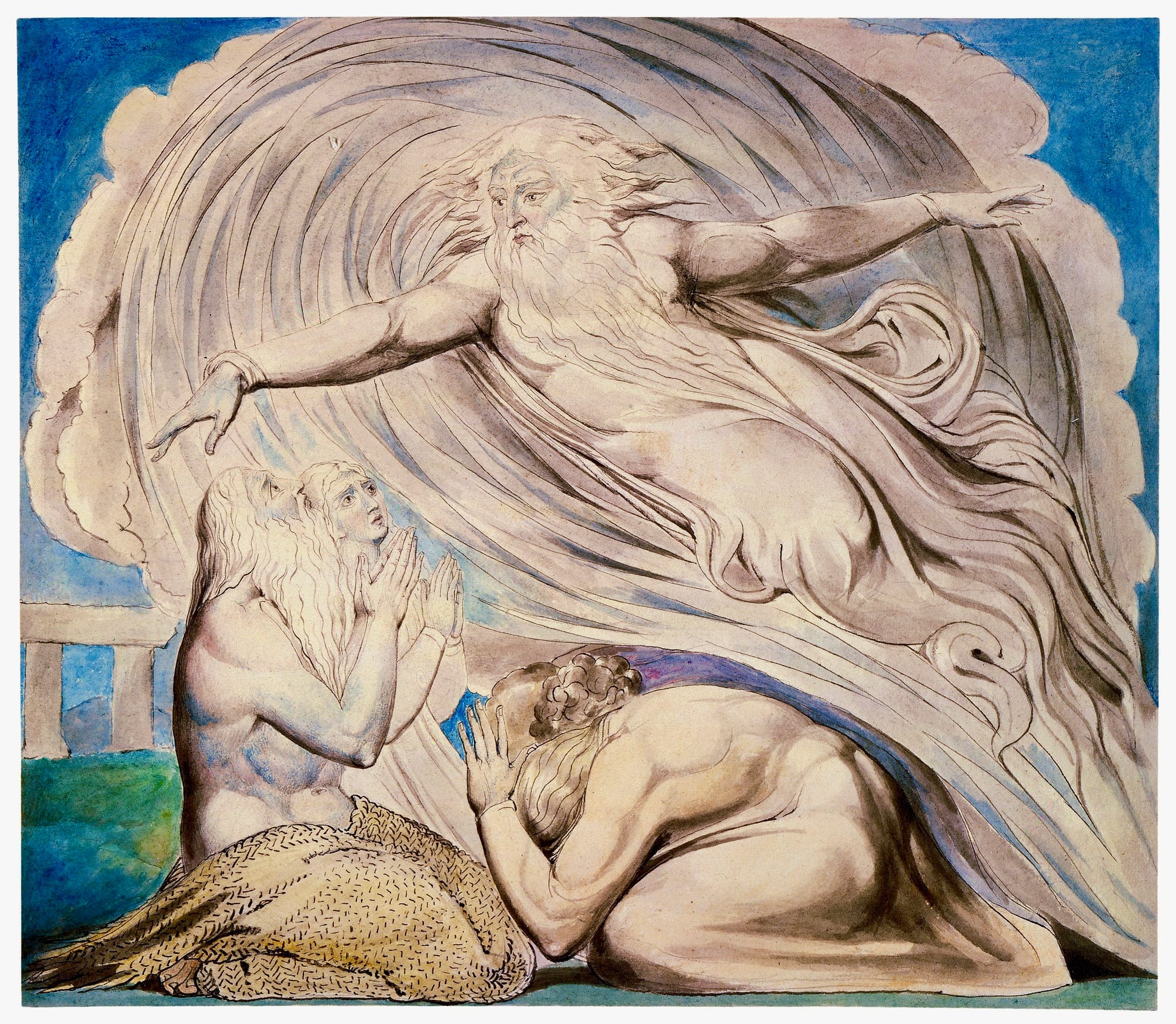
‘Ali’s rhetorical questions recall those of God to Job (peace and blessings be upon him) in the Biblical Book of Job, 38:4-18:
‘Where wast thou when I laid the foundations of the earth? declare, if thou hast understanding.
Who hath laid the measures thereof, if thou knowest? or who hath stretched the line upon it?
Whereupon are the foundations thereof fastened? or who laid the corner stone thereof;
When the morning stars sang together, and all the sons of God shouted for joy?
Or who shut up the sea with doors, when it brake forth, as if it had issued out of the womb?
When I made the cloud the garment thereof, and thick darkness a swaddling-band for it,
And brake up for it my decreed place, and set bars and doors,
And said, Hitherto shalt thou come, but no further: and here shall thy proud waves be stayed?
Hast thou commanded the morning since thy days; and caused the dayspring to know his place;
That it might take hold of the ends of the earth, that the wicked might be shaken out of it?
It is turned as clay to the seal; and they stand as a garment.
And from the wicked their light is withholden, and the high arm shall be broken.
Hast thou entered into the springs of the sea? or hast thou walked in the search of the depth?
Have the gates of death been opened unto thee? or hast thou seen the doors of the shadow of death?
Hast thou perceived the breadth of the earth? declare if thou knowest it all.’
Divine sovereignty implies human responsibility, which is to discern the Real, and thereby conform to it. These two aspects of responsibility, faith and ethics, are therefore the criteria for God’s judgment of Man. Man is expected to submit to the order of Heaven. He must live with the nobility and dignity expected of God’s fiduciary on earth. For Man is the servant (‘abd) of God ‘Abd Allah’, which was a title by which Prophet Muhammad was known; and, by virtue of his intrinsic humility, Man, freed of pride, is equipped to engage in true worship (ibada, derived from ‘abada or subservience [to God]) and to be God’s vicar or divine vicegerent (khalifa), and so to fulfil the trust (amanah) expected of him. This is the condition of human authority on Earth: to use it in the cause of Heaven. As the Qu’ran relates, ‘[Remember] when your Lord said to the angels, “I am going to place a successive [human] authority on earth.” [innee jaa'ilun fil ardi khaleefa(tan)] They asked [Allah], “Will You place in it someone who will spread corruption there and shed blood while we glorify Your praises and proclaim Your holiness?” Allah responded, “I know what you do not know.”’ (2:30) What God knows is that Man is equipped to perceive Him because the Heart contains the light by which God is known. So, in accordance with the celebrated non-canonical Hadith Qudsi, Allah states: ‘Neither My heavens nor My earth can contain Me, but the heart (qalb) of My believing servant contains Me.’ (Mā wasiʿanī arḍī wa lā samāʾī, wa wasiʿanī qalbu ʿabdī al-muʾmin.) But this nobility of humanity is not a cause for false pride. It is precisely because the Spirit resides in the Heart of the believing servant (‘abdī al-muʾmin) that one must embrace humility. It is by seeking the Lord in one’s submitted self, as ‘Abd Allah’, that one meets the conditions of grace to discover His presence through gnosis in accordance with the Hadith, ‘Whoever knows himself, knows his Lord’ (‘Man 'arafa nafsahu faqad 'arafa Rabbahu’).
a corollary of divine sovereignty is the necessity for the soul to submit in humility to the Spirit
In the passages quoted earlier from the Qur’an about the sovereignty of God, Man is exhorted to be spiritually aware of God, who, though invisible as Transcendence, is nonetheless immanently present to those possessing eyes to see, witnessing through the Heart’s vision, not simply looking with eyes of the flesh. Such discernment demands spiritual humility as a condition of taqwa. Most people, like the Earl of Gloucester in Shakespeare’s play, The Tragedy of King Lear, acquire spiritual insight only after calamities befall them as a result of their worldly blindness. Their worldly debasement, like the proverbial ‘Fall of Man’, makes them aware thereby of their human frailty and dependence on God. In Gloucester’s case, through spiritual awakening, he can then realize, ‘I stumbled when I saw.’ (KL: 4:1). The sight that he lacked was cardial, ‘the evidence of things not seen’ (Hebrews, 11:1). As Antoine de Saint-Exupéry insightfully observed in The Little Prince, ‘It is only with the heart that one can see rightly; what is essential is invisible to the eye.’ Or, as William Blake famously stated in The Marriage of Heaven and Hell, ‘If the doors of perception were cleansed, everything would appear to man as it is: Infinite.’ So, a corollary of divine sovereignty is the necessity for the soul to submit in humility to the Spirit.
Seeing aright is being aright, which manifests in the ability to love despite outward differences, just as God loves all, in the knowledge that, at core, creation is, as God in the Bible sees it, ‘good’ (Genesis, 1:31). It takes spiritual imagination (a cleansing of the doors of perception) to be truly empathetic, to respond with sensitivity to inner beauty. One can then stand in the shoes of another and can, according to King Lear’s own prescription, ‘Take physic, pomp; Expose thyself to feel what wretches feel, That thou may shake the superflux to them, And show the heavens more just.’ (KL: 3:4) Therefore, Truth (the realigning of our perception to conform to spiritual verities) is the connective foundation for Justice (the ordering of our earthly polities according to the heavenly norm).
To summarize: Man’s awareness and acceptance of God’s sovereignty is the precondition for placing him within the order of the heavenly norm he was placed on earth to uphold. For this was he entrusted to be the khalifa, to fulfil the amanah, to conform to fitra, and by this criterion Man’s soul will be judged by the Maaliki Yawm-id-Din (1:4). We will address this aspect of soteriology later, but we turn next to the central importance of being guided on the Straight Path, addressed in the final three verses of the Sura.
‘AS-SIRAT AL-MUSTAQEEM’ AND THE DIALECTIC OF GUIDANCE
Before we return to the topic of how Man is judged by God, it is important to appreciate the dialectic of guidance that underlies the God-Man relationship, and is implied in the notion of Man’s appeal to be guided on the Straight Path (As-Sirat Al-Mustaqeem) (1:6). The Hadith of the Hidden Treasure tells us that God originated Man out of the desire to be known, that is, to be known in His substance as Love (connoted by the Rahman-Rahim matrix) and thereby to be reintegrated in and by Love. The Hadith states that God's ‘love to be known (using the Arabic word ‘ahbabtu’) is the motivation for God manifesting Himself in the ‘mirror of creation’. To be thus reintegrated, Man must first willingly abandon contingency. While creation is a descent into a world of forgetting, the purpose of human existence is to transcend the distance separating Man from God through Love, its reintegrating bond, and to flee contingency in search for the Absolute.
One expression of this passage of the soul’s journey and its growth through submission into the Spirit (and so of the Straight Path) is found in the following non-canonical Hadith Qudsi, often cited in esoteric traditions:
Who seeketh Me, findeth Me; Who findeth Me, knoweth Me; Who knoweth Me, loveth Me; Who loveth Me, him I love; Whom I love, him I slay; Whom I slay, him must I requite; Whom I requite, Myself am his Requital.
Here, we see that knowledge is ontological and kenotic, the merging of selfhood into the divine substance through the alchemy of Love.
The Straight Path is therefore a Path of Return (ma’ad) into the grace of Transcendence. The Qur’an is clear about the destination, stating that ‘this is the Way leading straight to Me’ (16:91) A ‘Path’ implies a destination, and therefore a purpose or telos, and in this sense the ‘Sirat’, like the Ba in the Basmala, functions as a connector, a reminder that Man is made for Love. Indeed, the term ‘Sirat’ is a refutation of the argument that life is meaningless. The Qur’an repeatedly emphasizes that the creation of the world, and of humanity in particular, is far from pointless. ‘Did you then think that We had created you without purpose, and that you would never be returned to Us?’ (23:115) The purpose is for humanity to know, and so to love God and, through His connecting bond, to love one another. We are to worship God (‘O Mankind! Worship your Lord who created you’) (2:21), and to do so, we must look beyond the illusion of all that is not God, all that is merely contingent, including the illusory world and the deluded self, to that which is Transcendent, and thereby conform to the Heavenly order, to subsist in the wholeness of the Spirit in which the soul truly subsists: the Absolute.
True faith entails ethical behaviour
One expression of this harmonic and ethical vision is found in the Bani Adam verse from the 13th century Persian mystic Sa’di in his book, Gulistan, which is derived from Hadith authorities[[21]]. The verse is as follows:
Human beings are members of a whole, In creation of one essence and soul. If one member is afflicted with pain, Other members uneasy will remain. If you have no sympathy for human pain, The name of human you cannot retain.
Qur’anic metaphysics are based on precisely this integral and integrating ethical foundation. Humanity is created from ‘one soul’ (nafs wāḥida) (4:1), whose Tawhidic foundation is the ethical underpinning of dignity and ‘humane’ behaviour. Through love and empathy, we recognize the dignity (karamah) of all, according them worth as spiritual kinfolk, recognizing that we are, in response to Cain’s impudent question to God, our ‘brother’s keeper’ (Genesis, 4:9). True faith accordingly entails ethical behaviour. And this point is made explicit by the Prophet: ‘None of you has faith until he loves for his brother what he loves for himself.’[[22]] This message of ethics as the ontological expression of love, derived from God’s gracious care for each of us modelling the care we owe each other is exemplified in the verses of Sura Ad-Duha (93: 6-11), where the Prophet is reminded: ‘Did He not find you as an orphan and then sheltered you? Did He not find you unguided and then guided you? And did He not find you needy and then satisfied your needs? So do not oppress the orphan, nor repulse the beggar. And proclaim the blessings of your Lord.’ God’s love is the foundation and the source of our dignity and of the love we radiate as His light in the world.
The Path of Love cannot, however, be trodden through compulsion, only through free will. The Beloved can inspire, and the lover can be drawn to the Beloved by the alchemy of Love. God can guide and inspire, and Man can choose to heed and submit, in the faith that Allah, as Rahman and Rahim, is Love, and will respond lovingly. And, precisely because Love must be freely given, Man is also free to choose to reject the call of Love, beguiled instead by its ersatz parodies.
The Qur’an cautions Man to not become hypnotized and ensnared by the external world. It is merely a sensorium of allurements and passional gratifications, often pitting souls against each other, rendering them to be forgetful of their intrinsic bond. Earth is not Paradise, and so the world is merely a testing ground for the soul. The Qur’an recognizes this, referring to existence as ‘a passing delight and a play’ (29:64): it is ‘but a brief enjoyment, whereas, behold, the life to come is the home abiding.’ (40:39) The soul is therefore bidden not to forget her spiritual nature and her attendant ethical obligations.
But dunya is ghafla: the world is a place of forgetting. Therefore the Qur’an exhorts humanity as follows: ‘And so, set thy face steadfastly towards the [one ever-true] faith, turning away from all that is false, in accordance with the natural disposition [fitra] which God has instilled into man: [for,] not to allow any change to corrupt what God has thus created - this is the [purpose of the one] ever-true faith; but most people know it not.’ (30:30) This fitratic ‘orientation’ is what the Straight Path signifies.
Unlike Christianity, which emphasizes ‘original sin’ and inherited guilt as the basis for the Christic redemption undertaken by the Saviour on behalf of humanity (based on Augustinian readings of Johannine and Pauline texts), Islam emphasizes that humans are born in a state of fitra, and are responsible for not allowing ‘any change to corrupt what God has thus created.’ (30:30) Like the Bible, the Qur’an recounts the temptation of Man in the Garden, and of Man’s disobedience. (Genesis 2:16-17; and Genesis 3:1-24) (Qur’an, 2:30-39; 7:11-25) But, unlike Iblis who arrogantly disobeyed God and did not repent, Man immediately repented and was forgiven by God, but was thereafter (in the Qur’an as in Genesis), sent into exile, being exhorted by God not to sin (this is the basis of the Covenant of Alast). The sin of Man (that is, of Adam and Eve/Hawwa) in the Garden was followed by these words of repentance, ‘"Our Lord! We have wronged ourselves. If You do not forgive us and have mercy on us, we will certainly be losers" (7:23), which contain a key idea in respect of sin: sinners wrong themselves, God does not wrong them. Each soul is individually is responsible to preserve fitratic purity, and is given the individual freedom and trust to do so. Hence, ‘No bearer of burdens shall bear the burden of another’ (53:38). But this freedom and trust carry with it the responsibility not to disobey, to choose not to sin, to guard against going astray. And so, ‘Whoever does good will do so for his own self, and whoever does evil will himself bear its consequences.‘ (45:15). It is never God who is responsible for our misdeeds: ‘Indeed, Allah does not wrong the people at all, but it is the people who are wronging themselves" (10:44). This is an idea which holds significance in terms of the soul’s responsibility on the Day of Judgment, something we discuss later.
The illusory world and the rebellious self, which obscure the divine Light of Love, are the soul’s spiritual battlefield (its ‘Kurukshetra’, to use the term by which this allegorical battlefield is known in the Hindu scripture, Mahabharata). Human beings will be tested therefore by their possessions (by both abundance and deprivation), their minds and bodies (desires, fears, appetites, physical attributes and conditions, abilities, powers and faculties, and their loss), their relationships (societal, familial, reputations), and by every condition that can deflect from the soul’s allegiance to God. Some will be tested by comforts and ease, others by hardships and suffering. ‘And We shall test you by ill and by good in order to try you, and you will return to Us‘ (21:35). ‘You shall most certainly be tried in your possessions and in your persons’ (3:186); and ‘your worldly goods and your children are but a trial and a temptation’ (8:28). One may gratefully accept the gifts of life, but must never lose sight of the Hereafter: ‘Wealth and children are an adornment of this world’s life: but good deeds, the fruit whereof endures forever, are of far greater merit in thy Sustainer’s sight, and a far better source of hope’ (18:46). Faith brings the certitude and hope that can over come misfortune and hardship, for people are indeed tried ‘with misfortune and hardship, so that they might humble themselves’ (7:94).
To struggle in the Way of God is the true significance of the much-misunderstood term ‘jihad’. Though human beings are met with trials, the Qur’an assures one that ‘God does not burden any human being with more than he is well able to bear; in his favour shall be whatever good he does, and against him whatever evil he does’ (2:286) (see also 6:152, 7:42, 23:62 for that repeated assurance that ‘We do not burden any human being with more than he is well able to bear’). So one must bear one’s trials with detachment, patience, and fortitude. One can see in the stories of the Biblical prophets (like Adam, Noah, Job, Abraham, Jacob, Joseph, Moses, David, Solomon, Jonah, among many others) (peace and blessings be upon them all) and in the lives of Jesus and of Muhammad (peace and blessing be upon them), and of non-Biblical sages too, the tests and trials (jihads) they had to bear, and the importance of their faith in overcoming their tribulations. The Qur’an, like the Bible and other wisdom texts, is replete with examples to inspire hope in humanity, and to provide cautionary reminders of the true purpose of existence and of the meaning of life. These illustrations teach us of the importance of qualities such as faith and trust, patience and perseverance, forbearance and fortitude, forgiveness and mercy, and many other similar qualities that are included as reminders in the Most Beautiful Names.
The aim, then, is for Man to live in expectation of such tests and trials, so that he is not deflected or overwhelmed by them. Therefore, in Islam, as in the faith traditions generally, two principal criteria for being on the Straight Path are faith (iman) and ethics (akhlaq). The first is the soul’s perception of the divine substance of the Spirit, while the second is the soul’s adhesion to it through Love. Faith is the recognition of the limits of human intelligence in the face of Transcendence (a lesson important in the modern world of scientistic hegemony), while ethics represents aligning Man’s Will with God’s Will (as Jesus stated in the Garden of Gethsemane, ‘not as I will, but as You will’) (Matthew, 26:39). Together, these represent the soul’s submission to the dominion of the Spirit, conforming to the Oneness of reality (tawhid), to the heavenly order of wholesomeness and harmony. Islam is thus often described as a ‘way of life’, and one might say this is because the Straight Path is veritably of ‘faith as ethics’, tawhid amplified as rahma. It is the Path of the community of equilibrium and harmony, of the people of the Middle Way (ummatan wasatal) (2:143).
In the Prefatory Remarks, we had noted that Al-Fatiha is a dialogic prayer where the petitioner seeks guidance and God responds. Because the Path to Love must be voluntary, the onus is on Man to seek help, through spiritual humility (khushu’) and trust (tawakkul). So, the Sura states, ‘iyyaaka na'budu wa-iyyaaka nasta'een’ (‘You alone do we worship, and You alone do we ask for help’) (1:5). This central affirmation of the soul’s complete submission through worship of and reliance in the Lord can be said to encapsulate the entire Qur’anic ethos. The help Man seeks by the call for guidance is to be on the spiritual Path, ‘ihdinas Siraatal Mustaqeem’ (‘Guide us to the Straight Path’) (1:6), recognizing that God heeds those who heed Him willingly, but not (except by operation of His grace) those who choose not to do so. Thus, the Sura characterizes the Straight Path as ‘Siraatal lazeena an'amta alaihim ghayril maghdoobi alaihim wa-lad daaalleen’ (‘the Path of those You have blessed—not of those who incur wrath, or those who are astray’). We will say more about these categories when considering God’s judgment of souls in the next section.
For the moment, we want to emphasize that the dialectic of guidance is based on the principles of the soul, by her own free will choosing to engage in the dialogue of call-and-response. In accordance with this dialogical foundation, God first equips humanity to know Him, knowing that Man is ‘much forgetting’, tending to arrogance and pride, and is ‘rebellious’. The very word for ‘Man’ in Arabic, ‘insan,’ is a cognate of the word for ‘forgetfulness’, ‘nisyan’. Moreover, the world, with its surface distractions, is itself the abode of forgetfulness. So, guidance begins with the Creator embedding His divine norm (fitra) in the Heart (30:30), which functions as a preceptor of the soul as Spirit. The soul is then tested before entering the world by affirming the Rububiyyah or God’s dominion in Covenant of Alast. The episode, in essence a pre-existential Shahada (literally, ‘witnessing’ or ‘testifying’), is related as follows: ‘And [remember] when thy Lord brought forth from the Children of Adam, from their loins, their seed, and made them testify of themselves, (saying): Am I not your Lord? They said: Yea, verily. We so testify. (That was) lest ye should say at the Day of Resurrection: Lo! of this we were unaware.’ (7:172) The soul now possesses the criterion by which to live in the world according to the norm of the heavenly order.
When the soul enters the world, she is in exile in a domain of distraction, apt to forget the Covenant to remember God. So, God sends His messengers. This is done for all communities, throughout history (even prior to the advent of Muhammad) so that no community is abandoned by God. ‘And there was no nation but that there had passed within it a warner.’ (35:24; see also 10:47, 16:36) Some of these messengers are specifically mentioned in the Qur’an, but Muhammad is told, ‘And, indeed, [O Muhammad] We sent forth apostles before your time; some of them We have mentioned to you, and some of them We have not mentioned to you.’ (40:78) Thereby, the Qur’an potentially validates not only those messengers referred to in the books of the Jews and Christians (ahl al-kitab) but also other guides (such as the Hindu avatars, the Buddha, Lao Tzu, Confucius, and Socrates) not expressly named in the Qur’an but who affirmed the message of the Oneness of reality. This is emphasized as the core message, tawhid, and its adherents are referred to in the Qur’an as being of the ‘din al-hanif’ (of the ‘pure faith’) (30:30). The Qur’an expressly refers to several of these hunafa (adherents of the din al-hanif) as ‘muslim’ even though they lived before the formal advent of Islam as a world religion some fourteen centuries ago. So, for example, Abraham (peace and blessings be upon him) is referred to as a ‘hanif’ (monotheist) (3:67, 6:161) and also as a ‘muslim’ (one who submitted to God): ‘Abraham was not a Jew nor a Christian, but he was a ’muslim‘, inclining to truth.’ (3:67) Jesus, Moses and other prophets (peace and blessings be upon them) are revered in Islam as servants of God (or ones who submitted, and they are expressly called ‘muslim’), and the disciples (hawariyyun) of Jesus are also described as ‘muslim’: ‘And [remember] when I inspired to the disciples, 'Believe in Me and in My messenger Jesus.' They said, 'We have believed, so bear witness that indeed we are muslims [in submission to Allah].’ (5:111) (see also 3:52)
it does not behoove Man to vainly exceed the limits of his powers nor to trespass the bounds placed around the sanctuary of the Sacred mount
In addition to these reminders of the universal and perennial message of the One Spiritual Reality (tawhid) sent through the entrusted divine messengers throughout history, God has continually spoken to His faithful servants who open their Hearts to Him. The benevolent deity has never ceased to communicate with his faithful servants, but, just as a transmitter requires a receiver attuned to receiving its transmitted signals, God first demands that Man remember Him (in his Heart): ‘So remember Me; and I will remember you. And be grateful to Me and do not deny Me.’ (2:152) It is therefore incumbent on Man to call on God to elicit a response: ‘I respond to the invocation of the suppliant when he calls upon Me’. (2:186) To not call upon God can sometimes be an attribute of mistrustful arrogance and ingratitude. Tirmidhi, in fact records a Hadith to the effect that whoever arrogantly refuses to turn to God incurs His wrath.[[23]] To seek God’s assistance, and to trust in His response, is part of the dialectic of guidance. It is also a test for Man’s use of his freedom, to curb his Promethean tendencies, for it does not behoove Man to vainly exceed the limits of his powers nor to trespass the bounds placed around the sanctuary of the Sacred mount.
Moreover, it takes humility to truly love, and only those who are worshipful and reverent can do so. As Jesus stated in the Sermon on the Mount, ‘Blessed are the meek, for they shall inherit the earth’ (Matthew, 5:5). God wants only the love freely and willingly given to Him. Humans are not created to be programed robots or to have conditioned Pavlovian responses. Freedom entails choice, and the God of Love cannot be reduced to a disciplinarian, an enforcer of human choice. If, in the result, God is seemingly absent from human affairs, this is a misunderstanding; far from refuting God’s operational powers as sovereign in the world (Rabbil 'aalameen) or in the afterlife (Maaliki Yawm-id-Din), it affirms God’s profound compassion that He in fact allows Man the freedom to come to Him through love and willing submission. Man is to be free to love or deny God. As Tagore said (in ‘Fireflies’ his book of spiritual aphorisms), ‘I am able to love my God because He gives me freedom to deny Him.’ And the Qur’an affirms this generous spirit of freedom in the statement, ‘Let there be no compulsion in religion’ (2:256). The constraints to morality are not necessarily external (though there are of course worldly laws and enforcements, as well as what are termed ‘karmic’ laws that come into effect for ‘no one can flee his own shadow’), but the ‘conscience’ planted by God in the soul is always potentially operative even in the ‘kafirun’ and can be activated unexpectedly. Hence, the Qur’anic advice that ‘Good and evil cannot be equal. Respond [to evil] with something that is so beautiful [in its goodness] (billatee hiya ahsanu) that even your enemy [will be won over] and become like a close friend’ (41:34). But, since God will not necessarily intervene outwardly to compel enforcement, the text continues: ‘But none is granted this [beautiful outcome] except those who are patient (alladhina sabaru) and greatly fortunate’ (41:35).
Human beings have been given free will, and they are to account for their use of it. The Qur’an expressly addresses this aspect of free will and the responsibilities of moral discernment and choice. ‘Now had it been Our will [that all men should not be able to discern between right and wrong], We could surely have deprived them of their sight, so they would stray forever from the [right] way: for how could they have had insight [into what is true]?’ (36:66) ‘And had it been Our will [that they should not be free to choose between right and wrong], We could surely have given them a different nature [and created them as beings rooted] in their places, so that they would not be able to move forward, and could not turn back’ (36:67)o ‘Yet had We so willed, We could indeed have imposed Our guidance upon every human being’ (32:13, 26:4, 36:66-67) but this would contradict the principle of no compulsion (2:256). Human beings were entrusted with free will in order to know God, His loving nature, their own fitratic nature, and to know each other in order to live harmoniously. To fail to do so is a sin (a self-wronging) for which one is accountable to the One who entrusted the soul with this gift and responsibility.
God responds to those who truly seek His assistance, but in ways that may be inwardly operative, enhancing spiritual growth. And, though God may be seemingly absent, for those who possess eyes to see, God continues to manifest His ‘signs’ not only in the innermost depths of themselves (anfusihim) but also in the outermost or utmost horizons (fi al-afaqi) (41:53), through His gracious creation, the wondrous creative regeneration and sustenance of the world, in the mysteries of life, death, and through unexpected infirmities and incapacitations, or boons, and in all those ways that humans who are spiritually blind are apt to attribute to the workings of Fortune, but which the intellect instilled in the Heart knows to be the workings of God.
In these various ways, God continues to guide humanity upon the Straight Path (As-Sirat Al-Mustaqeem) (1:6), asking only that Man look at the ‘signs’ with discerning eyes, and seek His guidance from a place of spiritual humility. And to those who truly seek His guidance, God is pleased with them and ‘blesses them with His favours’. (1:7) And then, in the words of the beloved canonical Hadith Qudsi, ‘When I love him [the devoted servant] I am his hearing with which he hears, his seeing with which he sees, his hand with which he strikes and his foot with which he walks.’[[24]]
THE JUDGMENT OF ‘MAALIKI YAWM-ID-DIN’
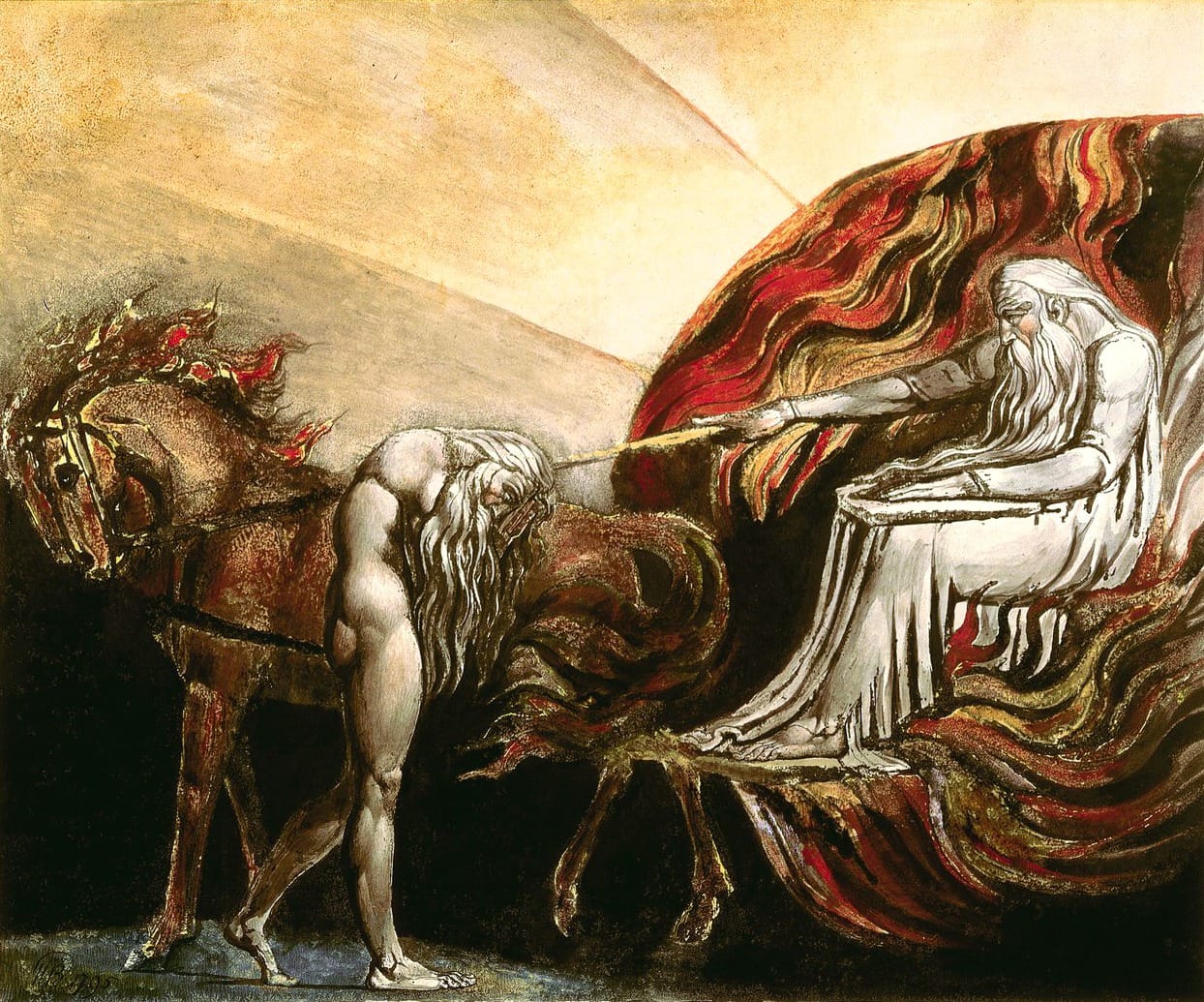
The phrase ‘Maaliki Yawm-id-Din’, Master of the Day of Judgment (1:4) assumes a soteriology based upon the purpose of existence as expressed in the Shahada and the Covenant of Alast (to live in accord with spiritual verities), according to the fitratic norm, and the promise that every soul will return to God to be judged by Him according to the merit of the soul’s deeds. The term ‘Din’ in this context denotes a ‘reckoning’, for Man is khalifa, entrusted with caring for his soul and the world; and so, Man has to account for this trust through a reckoning in which even his own limbs will testify against him (36:65; 24:24; 41:20-21). In this accounting, Man will not be judged by his deeds alone, but by his motives because, according to a canonical Hadith, ‘Actions are judged by intentions, and everyone will get what they intended.’[[25]]
As we have noted earlier, dunya is a place where one is tested; Man is apportioned days of fortune and of misfortune ‘to the end that God might mark out those who have attained to faith’ (3:140) ‘and that God might render pure of all dross those who have attained to faith’ (3:141). Humanity is reminded of the fleeting nature of dunya in comparison to the Hereafter: ‘You may desire the fleeting gains of this world – but God desires [for you the good of] the life to come’ (8:67). The Qur’an asks, ‘Would you content yourselves with [the comforts of] this worldly life in preference to [the good of] the life to come? But the enjoyment of life in this world is but a paltry thing when compared to the life to come!’ (9:38). And so, the Qur’an is critical of ‘the ones who barter the Hereafter for the life of this world’ (2:86).
Humanity has a ‘bond with God’ (‘ahd Allah) established in their primordial nature (2:27, 30:30) which binds them to God and to humanity: ‘a bond with God and a bond with men’ (3:112). So, the Qur’an states, ‘And [always] observe your bond with God: this has He enjoined upon you’ (6:152) and ‘Be true to your covenants!’ (5:1) and so ‘hold fast, all together, unto the bond with God, and do not draw apart from one another’ (3:103) ‘that there might grow out of you a community who invite unto all that is good’ (3:104). Humanity’s very foundations are faith and unity: ‘Steadfastly uphold the [true] faith, and do not break up your unity therein’ (42:13).
Judgment is based on the criterion of spiritual meritocracy: ‘My covenant does not embrace the evildoers’ (2:124) God rejects ‘those who break their bond with God after it has been established [in their nature]’ (13:25), but honours His promise to remember those who remember Him (2:152) and to love those who love Him (3:31); this is ‘a bargain that can never fail’ (35:29). ‘Verily, those who attain to faith and do righteous deeds will the Most Gracious endow with love’ (19:96).
Al-Fatiha (1:7) distinguishes therefore between those whom God ‘blesses with His favours’ (‘an'amta alaihim’) and those who ‘displease Him’, who thereby ‘incur wrath‘ upon themselves (‘al-maghdubi alayhim’), and those who accursedly ‘go astray’ (‘al-daalleen’). It does not suffice a soul merely to mouth a creed if the person is not spiritually sincere. This is similar to Jesus’s teaching: ‘Not every one that saith unto me, Lord, Lord, shall enter into the kingdom of heaven; but he that doeth the will of my Father which is in heaven.’ (Matthew, 7:21) Hence, the Qur’an states, ‘Or do they think – they who do evil deeds [while claiming to have attained to faith] – that they can escape Us? Bad, indeed, is their judgment!’ (29:4) But good deeds alone, without self-surrender, will not suffice as faith is the foundation of moral rectitude: ‘But for those who are bent on denying the truth, their [good] deeds are like a mirage in the desert’ (24:39). Faith involves true ‘submission’, being a ‘muslim’ (one who submits), conforming one’s entire being to the fitratic norm: ‘Yea, indeed: everyone who surrenders his whole being unto God, and is a doer of good withal, shall have his reward with his Sustainer’ (2:112) (32:19).
God brings back each soul to answer for their sojourn in the world, to receive a fair Judgment according what they have earned. There are numerous texts in the Qur’an which speak to this. For example:
‘Indeed, we belong to Allah, and indeed, to Him we will return’ (2:156)
‘Every soul will taste death. And you will only receive your full reward on the Day of Judgment. Whoever is spared from the Fire and is admitted into Paradise will indeed triumph, for the life of this world is no more than the delusion of enjoyment.’ (3:185)
‘And be conscious of the Day on which you shall be brought back unto God, whereupon every human being shall be repaid in full for what he has earned, and none shall be wronged.’ (2:281)
‘But We shall set up just balance-scales on the Day, and no human being shall be wronged in the least: for though there be [in him but] the weight of a mustard-seed [of good or evil], We shall bring it forth; and none can take count as We do!’ (22:46)
When the account of one’s deeds is brought forth and the good and the bad are placed on the ‘just balance scales’, one will be judged by the expectations established in the Covenant of Alast and the primordial norm of fitra instilled in the Heart. This norm is known as the ‘furqan’ (criterion), a term etymologically related to the term ‘qur’an’, and in fact a name by which the Recitation is sometimes known. Those who possessed spiritual humility, trust, God-consciousness, remembering and invoking Him, and who lived in conformity with the heavenly norm, based on bonds of amity, harmoniously, are the ones who will please God and who will be rewarded with His favours. By centering their souls in the Spirit, they are able to find the equilibrium to live in the world true to the divine norm.
at the time of the Reckoning the soul will be unable to gainsay what it had pre-existentially witnessed
By contrast, those who are distracted or beguiled by the world and the urges of the egoic self, who simply follow their own whims, lusts, selfish desires and caprices (al-ahwa), are the ones who earn His displeasure. One way of understanding the difference between those who go astray and those who incur God’s wrath is that the former are forgetful while the latter are intentionally rebellious and disobedient in the face of obvious reminders. One represents an error of discernment, while the other an error of volition, of the arrogant refusal (like Iblis) to submit. There is an overlap between these, but in either case, it is the element of deliberation that will be condemnatory. They are bent on simply following their own capricious and vain desires. Just as God remembers those who choose to remember him (through dhikr and worshipful acts), God turns from those who choose to turn from Him. Spiritual blindness and willful intransigence breeds hard hearts and divine disfavour, even displeasure. Thus, the Qur’an rhetorically asks, ‘And who could be more astray than those who follow their caprices with no guidance from Allah?’ (Wa-man adallu mimmanit taba'a hawaahu bighari hudam minal laahi?) (28:50; see also 25:43, 30:29, 45:23). And the Qur’an issues this admonition to them: ‘Surely those who go astray from Allah’s Way will suffer a severe punishment for neglecting the Day of Reckoning.’ (innal lazeena yadilloona 'an sabeelil laah; lahum 'azaabun shadeedum bimaa nasoo Yawmal Hisaab) (38:26). As we stated earlier, sin in Islam is a matter of individual responsibility and individual accountability, not of inherited guilt and collective atonement.
The accounting in the Hereafter is mirrored in the accounting sought by the living conscience. In one’s worldly life, the soul accounts to the Spirit, the seat of the soul’s conscience, which, despite any efforts to veil it by the ‘kafir’ or by ‘mushrikun’ (the idolators who commit ‘shirk’), remains fully operative. In the afterlife, the soul faces the Judgment of the Lord, who will remind it of the Covenant of Alast, so that at the time of the Reckoning the soul will be unable to gainsay what it had pre-existentially witnessed, ‘…lest ye should say at the Day of Resurrection: Lo! of this we were unaware.’ (7:172)
The Judgment promised is so fair that ‘none of you will be wronged [even by the width of] the dint of a date stone.’ (4:77)
As a result of the Judgment all that is impure and unworthy of preservation will be purged in a purifying fire (painfully experienced as ‘Hell’), while the good will be preserved in the luminous Spirit that is the abode of peace and beauty (experienced as ‘Paradise’). The Qur’an contains allegorical images of these abodes, including rankings that represent the rewards and punishments.
Though God expresses displeasure through wrath, He remains a God of Love, and is therefore especially amenable to those who genuinely repent. One of his Names, Al-Ghafoor, signifies the quality of being Much-Forgiving. So, the Qur’an states, ‘Say, 'O My servants who have transgressed against themselves [by sinning], do not despair of the mercy of Allah. Indeed, Allah forgives all sins. Indeed, it is He who is the Forgiving, the Merciful.’ (39:53)
The divine nature is intrinsically Love. It is characterized by Rahmat, the law of benevolence and mercy (6:12) and underlined in the oft-cited canonical Hadith Qudsi which states, ‘My mercy precedes My wrath’[[26]]. And so, even the threat of Hell is, for the truly repentant, eclipsed by the compassion of the divine nature. According to accepted Hadith, at the end of time, God will eventually extinguish the fires of Hell out of His infinite mercy.[[27]]
CONCLUDING REMARKS
According to a saying of Imam ‘Ali, the wisdom contained in the Sura Al-Fatiha exceeds what could be piled onto the backs of 70 camels (a figurative allusion of its immensity). The foregoing reflections provide a small window into the richness and depth of the Sura. Indeed, the rest of the Recitation could in some sense be considered commentary about the Opening. And, for the adept and spiritually discerning seeker, the Sura can be a gateway to the spiritual transformation implied by the occulted Dot beneath the Ba, the Spirit hidden within the Heart.
It is customary to end the recitation of the Sura Al-Fatiha with a single Arabic word, whose meaning, ‘May it be so!’, is both faithful prayer and the assurance of the Lord’s loving response. And so, we conclude with that word: ‘Ameen!’

[[1]]: The term ‘umm’ (mother) signifies a deep maternal bond, cognate of the term ‘umma’ (community)
[[2]]: According to scholarly consensus, Al-Fatiha was revealed prior to the revelation of Al-Hijr 15:87, in which it is referred to as the ‘seven oft-repeated verses’ (Sab'a min al-Mathani), marking it as an early Meccan revelation
[[3]]: ‘Prophet Muhammad was given two lights (nuran, lights of guidance) on Mi’raj: an Angel opened the door that was previously unopened, and brought Al-Fatiha and the last verses of Al-Baqara.’ [Sunan an-Nasa’i 912: Book 11, Hadith 37: trans.: Vol. 2, Book 11, Hadith 913]
[[4]]: ‘Whoever performs any prayer in which he did not recite Umm Al-Qur'an, his prayer is incomplete.’ Sahih Muslim 395a: Book 4, Hadith 41; ‘Whoever does not recite Al-Fatiha in his prayer, his prayer is invalid.’ Sahih al-Bukhari 756: Book 10, Hadith 150
[[5]]: The reference in 15:87 to Al-Fatiha’s ‘seven oft-repeated verses’ (Sab'a min al-Mathani) underlines their importance in prayer
[[6]]: ‘Turn thy face towards the right way, [in] pure faith, (following) the ‘fitra’ on which God has created [all] mankind. There is no altering God's creation. That is the right, straight way.’ (30:30) ‘Fitra’ is the primordial disposition of the soul, native to every soul, the inborn spiritual nature, which is universal, and precedes her particular birth religion. ‘No child is born, except upon the natural disposition (al-fitra), then his parents make him a Jew, a Christian or a Zoroastrian.’ Sahih al-Bukhari: In the Book of Predestination (Book 82, Hadith 44 [English translation number 1358]) and the Book of Funerals (Book 23, Hadith 139)
[[7]]: ‘In time We shall make them fully understand Our messages (through what they perceive) in the utmost horizons (of the universe) and within themselves, so that it will become clear unto them that this (revelation) is indeed the truth. (Still) is it not enough (for them to know) that thy Sustainer is witness unto everything?’ (41:53)
[[8]]: ‘And, indeed, We sent forth apostles before thy time; of some of them have We conveyed [their] story unto thee, and of others We have not conveyed their story unto thee.’ (40:78); ‘Verily, We have sent thee with the truth, as a bearer of glad tidings and a warner: for there never was any community but a warner has [lived and] passed away in its midst.’ (35:24); ‘And indeed, We sent forth a messenger unto every community [with the message]: 'Worship God, and shun the evil one!'’ (16:36)
[[9]]: ‘Verily, the most noble of you in the sight of God is the one who is most deeply conscious of Him.’ (49:13); ‘Hence, be conscious of God, and know that you are destined to meet Him; and give glad tidings unto those who believe.’ (2:189); ‘the garment of God-consciousness (taqwa) is the best of all garments’ (7:26)
[[10]]: Muslim, 775
[[11]]: Sahih al-Bukhari, no. 5007
[[12]]: The omission is said to have been made on the express direction of the Prophet. The reasons cited for this are said to be that the ninth sura is in effect a continuation of the eighth (which does contain the Basmala) and that the formula designates ‘peace’ while the content of the ninth sura, revealed during wartime and addressing its unusual conditions, was not thematically about peace
[[13]]: ‘Every important matter that is not begun with Bismillah is devoid of blessings (barakah).’ Cited in several Hadith collections, for example, in Sunan Ibn Majah, 1894
[[14]]: The Hadith of the Hidden Treasure is a sacred tradition (Hadith Qudsi) accepted by the Sufis, in which Allah states: ‘I was a Hidden Treasure who wished to be known, so I created the world.’
[[15]]: This disputed tradition in the Hadith canon is nonetheless widely accepted in the mystical tradition, given its esoteric significance
[[16]]: The Prophet is reputed to have said, ‘I am the city of knowledge and 'Ali is its gate’. Though cited in both Sunni and Shi’a compilations (for example by Sahih al-Tirmidhi), the Hadith remains controversial due to its political implications in the Sunni-Shi’a schism
[[17]]: ‘And [remember] when thy Lord brought forth from the Children of Adam, from their loins, their seed, and made them testify of themselves, (saying): Am I not your Lord? They said: Yea, verily. We testify. (That was) lest ye should say at the Day of Resurrection: Lo! of this we were unaware.’ (7:172)
[[18]]: Ash-hadu an la ilaha illallah, wa ash-hadu anna Muhammadan rasulullah (I bear witness that there is no god but Allah, and I bear witness that Muhammad is the Messenger of Allah) affirms, in the first part, that only God is, and, in the second part, the perfectibility of humanity, represented by the archetype of Muhammad (whose name in Arabic signifies ‘the Praised’)
[[19]]: Sermon 94, Nahjul-Balagha, Sermons, Letters and Sayings of Imam ‘Ali, translated by Syed Mohammed Askari Jafery, Tahrike Tarsile Qur’an, New York, Second American Edition, 1981
[[20]]: Sermon 190, Nahjul-Balagha, Sermons, Letters and Sayings of Imam ‘Ali, translated by Syed Mohammed Askari Jafery, Tahrike Tarsile Qur’an, New York, Second American Edition, 1981
[[21]]: The Bani Adam verse expresses the idea of intrinsic connection in the following Hadiths: ‘Muslims are like a single man. If the eye is afflicted, then the whole body is afflicted. If the head is afflicted, then the whole body is afflicted.’ (Muslim 2586) ‘Bani Adam’ in Sa’di’s verse means ‘humanity’; the term ‘muslim’ in the Hadith should be understood in this sense. The parable of the believers in their affection, mercy, and compassion for each other is that of a body. When any limb aches, the whole body reacts with sleeplessness and fever.’ (Sahih al-Bukhari 6011) Al-Hilimi: ‘It is befitting for them to be like that. As one hand would not love except what the other loves, and one eye or one leg or one ear would not love except what the other loves. Likewise, he should not love for his Muslim brother except what he loves for himself.’ (Shu’ab al-Imān 10379)
[[22]]: Sahih al-Bukhari 13. See also the following: ‘The servant does not reach the reality of faith until he loves for people what he loves for himself of goodness.’ (Sahih Ibn Ḥibbān 238)
[[23]]: Abu Huraira reported: The Messenger of Allah, peace and blessings be upon him, said, “Whoever never asks from Allah, He will be angry with him.” Sunan al-Tirmidhī 3373
[[24]]: On the authority of Abu Hurayrah (may Allah be pleased with him), who said that the Messenger of Allah (ﷺ) said: ‘Allah (mighty and sublime be He) said: Whosoever shows enmity to someone devoted to Me, I shall be at war with him. My servant draws not near to Me with anything more loved by Me than the religious duties I have enjoined upon him, and My servant continues to draw near to Me with supererogatory works so that I shall love him. When I love him, I am his hearing with which he hears, his seeing with which he sees, his hand with which he strikes and his foot with which he walks. Were he to ask [something] of Me, I would surely give it to him, and were he to ask Me for refuge, I would surely grant him it.’ No 25, 40 Hadith Qudsi
[[25]]: Hadith Nawawi No.1, related by Bukhari and Muslim
[[26]]: Sahih al-Bukhari (Hadith 7404, 3022) and Sahih Muslim (Hadith 2751)
[[27]]: Narrated Anas bin Malik: ‘The Prophet said, "The Hell Fire will keep on saying: 'Are there anymore (people to come)?' Till the Lord of Power and Honor will put His Foot over it and then it will say, 'Qat! Qat! (sufficient! sufficient!) by Your Power and Honor. And its various sides will come close to each other (i.e., it will contract)." Sahih al-Bukhari 6661