
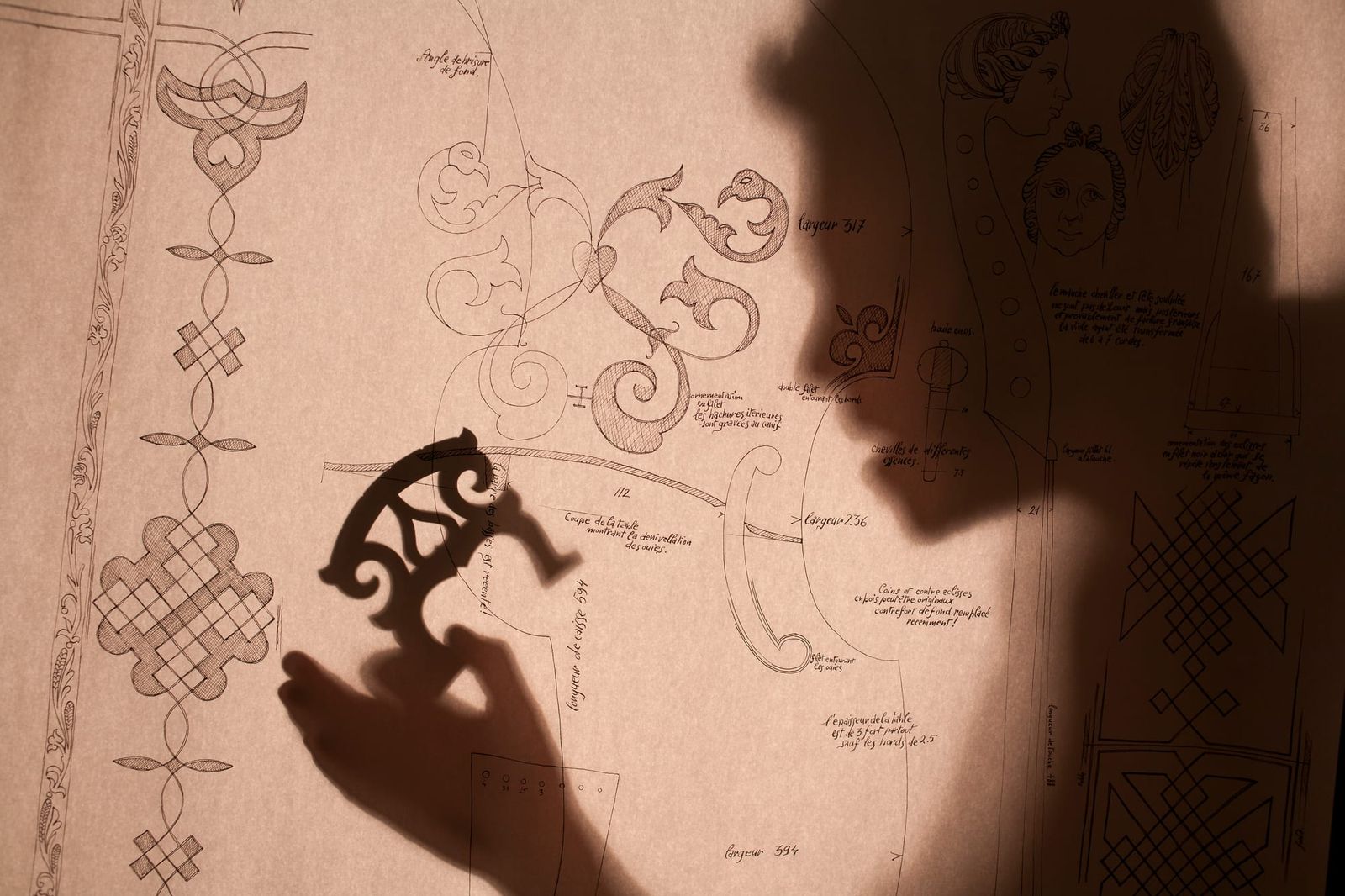
La música es algo más que un arte:
es una forma de conocimiento...
una gnosis, un conocimiento
que da salud o que salva.[[1]]
—Eugenio Trías
…música… tiempo hecho alma...[[2]]
—María Zambrano
[[1]]: Music is something more than an art:
it is a form of knowledge... a gnosis,
a knowledge that gives well-being or that saves
[[2]]: ... music... time become soul...
I. Purgation
II. Illumination
III. Union
I.
The Gift of Tears
für Johanna Rose,
seraphische Gambistin
It was after rain
that the angel came.
—William Trevor
Once the angel comes before us
do we tremble?—or summon fear
to banish wonder, unbeheld
should inward eye be parched by pride,
disdain the risk of broken bread,
the precious threat we might be healed
if the solid world we prefer
were but a pulse on wings of grace?
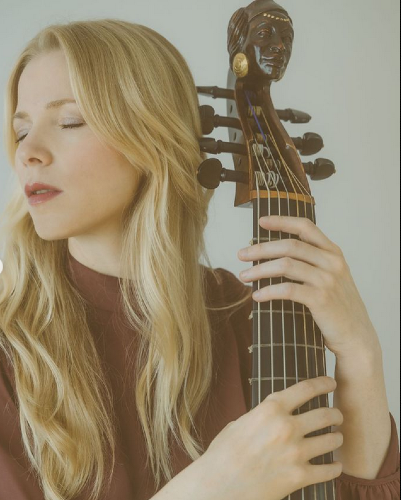
(Bach: Allemande BWV 1011- live performance)
II.
Crépusculaire
à Lucile Boulanger –
«...la source reste à ce jour introuvable.»[[3]]
[[3]]: “The source remains so far untraceable.”
See below, Notes for “Crépusculaire”
The voice at first a moan... soon sinuous
bloom of veins, warmth that ripens into arcs...
Sombre joy, penumbral iridescence:
shadow has become the rainbow’s matrix,
this web of seven strings a tenebrous
reverberation of the primal seed
in whose unfurling soul and flesh embrace,
Pythagoras and Leibniz coincide,
aspiring to discern that paradigm
of which all creatures form a paraphrase
whose melodies invite us to redeem
our deafness to the music of the spheres.
Did we anticipate astonishment?
Mere virtuosity that disappears
when harmonies align, to culminate
in a fall of incandescent whispers?
The gamba thrives in ferment and repose
between the diapason and the pearl:
solar oscillations, nocturnal poise,
glint of sardonyx, brocade’s flow, spiral
of ravens, intimate murmur of flame,
trellis of crescendo and interstice,
delicate cadence caressing the gleam
that traces the concentus cœlestes.
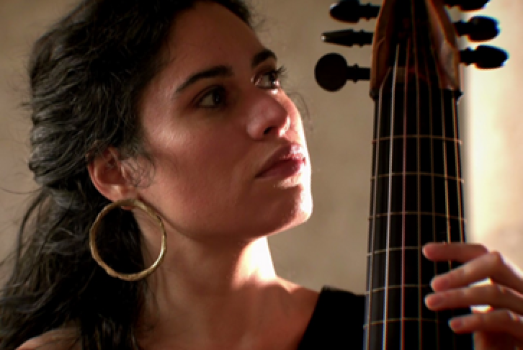
(BACH - ‘Preludio BWV 846/a’ // ABEL - ‘Arpeggio in D Minor, WK 205’)
III.
The Art of Memory
per Jordi Savall
La saba de la bellesa
El sabor del sagrat[[4]]
[[4]]: (Catalan:) The sap of beauty,
the savour of the sacred
You raise a supple bow in upturned palm,
opposing fingers poised upon the frets
preparing to resuscitate the flame
that receptivity alone creates.
Deftly now, caress the veil, graze the gate
your touch unseals: transpose mere strings to coals
reviving ancient colours we forgot.
Disclose la lumière sans limite that flows
through us as ripples of dispersed perfumes:
rhapsodic joy, laments that elicit
regret for all our fallen nature maims.
With litanies of tenderness long lost
open our path to the timeless haven
where love annihilates oblivion.
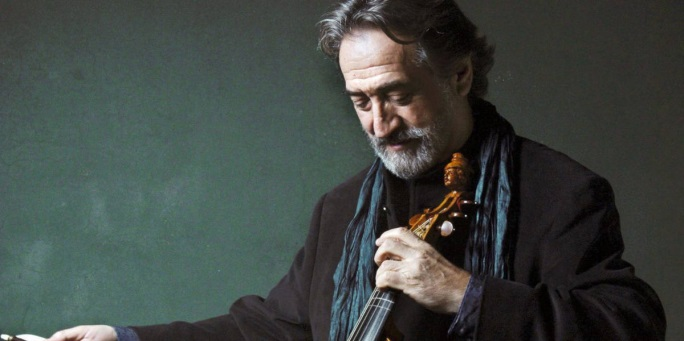
(Sainte-Colombe - Prélude // Marais – Sarabande à l’Espagnole)
Notes for “Crépusculaire”
Epigraph:
Lucile Boulanger: Though she is referring to a manuscript, Mlle. Boulanger’s eloquent words suggest themes of a metaphysical ambit: the ultimate mystery of music’s source.
vv. 8, 12, 24:
In Renaissance & Baroque lore, deriving from Classical and Medieval sources, Pythagoras, on account of his purity, was regarded as uniquely capable of hearing the music of the spheres, or “heavenly concord”: “Pythagoras audivisse fertur, concentus cœlestes.” (Bernardus, Seminarium totius philosophiae, II. 767; and see Porphyry, De vita Pyth. xxx, and Iamblichus, De vita Pyth., xv.)
Leibniz (1646-1716) stresses that we fail to perceive the universal harmony immanent in all things when we apprehend only diversity bereft of unity, which demands a capacity for grasping the full diapason, the chiaroscuro of reality: “as a painting is set off by shadow, as the harmony due to dissonances transforms the dissonances into consonance (just as from two odd numbers an even number comes about).” Such contrast is essential, for “the goal of human life is the recognition of harmony, where that is the same thing as the intuition of God: when we ‘contemplate the universal Harmony of things,’ we are face to face with the Divine ... The beatific vision will occur when we are able to discern the unity within the multiplicity of the world... God is like an infinite melody played in infinitely complex ways.” – [Christia Mercer, Leibniz’s Metaphysics: Its Origins and Development (Cambridge UP, 2004), pp. 394, 213, 215.]
The Music of the Spheres influenced not only poets and philosophers, but astronomers like Kepler. As the paradigm of cosmic order that not only prevails in the heavens but permeates the terrestrial order, it “provides the perfect pattern for art in any medium that purports to be true... It encompasses the full range of Pythagorean reality, from the highest celestial abstraction to the most affective of human experience.”- [S.K. Heninger, Jr.Touches of Sweet Harmony (San Marino, CA: Huntington Library, 1974; 2nd ed. Tacoma, WA: Angelico P, 2013), p. 179.]
The theme is perhaps most famously alluded to in Shakespeare’s Merchant of Venice (V.1, 58ff.):
There’s not the smallest orb which thou behold’st
But in his motion like an angel sings,
Still quiring to the young-eyed cherubins;
Such harmony is in immortal souls;
But whilst this muddy vesture of decay
Doth grossly close it in, we cannot hear it.
Despite our mortal frailty, earthly Music traces in its highest utterances that heavenly concord. Audible yet invisible, it offers a bridge between the sensual and spiritual realms—revealing “the present as a point in time through which eternity enters our consciousness...” [Heninger 227]. Hence crepuscular: echoing the double twilight of morning and evening, when day and night converge, inviting us to contemplate and integrate the coincidence of opposites.
Renaissance & Baroque composers from Monteverdi to Pergolesi understood: Music is not merely emotional but intellectual (Bach, though unique, is no exception), and thus echoes the Empyrean realm: “the Sphere of Intelligence, as the mean between matter and Form, between movement and repose, time and Eternity.” [«la Sphère de l’Intelligence, comme moyenne entre la matière et la forme, entre le mouvement & repos, & entre le temps et l’Éternité.» [Guy Le Fèvre de la Boderie, «Épistre», in his translation of Francesco Giorgi, L’harmonie du monde divisée en trois cantiques (Paris: Jean Macé, 1578), p. vii.]


