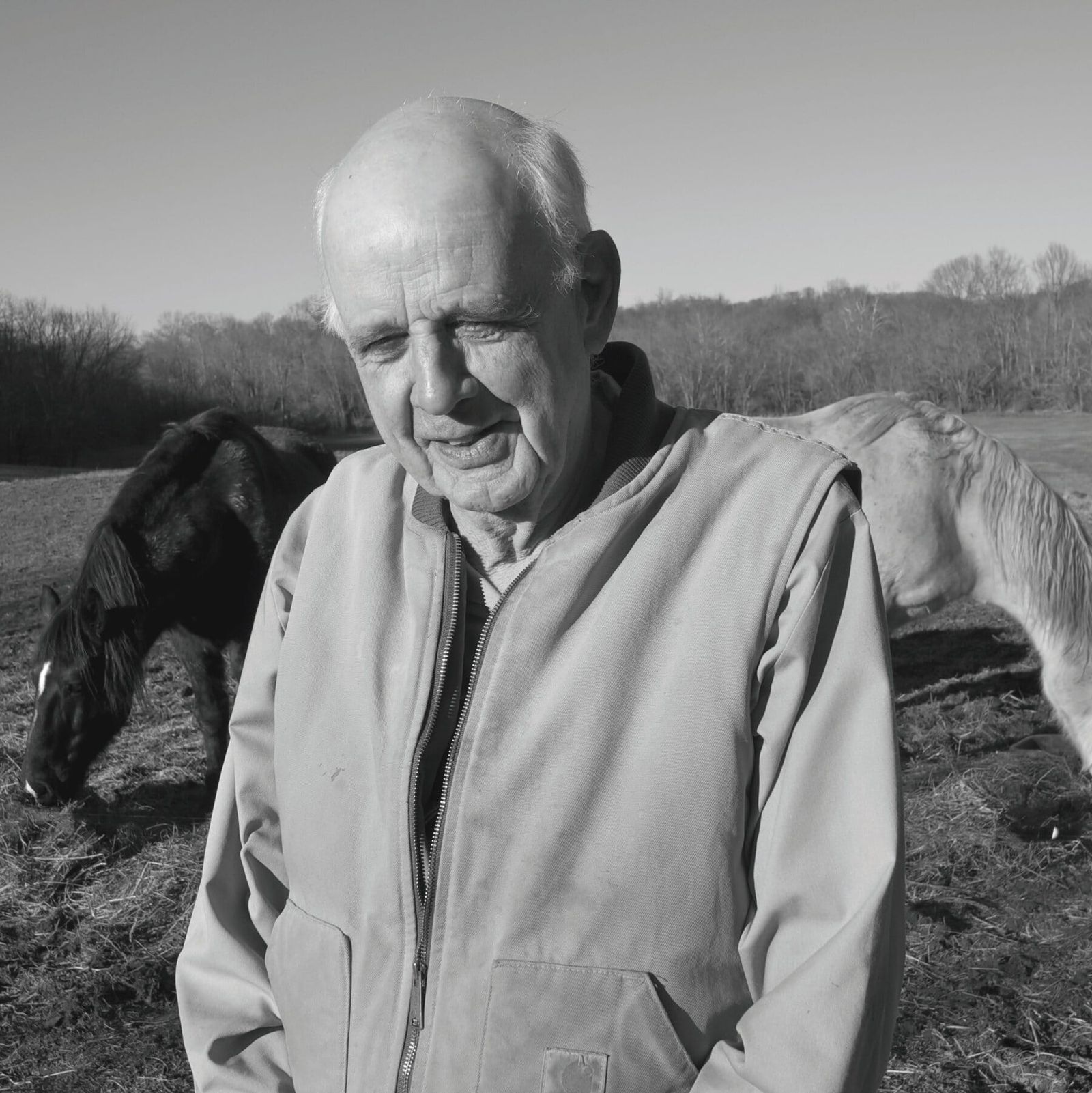
Wendell Berry is not easily labeled. Known as a poet, author, and man of letters, he is also a farmer, agrarian reformer and environmentalist, a cultural and economic critic, and a defender of communitarian and family values and lifestyles, whose ideas are rooted practically in a sense of fidelity to place and community and in a commitment to community-based living. He was born into a farming heritage in Kentucky in 1934. After studying creative writing under Wallace Stegner at Stanford in 1958, he traveled abroad in Europe under a Guggenheim Fellowship in 1961, before returning to the USA to teach English briefly in the Bronx in New York, and then, in 1965, purchasing a farm and homestead, Lane’s Landing, in his native Kentucky, and settling there with his family. For several years Berry pursued an academic career, teaching creative writing at the University of Kentucky till 1977, but he has since devoted himself to cultivating his farm, and tending to the needs and concerns of his family and community, while maintaining a prolific career as a writer. The recipient of several writing awards, Berry’s ideas—in particular, his views on stewardship and sustainable communities—have gained the attention and garnered the support of traditionalists and critics of modernism over the years. Berry is a Fellow of the Temenos Academy in England.
Conversations with Wendell Berry is an anthology, edited by one of Berry’s former students, which gathers in one place for the first time his various interviews spanning the period 1973 to 2006. Reading these interviews, one can discern a remarkable thematic coherence and consistency of thought, while observing, in his responses to the changing currents of time and topic, the perennial value of his ideas. This review of the anthology will attempt to provide an overview of the themes that emerge from his conversations, as far as possible in Berry’s own words.

A good community is one in which people understand that in order to have certain good things, they have to have them in common.
At the heart of Berry’s worldview is the community. Berry speaks of a “community” as a “commonwealth,” which is “a holding in common of many different things of value,” an inclusive “pattern of practical relationships” and “a pattern of loyalties”. “A good community is one in which people understand that in order to have certain good things, they have to have them in common.” This idea of community is necessarily economic, and is based on the notion of a fidelity to place, to sharing space, and to improving the quality of life for all who live in that shared space, based on their common concerns and values. “When enough people in a place know themselves as members, then I believe the place will change for the better. That’s a statement of faith necessarily, because most of us now don’t live in such a place…most of us live in places and in neighborhoods dominated by the influence of individualism, by the endless justified selfishness of the consumer economy, and by the principle of competition.”
The idea of community could easily be qualified to limit the definition to suit dominant elements in the group, as it is in some modernist discourse—for example, in secularist polemics of exclusion (think of the hijab controversy in France) or limits to reasonable accommodation (think of the Heurouxville controversy in Quebec); but Berry is clear that the vision of a community requires a greater magnanimity and pluralistic foundation than some modernistic communitarian views might allow. Berry is critical of the idea of an “intentional community”: “I think the idea that you can have an intentional community is about as misleading as saying you can have an intentional life. If you’re going to have a decent and stable community, you’ve got to produce the cultural and social forms by which to deal with the unexpected and the undesirable. The intentional community idea assumes that when you say love your neighbor as yourself, you have some kind of right to go out and pick your neighbor. I think that the ideal of loving your neighbor has to take on the possibility that he may be somebody you’re going to have great difficulty loving or liking or even tolerating.”
The pluralism that extends hospitability to just anything is not valid. There are standards.
But where does one draw the line in defining the community and the outcast? Berry’s broader approach to community is not defined by outer emblems of affiliation but by the commitment to the principle of neighborly love. This involves: “loving one another, taking care of one another, being thankful for the gifts of heaven and earth and our human forbears, taking good care of those gifts.” For Berry, the community is the servant of its individual members, and this service, which is the seedbed of its culture, extends from the economic sphere—the cultivation of the land and its bounties—to the spheres of upbringing and education—the cultivation of values. As a corollary, Berry’s notion of pluralism is founded on his particular view of community and its fidelity to people and place, which he distinguishes from broader or narrower notions of pluralism that are relativistic or superficial: “The pluralism that extends hospitability to just anything is not valid. There are standards. Real pluralism extends respect—not tolerance—toward all rooted, locally adapted cultures that know what works and what doesn’t work in a given place. That kind of pluralism doesn’t exist now. In fact, as soon as a culture becomes rooted, our so-called pluralism withdraws its respect, labeling it provincialism or anachronism.”
There is no line that you can draw between people and the elements they depend on. … Humans…have responsibilities that go above and below.
Berry’s generous view of ‘community’ is related to his environmentalism and is based on the intimate relationship between man and the environment. “There is no line that you can draw between people and the elements they depend on. That’s why this term ‘environment’ is so bothersome to me. ‘Environment’ is based on that dualism, the idea that you can separate human interests from the interests of everything else. You cannot do it. We eat the environment. It passes through our bodies every day, it passes in and out of our bodies. There is no distinction between ourselves and the so-called ‘environment.’ What we live in and from and with doesn’t surround us—it’s part of us. We’re of it, and it’s of us, and the relationship is unspeakably intimate.” But while there is no ultimate boundary between man and the environment, Berry nevertheless acknowledges a hierarchical basis to life and the responsibilities this entails: “Humans…have responsibilities that go above and below. We’re supposed to be humble and reverent toward the things that are above us and magnanimous to those things that are below us.”
My approach to religion has pretty much been from the bottom up. I never was much good at the top-down version, and my understanding of religion has grown from my understanding of the things of time, from family and community life.
Underlying Berry’s notions of community and environment is the sense of interconnectedness and interdependence, and reverence and responsibility, that are central to the meaning of faith for him. In one interview, Berry confides: “My approach to religion has pretty much been from the bottom up. I never was much good at the top-down version, and my understanding of religion has grown from my understanding of the things of time, from family and community life.” He is critical of the conventional teachings of the Church: “The ‘church’—in its organized forms—has always loved itself for excluding, and sometimes for killing, unbelievers and heretics. Christianity (in its Western forms, at least) has also tended to exclude nature—the body’s life and all it depends on. Which is to say that it has not been interested enough in our economic life. It has been too easy to be ‘a good Christian’ while destroying the world that (we are told) God loves.” Berry cautions against the effects of a materialistic and outwardly pietistic religion: “religion itself is increasingly industrialized: concerned with quantity, ‘growth’, fashionable thought and an inane sort of expert piety.” Instead, Berry advocates a return to the heart of Christ’s teachings, in particular their emphasis on love: “I think that if Christians quit worrying about being ‘Christians’ or church members and just undertook to do what Christ told them to do—love one another, love their enemies, take care of the helpless and the friendless and the unworthy and the no-account—then the ‘church’ might sooner or later dissolve into something much better.” Berry views religion as an ecological idea, involving a shift in viewpoint from the idea of the Church to the whole of Creation—a shift that requires humankind to exercise the faculty of the spiritual imagination: “When St. Paul said that ‘we are members of one another’, he was using a far more inclusive ‘we’ than Christian institutions have generally thought. For me, this is the meaning of ecology. Whether we know it or not, whether we want to be or not, we are members of one another: humans (ourselves and our enemies), earthworms, whales, snakes, squirrels, trees, topsoil, flowers, weeds, germs, hills, rivers, swifts, and stones—all of ‘us’. The work of the imagination, I feel, is to understand this.”

There are standards relating to culture that go beyond the self-interest of any group. We must, first and foremost, ask what objective measures we can use in our efforts to live in the world without destroying it.
Inevitably, these notions of interconnectedness and interdependence that lie at the heart of Berry’s worldview are central to his views of economic life. Berry defines the economy in a way that pays due attention to “externalities,” unlike many modernist economic theories: “Economy is our way of making a living. It connects the human household with the good things that sustain life. This involves the money economy and many other things that our present idea of ‘economics’ excludes: good work, good care of the materials and other gifts of nature, faithfulness to one another in all relationships.” For Berry, good economics is tied to good community: “I think this starts with an attempt at criticism of one’s economy…What are the things that one buys? How necessary or useful are they? What is their quality? Are they well grown or well made? What is their real cost to their producers and to the ecosystems in which they were produced? Almost inevitably when one asks these questions, one discovers that they are extremely difficult and sometimes impossible to answer. That frequently is because the things we buy have been produced so far away as to make impossible any stewardly interest on the part of the consumer. And this recognition leads to an even better question: how can these mysterious products brought here from so far away be replaced by products that have been produced near home? And that question, of course, leads to all manner of thoughts and questions about the possibility of a better, more self-sufficient local economy. What can we neighbors do for one another and for our place? What can our place do for us without damage to us or to it?” These kinds of questions and the approach they imply compel Berry to be critical of the exploitative globalized economy, which he views as a false kind of pluralism, one that is potentially destructive of the environment: “Today, local economies are being destroyed by the ‘pluralistic’, displaced, global economy, which has no respect for what works in a locality. The global economy is built on the principle that one place can be exploited, even destroyed, for the sake of another place. That is a bad kind of pluralism.” For Berry, the problems of poor economics and of the lifestyle diseases that result from them are derived from the alienation of people from land and community. Things have grown too big, too complex, and we are losing our connection with reality, forfeiting control to systemic changes in a way that is threatening all we should truly value: “…we’ve lost the sense of connection between ourselves and the natural world…and this connection is economic necessarily.” This is the principal reason that Berry is a proponent of locally self-sufficient communities. He cautions: “Creatures who grow beyond the carrying capacity of their habitats will die. So the right question is: will we restrain ourselves, or will we die?” The economics he advocates are based on prudence and responsibility: “Shorten the supply lines. Bring your economic geography back into your own view.”
…ignoring complexity makes complication.
Berry advocates the need for real engagement with complexity in dealing with life. This requires an inner harmony and integrity. It requires a reconnection with the world, a reordering of elements so that a just response to complexity can then emerge: “Simplicity means that you have brought things to a kind of unity in yourself; you have made certain connections. That is, you have to make a just response to the real complexity of life in this world. People have tried to simplify themselves by severing the connections. That doesn’t work. Severing connections makes complication. These bogus attempts at simplification ignore or despise the real complexity of the world. And ignoring complexity makes complication—in other words, a mess.” In order to truly reconnect with the world, we must pay loving attention to the things that matter: “I want to live in a good place, and I know that people can’t live in good places unless they know where they are and pay the closest, kindest attention to what they do there.” This kind of attention requires us to be concerned about our relationship to our neighbors and our collective relationship with the land we share: “The primary concern has to be the cultural relation between people and land.” This means that we need to learn not to want to live just anywhere, but in a particular place; to be a loyal steward of our habitats and the creatures we share it with; to cultivate our shared lands responsibly, conserving them and sustaining them; to be loyal to one’s particular community while being open to all its members; to commit to a dignified life for all and to work responsibly in this cause as an engaged member of the community.
Love is not just a feeling; it’s a practice, something you practice whether you feel like it or not.
Central to reconnection is the notion of “love” as a discipline: “Love is not just a feeling; it’s a practice, something you practice whether you feel like it or not.” Berry gives the example of a farmer having to milk a cow: this must be done when the cow needs milking, not when the farmer feels like it. This takes a fidelity rooted in the discipline of love—of both community and land. “I think we’re developing a society now whose dominant effort is to get out of work. It’s probably a measure of our decadence that we can talk about a ‘work ethic’. Work isn’t an ethic, work’s a necessity.”
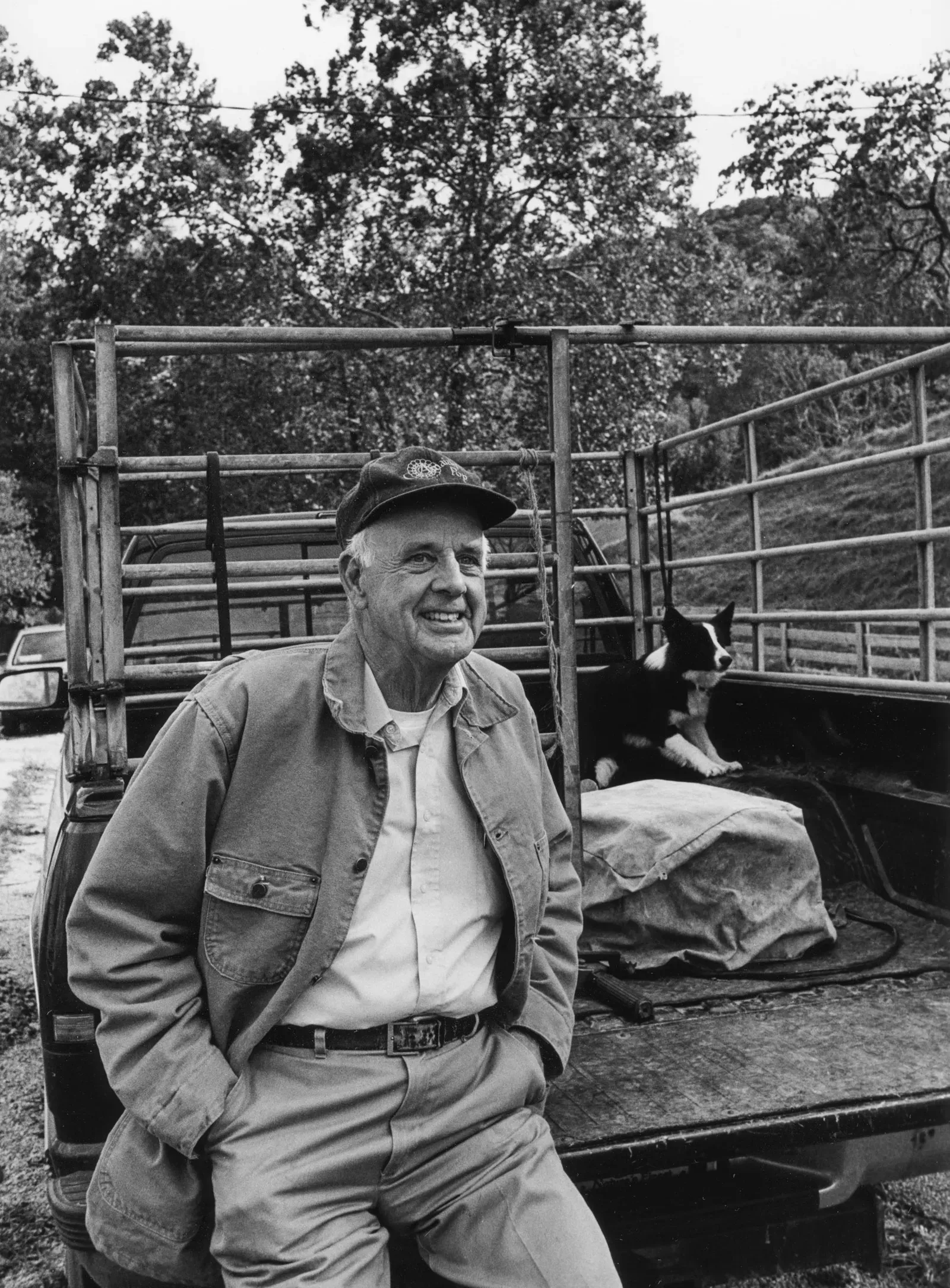
Berry’s ideas compel a rethinking of modernist premises in a variety of areas, and he has indeed much to say about the false premises of modernism, particularly as these might impact the community-based quality of life that he advocates. In one interview, Berry speaks of “the modern divorce between economy and religion—which is really just a version of the devastating old dualism of body and soul.” In another interview, he is critical of the myth of progress, which, at its worst, becomes in his view a kind of determinism: “It substitutes this infinite advance toward better and better life in the material sense for the old pilgrimage, which you make by effort and grace, to become a better person.”
To me, love is the source from which all else springs, and that is why the modern ‘sophisticated’ exploitation of sexual love is so regrettable, depressing and, I think, dangerous.
He also bemoans the loss of loving affection in the modernist emphasis on sexuality, rightly castigating promiscuity as a form of self-depreciation and exploitation: “To me, love is the source from which all else springs, and that is why the modern ‘sophisticated’ exploitation of sexual love is so regrettable, depressing and, I think, dangerous.” He is critical of the sexual revolution: “The sexual revolution, based on the superstition of safe sex, is as big a failure as the ‘peaceful atom (bomb)’. In the last 400 years, our attention has moved from the countenance to the specific sexual anatomy. When we read Shakespeare or Chaucer, we find that the great source of power is in the eyes…This change in focus of sexual love from the countenance to the genitals means that certain responsibilities are being refused. The countenance involves the spirit, the soul. If you deal with people in terms that require you to meet their eyes, you are dealing with them as living souls, not just as bodies. Further, if you deal with them as living souls you recognize instantly that certain things are demanded; for one, you must acknowledge them as people with lives, needs, problems. Of course, if we can keep the countenance out of it, we don’t have to take responsibility for the complexity of the encounter. We can remain in our ‘animal nature.’ However, once we exclude responsibility from the encounter, we have also obliterated its power.”
For those who are familiar with his writings, and also for those who are approaching Berry’s thinking for the first time, this book of conversations and interviews is a fine introduction, overview, and synthesis of the themes and ideas that lie at the heart of his worldview—a perspective that invites a reorientation to the Center and that has much wisdom to offer us in these disorienting times.