
Introduction
‘The Crisis of the Modern World’ has resisted the rust of time
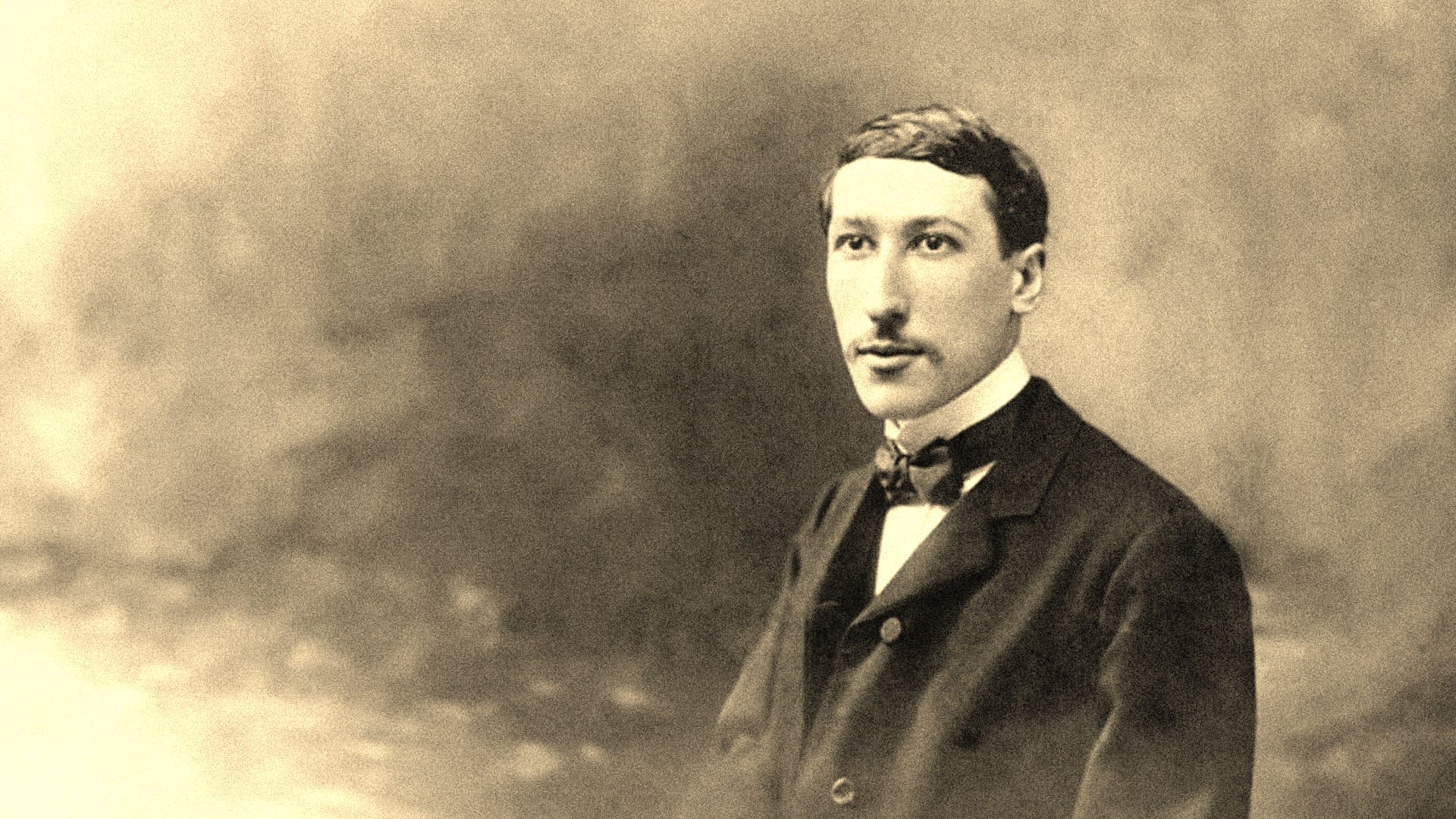
René Guénon’s The Crisis of the Modern World, first published in 1927, was a seminal book. It has served as a reference point for the so-called perennialist or traditionalist school, which was represented by major figures such as Ananda K. Coomaraswamy (1877-1947) and Frithjof Schuon (1907-1998). This volume followed in the steps of Orient et Occident (East and West), first published in 1924, which it developed and refined, and it preceded The Reign of Quantity and the Signs of the Times, published on the eve of World War II, which provided a wider and deeper metaphysical and cosmological background for Guénon’s critique of the modern world. Notwithstanding its being published nearly a century ago, The Crisis of the Modern World has resisted the rust of time, since most of its diagnoses remain relevant, and no doubt more so than ever. Notwithstanding, some secondary components of the book may appear today somewhat limitative, or even at times moot, as a result of all-too-schematic categories and, in some cases, arguably outdated prescriptions.
the substance of Guénon’s critique lies in his observation that the modern West is an “anomaly,” and even a “monstrosity” in the history of mankind
The Crisis of the Modern World is comprised of nine chapters, six of which – chapters 3 to 8 – build on the basic contrast between East and West, which is the focus of chapter 2 in the wake of Orient and Occident. As for chapter 1, it provides an eschatological background while the final section evokes some possible courses of action as a response to the modern crisis. To sum it up, the substance of Guénon’s critique lies in his observation that the modern West is an “anomaly,” and even a “monstrosity” in the history of mankind.[[1]] Modern civilization is the first one in human history not to be founded on metaphysical principles. It must be specified that, in Guénon’s idiom, metaphysics refers to a transcendent Reality or a transcendent Order that may vary in its formal definitions but always implies a source of ultimate meaning that informs all areas of human activities.
[[1]]: “Partial disorders cannot but exist, since they are necessary elements in the total order, but a period of disorder is in itself nevertheless comparable to a monstrosity, which, though the consequence of certain natural laws, is still a deviation and an error, or to a cataclysm, which, though resulting from the normal course of events, is nevertheless a subversion and an anomaly when viewed in itself.” The Crisis of the Modern World, Marco Pallis, Arthur Osborne, Richard C. Nicholson, translators, Hillsdale, New York: Sophia Perennis, 2001, p.19
Concomitant aspects of this radical flaw of the modern world include
1) an emphasis on action at the exclusion, or at the detriment, of contemplation,
2) the one-sided development of a science that focuses on the material shell of universal existence while dogmatically negating the reality of anything transcending this shell,
3) an individualism that moves away from universal metaphysical principles and substitutes subjective perceptions for intellective knowledge,
4) a “social chaos” in which natural differences and qualitative vocations are ignored, and human society is being turned upside down,
5) a material civilization that reduces everything to quantitative measures, and
6) an “invasion” of modern Western ideas and practices all over the world.
More synthetically, the content of the book can be divided into two sets of reflections: an extensive diagnosis of the modern world, which occupies most of the volume, and a few prescriptions, in fine, envisaging keys for the possible resolution of its crisis.
The urgency of the crisis and the general thrust of Guénon’s response to it are distinctly expressed in the following:[[2]]
“Consequently, when it is said that the modern world is in the throes of a crisis, this is usually taken to mean that it has reached a critical phase, or that a more or less complete transformation is imminent, and that a change of direction must soon ensue whether voluntarily or no, whether suddenly or gradually, whether catastrophic or otherwise, remaining to be seen.”
[[2]]: Crisis, p.2
To what extent are Guénon’s diagnosis and prescriptions still relevant today, in what respect Guénon’s “prophecies” can be confirmed, developed, re-formulated or corrected?
Before trying to answer these questions it may be useful to highlight the main challenges facing today’s world, and briefly consider a few of their implications in light of Guénon’s perspective. We may then proceed with a closer, more developed examination of the ways in which some of Guénon’s observations may be revisited. Finally, I will touch upon Guénon’s view of the meaning and modalities of the end of the modern world, and what a transition toward a new era could speculatively mean.
Challenges Facing the Modern World
With regard to the world as we see it today, one may mention five main critical areas:
1) the environmental crisis,
2) the demographic and migratory crises,
3) the opposition between new forms of “nationalism” and “globalist” interests, sensibilities, worldviews and ideologies,
4) the rise of religious “fundamentalism” (for lack of a better term) and inter-confessional strife, and
5) the new ways of global capitalism in connection with innovative forms of exchanges through virtual media, together with their manifold impact on human life and mentalities.
With respect to the first two, which are in a way “material” inasmuch as they pertain to the external framework of our life, Guénon’s critiques provide useful keys of interpretation. It is now hardly debatable that science and technology have contributed, albeit unintentionally and indirectly, to the degradation of the natural environment. One needs only mention, in this regard, the increasingly pervasive industrial and consumption-related overproduction, as well as the worrying growth of world population – and a sharp demographic imbalance between North and South. There would be much to say concerning what responses to the environmental crisis may mean in terms of a potential return to traditional principles. Suffice it to mention that such responses may lead in two divergent directions. One could be deemed propaedeutic, at least potentially, to a restoration of the sacred and traditional ways of relating to nature, namely a rediscovery of its theophanic dimension, its connection with transcendence as reflected in its beauty and majesty.
Conversely, it is also to be feared that environmentalism may confine, in its most radical and secular forms, to substituting nature for the sacred and transcendence, the exclusive focus being on the natural order as a sort of moral absolute, or even as a kind of subjective “god” bereft of transcendent horizon, if not even standing in opposition to the latter.
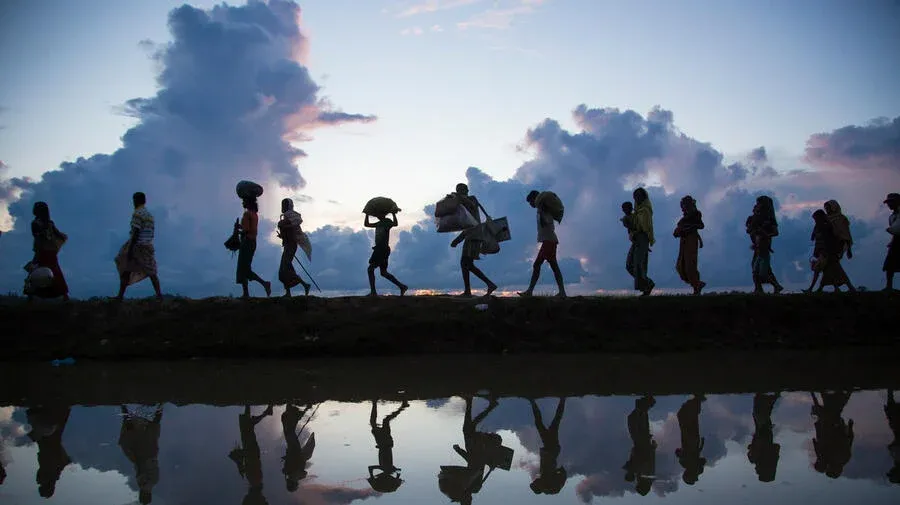
As for demographic trends, they are undoubtedly the unintended consequences of the advances of medicine, a relative good which — as any good and perhaps more than any other, is not without its negative effects. In parallel, the sharp contrast between North and South may be connected to changes in lifestyle and social conditions that occurred in the wake of the industrial revolution, through colonial expansion, the quasi-destruction of traditional modes of living, mass production and an inorganic urbanization, without omitting economic and political corruption.
Moreover, the socio-political and religious aspects of the contemporary crisis are not unrelated to Guénon’s diagnosis. The “globalist-nationalist” divide, and its fueling of conflicts of various sorts, stems from modifications in the modes of production and exchanges that derived from the scientific and industrial revolutions, and more recently, from the rapid and invasive emergence of the virtual world. On the one hand, these changes have unified the planet under common economic drives and interests within a virtual web of exponentially expanded, but largely unintegrated, communication. On the other hand, they have exacerbated the contrasts and inequalities between those whose horizon is still circumscribed by local identities, and who are often foreign to, or wary of, the global odyssey, and those for whom globalization has meant moving away from regional, ethnic and national “prejudices” – we use this term in the neutral etymological sense of something received through collective transmission without examination. Those who emphasize the former argue that globalization is also an intellectual and spiritual opportunity. For one thing, globalizing trends have made it possible to establish intellectual and spiritual inter-civilizational connections that could possibly echo Guénon’s call for an intellectual fertilization of the West by the East. If truth be told, however, interfaith and cross-civilizational endeavors have often amounted to an ambiguous aggregation of secularized and diluted forms of a rather abstract “universalism” with “globalist” trends, if not a cooptation of vulgarized esoteric ideas for such purpose. Without venturing into conspiracy theories one must recognize that there is therein a questionable turn worth pondering.
As for “nationalism,” Guénon characterized it as an anti-traditional ideology inherited from the French Revolution.[[3]] It flourished in various forms in the 19th and 20th centuries, first on the political left and then on the right. It is fundamentally opposed to the traditional concepts of Christendom and Empire, in and by which the principle of sovereignty was deemed transcendent to merely native and cultural realities. Here also, it might be necessary to revisit what so-called “nationalism” implies in our current context and, notwithstanding its anti-traditional sources, how its forms and meaning have been reconfigured along the way, and to what avail.
[[3]]: “… all nationalism is essentially opposed to the traditional outlook…” Crisis, p.98
“solidification“: in Guénon’s vocabulary, this word characterizes a hardening of the shell of human existence that blocks the access to higher realms of being
Moving briefly to the religious aspects of the contemporary crisis, the modalities of which Guénon did not, and could not, anticipate, one must highlight the spread of religious views often referred to as “fundamentalist.” This term is ambiguous, of course, and used in too many religious contexts to be quite satisfactory. It has moreover accrued negative connotations that may not be fair and appropriate in some instances. At any rate fundamentalism can be characterized by a tendency toward exclusive literalism, an emphasis on formal integrity as a prime criterion of truth and religious rectitude and, not uncommonly, a strong sense of collective identity fuelled by revivalist energies. Fundamentalist movements are relatively new in inspiration – the term itself arose in the context of American Protestantism in the early 20th century – and they tend to break away from traditional institutions and hermeneutics which they often consider as “deviations” from the original, uncorrupted truth and practice. In this respect they may correspond, in the religious sphere, to what Guénon referred to, in his Reign of Quantity and Signs of the Times, as “solidification.”[[4]] In Guénon’s vocabulary, this word characterizes a hardening of the shell of human existence that blocks the access to higher realms of being. It can be applied, by extension, to religious thinking and attitudes that absolutize forms in one way or another, depriving them thereby, at least in part, of their essential symbolic and sacramental function of communication with the transcendent order.
[[4]]: “In order to reach the stage that has been described, man must have lost the use of the faculties which in normal times allowed him to pass beyond the bounds of the sensible world, the loss being due to the existence of ‘materialization’ or ‘solidification’, naturally as effective in him as in the rest of the cosmic manifestation of which he is a part, and producing considerable modifications in his ‘psycho-physiological’ constitution.” The Reign of Quantity and the Signs of the Times, Hillsdale, New York: Sophia Perennis, 2004, pp.115-116
Finally, with regard to the neo-liberal world of virtual commodities and exchanges, cannot we see it as the extreme outcome of the “material civilization” that Guénon already highlighted? The numerous technical “revolutions” that it has entailed, and the unprecedented, and seemingly uncontrollable, communication that it unleashes, amounts, as Guénon observed, to “multiplying artificial needs” and “will create ever more needs than it will be able to satisfy (…)”.[[5]] This remark is increasingly relevant in a world in which an exponential access to objects of information and advertised goods has multiplied to the point of creating an artificial dimension of human desire and gratification.
[[5]]: Crisis, p.147.
Materialism and Religion, Materialism in Religion
Guénon did not hesitate to connect materialism at times with modern occurrences of religion and spirituality
Coming now to a more analytic application of some of Guénon’s ideas in today’s context, a first fruitful consideration might be that of the relationship between “materialism” and “religion.” While the term “materialism”, whether understood in philosophical or practical terms, is ordinarily taken to be opposed to the religious and the spiritual, Guénon did not hesitate to connect it at times with modern occurrences of religion and spirituality, namely what could be called “conventional”religion on the one hand, and “neo-spiritualism” on the other. When relating both realities to “materialism” what Guénon had primarily in view was their intimate connection with “forms” and “phenomena”, albeit in radically distinct ways. Conventional religion is a kind of reduction of religion to what Guénon calls “the illusion of ordinary life.” This illusion is a result of a lack of consciousness of transcendent realms of being that are relegated in an abstract and inoperative domain. He notes, in this respect, that most so-called religious people are about as materialistic, at least practically speaking, as anybody else. In such regard the concept of solidification does apply quite suitably.
Today we have new phenomena which confine to a “materialistic” understanding of religion in a “literalist,” “fundamentalist” and aggressively exclusivist modes. Let us quote Guénon himself to situate those in metaphysical context: [[6]]
"The more one enters matter the more the elements of division in opposition are emphasized; inversely the more one raises towards pure spirituality, the more one approaches unity, which can only be fully realized through the consciousness of universal principles.”
[[6]]: Crisis, p.41
This principle can be applied to large segments of contemporary religion. Here “matter” is evidently not to be understood in the ordinary sense of physicality, nor in the philosophical sense of a substratum, but as a principle of “multiplicity and division”, to use Guénon’s terms. One could object that religions have always been divided, including within their own boundaries, and often opposed to each other. However, past oppositions were largely due to lack of information, and to the organic coherence, and therefore relative exclusiveness, of the various worlds of faith. It was an exclusiveness resulting from the vigorous affirmation of religious and spiritual life. It could also be mitigated, or even transcended, in what Frithjof Schuon refers to as the “stratosphere” of contemplative metaphysics and mysticism.[[7]] The contemporary situation is largely different in that it often evokes the stiffening before death as a kind of rigid reflex of self-preservation. Thus many forms of religious “fundamentalism” may be understood in terms of “material” sedimentation, or solidification.
[[7]]: “(…) God is the same for all the religions only in the divine “stratosphere”, not in the human “atmosphere”; in this “atmosphere” each religion has its own God for all practical purposes, and there are as many Gods as there are religions.” Sufism Veil and Quintessence, Bloomington, Indiana: World Wisdom, 2006, p.41
He connected materialism and spiritualism to Cartesian dualism; neo-spiritualism corresponds to the principle of “dissolution”
On the other hand, Guénon considered neo-spiritualism also as a form of materialism, given its focus on tangible phenomena. Guénon went so far, actually, as to consider materialism and spiritualism as more or less equivalent. He connected them to the Cartesian dualism of res extensa and res cogitans, the two being intrinsically interdependent, and therefore in no way transcendent, since transcendence, in Guénon’s metaphysical view, lies beyond all oppositions and relationships.[[8]] By contrast with both conventional and fundamentalist forms of “solidification”, neo-spiritualism corresponds to the principle of “dissolution” whereby the shell of existence breaks out and gives way to unintegrated extra-material influences, particularly those springing from below, increasing thereby chaos and confusion. Thus, when he devoted a whole book to The Spiritist Fallacy (1923) Guénon, who had frequented neo-spiritualist milieus in his youth, was intent on alerting his readers to the fatal danger of a confusion of the spiritual and the psychic. [[9]]
[[8]]: “Indeed spiritualism and materialism, in the philosophical sense of these words, cannot be understood apart from each other, being merely the two halves of the Cartesian dualism, whose radical separation has been transformed into a sort of antagonism; since that time, the whole of philosophy has oscillated between these two terms, without being able to get beyond them.” Crisis, p.84
[[9]]: One way to clearly discern the first from the second is to consider that the former is universal while the latter pertains to the individual order. For more specifics on this fundamental distinction see chapter 35 in The Reign of Quantity, pp. 235-240
In most forms of modern life, where the focus is on phenomena, the vertical dimension of transcendence is kept out of sight, or else flattened down.
Dissolution does not only characterize the realm of existence, it also affects the realm of meaning, whereby the dogmatic shell of theological tenets has broken down, paving the way for heterodox thinking and diluted practices. This has been the case in the last decades, in ways not predicted by Guénon, mostly through the channel of modernist aggiornamenti of various kinds. As for the neo-spiritualist bent, it has found a new expression in New Age and self-help spirituality. While the latter is not necessarily connected to a quest for “extraordinary” phenomena, as it was in 19th and early 20th centuries neo-spiritualism, it is still associated, today, with a search for tangible effects of a different sort: physical health, psychological balance, professional and social effectiveness et alia. Today’s neo-spirituality has expanded its scope in that the “phenomena” it aims at encompassing are not allegedly “supernatural” or “occult” but, instead, relevant to the realms of the natural and the ordinary. In a way the “illusion of ordinary life” finds itself reinforced by neo-spirituality. The prime concern is to reach a sense of well-being and effectiveness in the conduct of one’s life. The vertical dimension of transcendence is most often kept out of sight, or else flattened down.
Finally, it is to be noted that neo-spirituality is also relevant to the domain of institutional religion. In addition to “fundamentalist solidification” we have witnessed the emergence of strong charismatic movements centered on “phenomena” that are understood as manifestations of the Holy Spirit, such as is the case, for instance, in the extensive and powerful diffusion of Pentecostal Christianity.
East and West: Orientations and Disorientations
Guénon: “Moreover, it would be quite logical for the ideas spread by Westerners to turn against them, since they are of a kind that can never beget anything but division and ruin.”
Guénon did not believe that the West had to be defended against anything or anybody but itself and its own productions. The Western world is responsible for its own undoing, it is a victim of its own wanderings.[[10]] More specifically, in contemplating the perspective of a collapse of the West, Guénon envisions four possibilities, which are all, directly or indirectly, karmic consequences of European thinking and doing. The first two are internal to the modern West itself. They involve conflicts among nations or between classes, both of which are actually creations of the modern West. In the 19th and 20th centuries, the rise of nations was a result of the collapse of traditional empires or religious civilizations that had thereafter included ethnic and linguistic subgroups. As for classes, they are purely economic realities, by contrast with orders and castes which are based, at least principally, normatively, and ideally, on inner qualifications or dispositions. Interestingly, however, ideologies based on such national and socio-economic realities, i.e. communism, socialism, nationalism and fascism, which were quite impactful in Guénon’s time, have either largely transformed or waned today. In the post-World War I era, nationalism was exacerbated as a subversion, or parody, of traditional orders. It was, in the case of Nazism, a form of counter-tradition, through its aspects of “hierarchical” and “occult”counterfeits, whereas Communism was the most virulent form of anti-tradition, intent as it was on destroying all remnants of religion.
[[10]]: “Moreover, it would be quite logical for the ideas spread by Westerners to turn against them, since they are of a kind that can never beget anything but division and ruin.” Crisis, p.98
the new forms of contemporary social conflicts are much more akin to modes of dissolution based on individualistic priorities than on ideas of nations and classes
Besides this difference, both corresponded, in their outer expressions, to a solidification, whereby the “material” aspect of existence took precedence over transcendent realities. This was true, in different ways, of both the “nativist” or “racist” foundation of nationalism and “historical materialism.” On the other hand, these ideologies kept a connection, albeit in very limited and quite ambiguous ways, with traditional realities such as “peoples” or “orders,” not to mention at times folk cultures and popular crafts. Today, the paradox is that what is called “nationalism” in the broadest and questionable sense, although clearly at odds with traditional principles and institutions in its historical inception, can be deemed to include the virtues of its solidifying stability by contrast with forces of mere dissolution. The defense of a national heritage does involve relative or indirect elements of truth and beauty that derive from its traditional roots, be they residual and little understood, and, on such a basis, they can sometimes provide partial elements of resistance to the dissolving and flattening aspects of many global trends. Let us not forget that solidification involves essentially an element of limiting opacity and adventitiously an element of protective stability, whereas dissolution is intrinsically destructive, its only virtue being that of making it possible for a new order to emerge from the ashes. In fact the new forms of contemporary social conflicts are much more akin to modes of dissolution based on individualistic priorities than on ideas of nations and classes. We have shifted from the modern to the postmodern, and the end of ideologies has given rise to new forms of grievances, tensions and strifes which are most often fuelled by reflexes rooted in various constructions and deconstructions of individual identity.
In a way, these trends epitomize extreme forms of the individualism that Guénon defined as the primary character of the modern world. In The Crisis of the Modern World, he characterized individualism as lacking metaphysical principles, bereft of universal objects of knowledge.
The negation, or the ignorance, of such principles confines to what could be called an “epistemological individualism,” both with respect to the object, hence the bewilderingly analytical character of contemporary forms of knowledge, and with respect to the subject, imbued with relativistic reflexes. Guénon saw the modern outlook as limited to the “individual faculty,” i.e. reason, or rather to an individual exercise of reason, for reason cannot work without premises. It cannot work in a vacuum, and it did therefore also contribute to the bent of the age that makes it function on the basis of relativistic axioms. However, even this “relativistic” dimension of individualized reason was made obsolete by the thoroughgoing dissolution activated by the post-modern deconstructive suspicion toward the stability of any meaning.
one of the paradoxes of the last decades has been a kind of formal re-Easternization of the Westernized East. This has been particularly the case in the world of Islam…
The third hypothetical cause of destruction of the modern West considered by Guénon would come from “Westernized Easterners.” At the time these words referred to Western-educated social elites in places like British India or China. Guénon argued that such Easterners were in fact intellectually Western. Their views of the world was aligned on the Western creed, with its emphasis on progressivist ideas. The reason why they found themselves in opposition to the West on the political level was precisely their sharing in Western ideas. In a way, they aimed at constraining the West to be more consistently “modern” than it had actually been in the name of its own professed values. Notwithstanding this aspect of the question some traditionalists, beginning with Frithjof Schuon, have noted in Guénon’s evaluation of the East an overestimation of Easterners coupled with an underestimation of universal human tendencies, as when Guénon argues that Asians are interested in industry only as a means to resist the West. This observation may have had a grain of truth in the early phases of the modernization of Eastern countries, but the last decades have proven it to be quite off the mark. Moreover, one of the paradoxes of the last decades has been a kind of formal re-Easternization of the Westernized East. This has been particularly the case in the world of Islam, where Westernization and outer religious re-Easternization have not uncommonly moved hand in hand, and have often coalesced as reformist and revivalist ideologies, in ways that have been spiritually impoverishing, not to say destructive, and often politically devastating.
With regard to technology, the modern West operated like a sorcerer’s apprentice
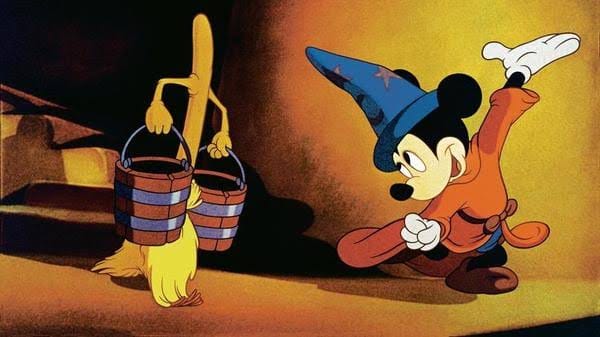
The fourth scenario in Guénon’s view of a Western self-destruction pertains to the potentially fatal dangers of the productions of science through technology. There already appears a clear karmic retribution for the scientific and industrial revolutions in the destruction of most of traditional civilizations and the degradation of the natural environment. Here the modern West operated like a sorcerer’s apprentice who may no longer be in a position to control the consequences of its own doings.
Beginnings of the End
Cyclical fall is ineluctable in its overall direction
What was the origin of this destructive course? Historically, Guénon refers to the Renaissance, or even sometimes to the late medieval period, as being marked by an initial moving away from traditional principles.
While we can identify, therefore, the main steps that led to its unfolding, how can we account for the first emergence of the modern world? One answer to this question might be found in Guénon’s specific treatment of the rise of Cartesian rationalism, in a way that could apply to any major paradigm shift. To quote Guénon, such changes are “the result of a wider underlying activity.”[[11]] In other words, such profound and impactful modifications are never spontaneous, their seeds are hidden, and the ways they unfold are manifold and difficult to outline in distinct ways.
Moreover, the word “work” obviously refers to active agents and deliberate efforts. On the one hand such changes are the outcome of profound modifications of mentalities, on the other hand the latter are largely determined by specific forces. Descartes was a seminal contributor to a new philosophical paradigm but his work would not have been possible without a cultural and intellectual climate that allowed it to crystallize.
[[11]]: Crisis, p. 59.
What strikes us then is both the clarity of Guénon’s identification of the ideological sources of the modern world and the mystery of their inception. This relative obscurity of the beginnings and the modality of their appearance can be connected to Guénon’s principle of “suggestion.” This term denotes a subtle influence produced by a deliberate agent upon others, and can indeed allude to a demonic influence in religious terms. At any rate, such suggestion escapes the consciousness and the will of those who undergo its influence. It is insinuated in a gradual, implicit, subconscious, but fully intended manner in such a way as to appear to be quasi-axiomatic. While one may attribute this idea of suggestion, with its hypnotic undertones, to the occultist background of Guénon, there is no doubt more to it. It cannot be reduced either to a kind of historical conspiracy theory. What this term indicates, first, is that the majority is utterly passive in any ideological shift. Secondly suggestion must find a receptivity in the recipient, a circumstantial susceptibility or predisposition. The sociology of most contemporary political revolutions bears witness to this twofold aspect. This being said, however, we cannot totally account for the why, when, and where of such transitional and transformative moments. The only reason, or the only cause, beyond the demiurgic action and its manifold “personifications”, is ultimately of a metaphysical order. Indeed it lies in the very nature of relativity, or what Guénon calls the Manifestation. Inasmuch as the latter is different from the Principle it is in a state of disequilibrium since only the Principle is cause of itself, as it were, and perfectly balanced in the harmony of its possibilities. It is therefore in the inherent disequilibrium of Manifestation that the actual source of any fall and deviation is to be found.
This point raises the question of the onto-cosmic ineluctability of the cyclical descent. It is clear, first of all, that this necessity is relative in the sense that Manifestation is characterized by variations that are inherent to a realm of contrasts. Cyclical fall is ineluctable in its overall direction but it entails partial ups and downs when it comes to its modalities.
This means that the ineluctability of the cyclical descent cannot be incompatible with partial elements of ascent. This is why action is not useless, as primarily illustrated by its potential role in the passage from one cycle to the next.
Subversion and Restoration
In the face of the wasteland of the West and the mortal perils that threaten it, what is Guénon’s prescription? First of all, given the grave and advanced stage of the current crisis one may wonder whether any course of action is not futile. In response to this objection, Guénon stresses that, with respect to traditional and spiritual work, “nothing accomplished in this order can ever be lost.”[[12]] Why is it so? Only that which is not fully real can be lost. Any work that pertains to being, to what Hindus call sat, is by this very fact real and preserved from disappearance. When the root of something is being, it cannot be lost, and it cannot but overcome ultimately, as echoed by the last three words of The Crisis of the Modern World: Vincit omnia veritas.
[[12]]: Crisis, p.117
the true and the good are always preeminent, ultimately, over error and evil … contact with the Principle, and therefore with Tradition as its expression, cannot be absolutely severed and must always be present, if only in a latent mode
Now, when it comes to prospective considerations of the unfolding of human history, what struck me upon re-reading Guénon’s The Crisis of the Modern World for the purpose of this essay, is the prudence of the author’s assertions. Although Guénon seems, at times, to consider some sort of “catastrophic” occurrences to be the unavoidable resolution of the crisis of the modern world, he shuns any categorical statements about the actuality and modalities of such events. While he explicitly refers to the Hindu cyclical doctrine of the yugas, the technical question, debated in contemporary Hinduism, of the current stage in the cyclical unfolding of history, might be secondary in this respect. What matters in a principial sense, besides the evident signs of the times, is the intrinsic reality of ontological loss, entropy or gravity that is unavoidably entailed by the passage from the Principle to the Manifestation. The latter entails duality, the former does not. And this distinction is also a key, positively, for understanding that the true and the good are always preeminent, ultimately, over error and evil. In fact the latter participate in the former in their own ways, and out of metaphysical necessity. As Guénon puts it in several of his works, partial or relative disequilibrium is part of universal equilibrium. This means that there cannot be any absolute chasm between the world of Reality and that of illusion. Illusion itself is part of Reality, to put it elliptically. Even the distinction between spirituality and materiality is moot on the highest level, since spirituality is the expression of the Principle but not the Principle itself, the latter transcending all distinctions. This point lies actually at the core of Guénon’s eschatological perspective since it means that contact with the Principle, and therefore with Tradition as its expression, cannot be absolutely severed and must always be present, if only in a latent mode.
It is in this regard that Guénon underlines the principle of occultation. The idea of a transitional obscurity is central to the very notion of crisis as a point of passage from one state to the next. Guénon makes use of two analogies: the nigredo of alchemy and the “dark night of the soul” of Christian mystics. The latter is characterized by a sense of distance from God, when His presence is not felt and faith is both tested and purified.
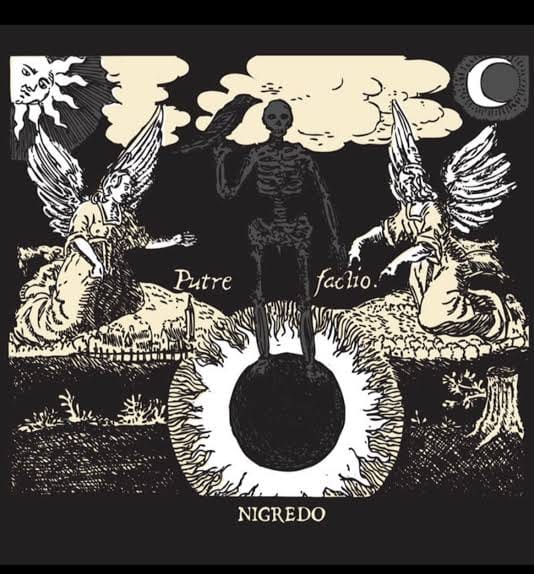
The nigredo is associated with decomposition and dissolution. It is a phase of extreme separation between Mercury and the body, a critical stage associated with death and the colour black. Black is the absence of colour, which indicates an absence of light, hence a manifestation deprived of its Principle. However, such a radical disconnection is only apparent and the successful nigredo presupposes an ability to keep the light of consciousness through the darkness of this separation.
Full consciousness must remain along the process of obscuration and separation. The successful achievement of the nigredo lies, therefore, in the ability to hold an active continuity throughout a period of passive discontinuity, a form of union in separation, and this is in a nutshell the challenge of spirituality in the modern world. This also echoes the notion of an “elite” that would remain conscious of Reality as darkness appears to have enshrouded the world. It is why it is said, in some traditions, that the end will not come, despite growing obscuration, as long as there is an active awareness of the Light. A Prophetic tradition states in Islam that “The Hour will not come until no-one on earth says, ‘Allāh, Allāh’.” (Ahmad)
Thus, what Guénon characterized as an “intellectual elite” might be better understood today as spiritual presence. In fact, Guénon himself states that “intellectuality (…) is one with true spirituality.”[[13]] Failing such an identification of the intellectual with the spiritual, no profound work of inner revival seems possible. A question may arise, however, from the semantic evolution of the terms “intellectual” and “spiritual.”
The first has come to denote mental abilities, referring as it does to discursive exercises, while the second has accrued subjective and diffuse connotations that often suggest a contrast with religion, if not an opposition to it. Moreover, channels of intellectual communication and influence have become extremely diverse and uneven, not to say protean, and as the analytic emphasis of the modern mind that Guénon deplored has consistently increased, it has also produced, through the most diverse media, an exponentially quantitative universe of data and discourses that borders on cacophony.
[[13]]: Crisis, p. 95
Now the way in which Guénon envisaged the mode of influence of an “elite”could not take into account the information revolution that took place in the 21st century. The flattening, as it were, of the modes of communication through the internet have made it for instance quite unlikely that an “elite” may gain a qualitative footing that could determine mass media. Even the most discerning and enlightening forms of information risk being drowned in the vertiginously proteiform world of today’s information. Moreover, the loss of integrity and influence of institutional religions make it all the more implausible that any such elite could induce significant changes on the collective level through such channels.
How then can a collective transformation occur? One possible answer could point to collective experiences that would reshape the human perception of the world, another could see it as a change of mentalities from within. The two could be conjoined. In several passages of his work, Guénon appears to be alluding to the possibility of external events which, in the form of catastrophes, could bear on the destiny of mankind and constrain it to change its direction. The current environmental crisis provides plausible scenarios along these lines.
The Role of The East
the role of an “elite” might be better understood as an “action of presence” informing religious forms, practices, and collectivities
Returning to Guénon’s view of the “elite”, the substitution of “spiritual presence” for “intellectual elite”, or their identification, is buttressed by Guénon’s reflection that “contact with the fully living traditional spirit is necessary to awaken what has thus fallen into a kind of sleep, and to restore the lost understanding.”[[14]] Guénon discards “bookish science” and “philosophical speculation” as insufficient to provide any support for any genuine restoration. The reference to “life” implies the presence of the Spirit, and therefore a spiritual tradition that is still operative. For Guénon, any authentic spirituality is “intellectual” in the sense that it entails, directly or indirectly, a connection with the Divine Intellect. There is no doubt, moreover, that any true intellectuality deploys itself beyond the realm of the mind and encompasses, therefore, the domain of the living Spirit. So the role of an “elite” might be better understood as an “action of presence” informing religious forms, practices, and collectivities, rather than as an intellectual influence in the ordinary sense. Elsewhere Guénon specifies that a “Western elite” would necessarily “require help from the East if it is to recover knowledge of its own tradition.”[[15]] While most of those who, in the West, would benefit indirectly from it would remain unaware of those Eastern sources. It must be noted that such an intermediary function is radically distinguished by Guénon from a “conversion.” It therefore excludes that the traditionally Christian West should or would embrace another faith. Indeed, the “Spirit blows where it lists,” hence the “inspiration” facilitated by the “elite” should be as free from exclusive forms as the Spirit itself. Moreover, the restoration that Guénon had in mind is not only a question of “spirit”, for there is also a formal side to it.
[[14]]: Crisis, p.64
[[15]]: Ibid
a restoration of tradition in the West could only occur through Christianity, and particularly through the Catholic Church
It is at this juncture that the central role of Christianity is highlighted. Guénon considered that a restoration of tradition in the West could only occur through Christianity, and particularly through the Catholic Church; the latter being the last repository of traditional knowledge, albeit in a dormant mode. He also highlighted the power of resistance of Christianity and attributed this resilience to its non-human origin.
tradition is not a synonym of religion in Guénon’s lexicon
He went actually so far as to affirm that “everything of value that there may be in the modern world has come to it from Christianity.”[[16]] More generally Guénon’s view is that a restoration of the traditional spirit can only take place, in the West, through a “religious form.” He does not pursue this point further, but it obviously implies that tradition is not a synonym of religion in Guénon’s lexicon. Tradition encompasses realities such as metaphysics, mythology, arts and symbolism, as well as initiatory disciplines and organizations.
[[16]]: Crisis, p.95
What characterizes religion specifically, for Guénon, is that its perspective is bound to the individual order; it highlights human spiritual and moral interests over metaphysical truth in its universal acceptation. It also entails a “sentimental” element, since it must engage an exclusive identification with a religious form in its particularity, which makes it a problematic vehicle for an objective metaphysical contemplation.
Moreover, Guénon’s view of Westerners as lacking contemplativeness made them as a whole ill-fitted in his eyes for the disinterestedness of the metaphysical perspective. While opining that the intellectual and spiritual substance of Christianity has been forgotten, or is only superficially understood, Guénon sees Christianity as including “in its very form all that is needed to provide the foundation of which we have been speaking.”[[17]] In this regard, it may sound paradoxical that Christianity, which affirms the freedom of the Spirit from forms and laws, could be primarily considered by Guénon in terms of its formal components. What is meant by form here, however, is a complex of theological and ritual elements that Guénon saw as paramount precisely because they do not have a human origin; his identification of the Church with “form” has no other meaning, in fact, than a recognition of this transcendent source.
[[17]]: Crisis, p.27
Vatican II … would have been, no doubt, anathema to Guénon
Now we must remember that The Crisis of the Modern World was written some 35 years before the Council Vatican II. This Council was precisely intent on adapting forms to what it deemed to be a radically new historical context, particularly with respect to sacramental and liturgical life. Such a point of view and its pastoral consequences would have been, no doubt, anathema to Guénon and make the Church unable, in his eyes, to function as the last ark of tradition. This could not appear in a fuller light than in his claim that Christianity “does not belong to the modern world, nor is it one of its component elements, but is the direct opposite of its tendencies and aspirations. This should be admitted frankly, instead of seeking for a vain conciliation: there can be nothing but antagonism between the religious spirit, in the true sense of the word, and the modern mentality, and any compromise is bound to weaken the former and favour the latter.”[[18]]
[[18]]: Crisis, p. 95
Conclusion
His is a message of hope
So, what are we to make of Guénon today? We may draw from his work a sense of discernment and a sense of hope. Guénon has provided principles and categories with which we are in a position to discriminate the good grain from the chaff, at a time when confusion appears to have reached an unprecedented stage. His hypothesis concerning the role of the Catholic Church might be moot. Some have said that he had actually no illusions in this respect, but felt he should not exclude this possibility so as not to appear to neglect any available means.
At any rate, his approach to Christianity itself was deficient. First, he denied the initiatic power of the sacraments. Second, he ignored large segments of the Christian tradition, as testified by his silence on the Orthodox Church. Third, the Catholic Church he knew was not that of the post-conciliar era.
His is a message of hope, however, since nothing positive is ever lost. We cannot know how things will work out, of course, but we know, as he reminded his readers, that the little that is done is never insignificant. As we have mentioned, Guénon saw the restoration of a Western “elite”, as he put it, as necessitating contacts with the East. He never viewed those contacts as an attempt to convert the West to the East, or to Islam. The irony is that his most direct spiritual heritage, represented by Michel Vâlsan and his followers, and other figures closely associated with Islam, became standard bearer of Islamic esoterism, or Sufism, not to say sometimes Islam itself, within Western and Westernized circles.
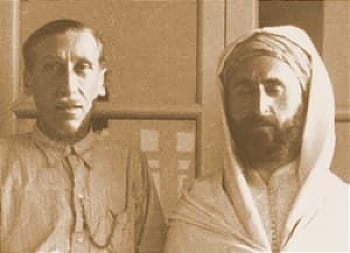
In a letter Schuon writes that “it is no doubt useful or necessary that a Western voice remind to the East what is ‘esoteric Islam’; it is no doubt as useful and necessary that another Western voice remind to the East what is esoterism as such, and it is certainly providential that it does so within the framework of Islam.”[[19]] By this contrast, Schuon refers to Guénon’s Islamic heritage on the one hand, that is “esoteric Islam” or Sufism, and to the fulfilling of Guénon’s esoteric inspiration through Schuon’s own work, on the other hand, “esoterism as such.” The latter remains at a distance from any confessional identification; it sees religions as sacred “frameworks”, or transformative spiritual abodes, rather than as principles of identity or sentimental motivations.
[[19]]: Our translation. Private Correspondence, Letter 00860, courtesy of The Schuon Estate
Indeed, this distinction is particularly cardinal when applied to Islam. The world of Islam has been characterized, in the last decades, by an emphasis on formal orthodoxy and collective identity, including in its political dimensions. This is a far cry from the intellectual influence that Guénon would have envisioned. Secondly, the metaphysical and spiritual dimensions of Islam have all-to-often become either rejected, suppressed or occultated given the suspicion or incomprehension that they tend to arise in a recent climate informed by puritanical reflexes. Moreover, a concomitant process of socio-political exteriorization has itself become a source of inter-religious tensions and conflicts.
As for the role of Hindu and Buddhist teachings and spiritual figures, it has also been complex, but hardly similar to what Guénon may have envisioned. Their impact has been less intellectual and doctrinal than “practical.” It could be said, indeed, that the allure of Eastern forms of spirituality took often a decidedly anti-intellectual bent, in part as a result of a thirst for the operative aspects of contemplative engagement, in part as a rejection of the dogmatic dimension of Abrahamic monotheism. The outcomes have been diverse and not uncommonly questionable, at least in light of Guénon’s criteria. At any rate, like in the case of Islam, Asian wisdom traditions have been propounded as alternatives to Christianity, rather than as means of its revivification.
We saw that Guénon opined that only a religious tradition could provide the forms needed for a restoration of traditional intellectuality. The stumbling block is that such a formal framework does not appear to be available anymore. This should not lead one to be overly negative about the chances of a spiritual restoration, however, or to fail to recognize the hypothetical means of a new beginning. While the current world may inspire a sense of vertigo rather than one of serenity, it must be kept in mind that, now more than ever, providence may work in unpredictable ways. As the Buddhists put it, there are innumerable upāyas, or skill-in-means, to respond to the myriad of needs and modes of receptivity, be they partial and still ambiguous in their manifestations.
It is not unreasonable to think, therefore, that the more discordant and chaotic the world becomes the more unprecedented and unexpected will be the ways in which spiritual opportunities and modes of inner rebirth may rise anew.