
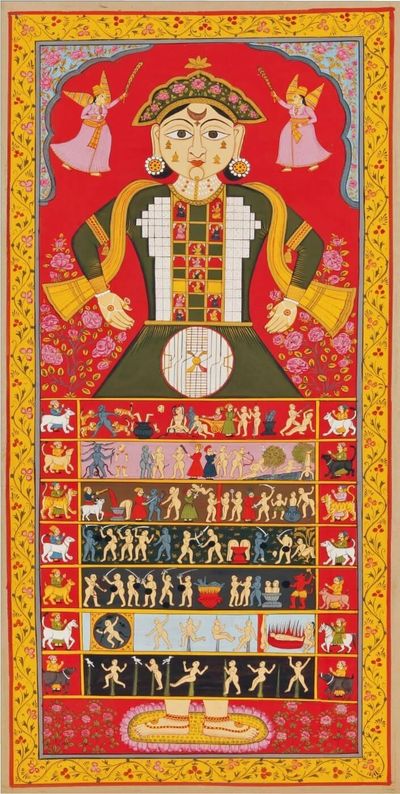
A science is a systematic way of knowing that recognizes an objective structure to reality (an ontology) and has an experimental method through which that structure can be understood (an epistemology).
If we consider metaphysics to be a science, we can say that its ontology is hierarchical and its experimental method is experiential, having to do with the science of spiritual states (ahwal) and spiritual stations or realizations (maqamat).
The true nature of God as Absolute Reality, and of God’s relationship to the universe He continually creates and destroys and creates again in every instant of time, can never be caught in the net of ideas.
If metaphysics remains merely theoretical—what we now call “academic”—it is incomplete; the science of metaphysics is only actualized and fulfilled if it functions as the intellective aspect of a true spiritual Path. Metaphysics as a Path has to do with the marriage of ontology with practical epistemology, the union of knowing and being. Traditional Metaphysics, therefore, is not simply the province of “thinkers” who have been more or less successful in “figuring out how reality works”: it is rather a total science of human enlightenment and transformation—not only a system-of-ideas but a wisdom or skill whose goal is the full actualization of the Human Form, a viable method for not only knowing ourselves but for becoming who we truly are.
Metaphysics is indeed a science—but this does not mean that it is a human acquisition or construct: it is a gift of God, and also a duty laid upon us by God. It is systematic in the sense that it is based on eternal principles, but it is in no way a closed system. The true nature of God as Absolute Reality, and of God’s relationship to the universe He continually creates and destroys and creates again in every instant of time, can never be caught in the net of ideas—yet as we pursue the path of metaphysics with God’s guidance, the same ideas keep coming back over and over again, in different forms, with different faces, wearing different masks. They are never the same twice because God infinitely transcends them; they always repeat in similar patterns and relationships because they are His true Names, the resonant echoes of His actual nature, reflections of His absolute objective reality.[[1]]
To repeat: traditional metaphysics as a science may be divided into two subsidiary sciences: the science of ontology that teaches us the nature of Being, and the science of epistemology that teaches us the ways of Knowing.
Likewise ontology can be divided into two branches: cosmology, the knowledge of the structure of the Cosmos, of universal manifestation or the Macrocosm, and anthropology, the knowledge of the structure of the Human Form, the Microcosm, which is the comprehensive epitome of that greater Cosmos, a concentrated synthesis which mirrors and is mirrored by that Macrocosm at every point.
The nature of Being as described by ontology, including how Being manifests in and as the Human Form, is the sole Object of the Knowledge that is established by epistemology. This Object is hierarchical in terms of its manifestation, while in Its Essence it transcends hierarchy entirely, seeing that there are no distinct “levels of Being” within the Unity of God—even though (paradoxically enough) all levels of Being are implied and made necessary, and in that sense harboured and prefigured, by and in that very Unity.
In cosmological terms the levels of the Hierarchy of Being defined by ontology and realized through epistemology include the Terrestrial; the Subtle Material; the Psychic; the Celestial or Angelic; the creative Logos; the Personal God or Pure Being; and the Formless Absolute or Beyond Being.
In anthropological terms, the human body corresponds to the Terrestrial level; the“etheric” life-energy of that body, as indicated by such things as the aura, the acupuncture meridians, and the chakras and nadis in various systems of shakti- or kundalini-yoga to the Subtle Material; the world of feeling-tones and mental imagery, including dream imagery, as well as the opposite-yet-allied world of logic and rationality (ratio, dianoia) to the Psychic; and the world of intelligible realizations united with the full actualization of those realizations to the Celestial or Angelic, as mediated by the human faculty variously named the Nous; or Intellectus; or al-Ruh; or the Eye of the Heart. This higher Intellect is the organ within the human constitution that witnesses Celestial or Angelic realities; that, on a deeper level, receives Knowledge and Being directly from the endlessly creative Logos; that, on a still deeper level, rests in intimacy with God as Pure Being; and that, on the deepest level, is fully identified with the One Self of All, the Formless Absolute that lies beyond Being entirely. Here is where the sayings of Meister Eckhart, “My truest ‘I’ is God” and “I would that God quit me of God” apply, since that which knows the Absolute can only be the Absolute—and on the level where Absolute Reality is both Knower and Known, no “separate God” appears.
Before our Knowing is sufficiently unfolded, we will see God, or whatever we take as the “God” we worship, as something on one of the lower rungs of this Ontological Hierarchy.
In terms of epistemology, the Nous, the indwelling Knower at one with all that is to be Known, is the ultimate source and criterion of Knowledge, which includes both the knowledge of the structure of cosmic manifestation (cosmology) and the corresponding knowledge of the structure of the Human Form (anthropology). Nonetheless our epistemological journey to the ultimate Knowledge must begin on the lower levels of the Hierarchy of Being, the levels of sense-experience, psychic experience (imaginal, feeling-based and rational) and conceptual experience. Before our Knowing is sufficiently unfolded, we will see God, or whatever we take as the “God” we worship, as something on one of the lower rungs of this Ontological Hierarchy. We will worship the terrestrial world or some element of it; the dimension of subtle energies or some quality of it; the realm of psychic images and entities or one of its inhabitants; the celestial/angelic world or one of its great powers; the Logos, which is the face of the Personal God turned toward creation; the Personal God Himself, Pure Being, the One called Allah in Islam, Ishvara or Saguna Brahman in Hinduism, the One who alone has the intrinsic power and right to say I AM, etc. And each of these objects of worship will be paired with a particular self-identity or ego that sees Reality in terms of it and is specifically configured to worship it.
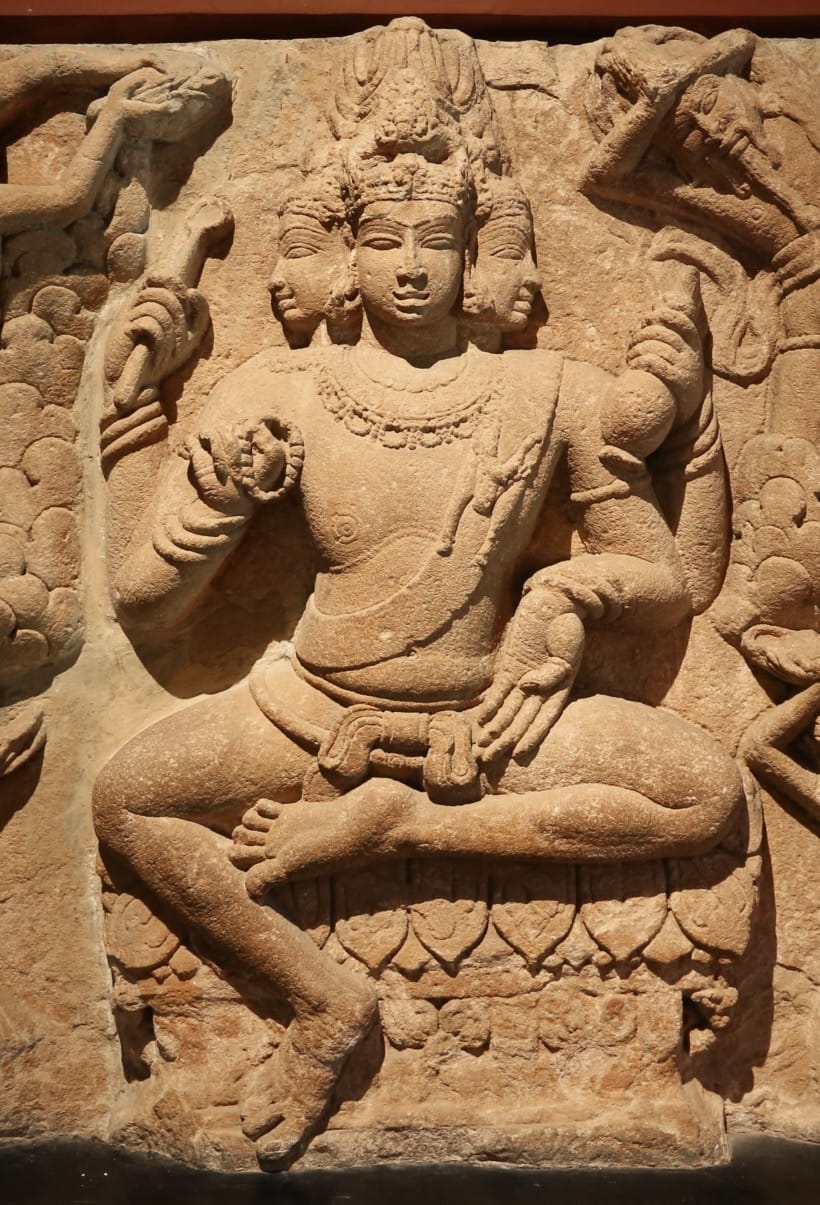
Only when we break through into Beyond Being, into what the Hindus call Nirguna Brahman, the Christians the Göttheit (Meister Eckhart) or Ungrund (Jacob Boehme), and the Sufis al-Dhat, only when we realize the Formless Absolute in which Knowing and Being are perfectly united, does this series of increasingly-subtle egos come to an end. In Hindu terms, this is moksha, Liberation; in Buddhist terms it is samyak-sambodhi, Perfect Total Enlightenment; in Sufi terms it is fana’, annihilation of the self-as-separate, and baqa’, subsistence of the self as a direct reflection or Name of Allah.
…in terms of the Spiritual Path, metaphysics is necessary but not sufficient.
Within Islam, the Spiritual Path takes the form of tasawwuf, Sufism. The essence of the Sufi way is taslim, submission to God. To effectively achieve this submission, however, we need to advance our epistemological vision; we need to be moving toward a clear and certain idea of what “God” is on the highest level, and for that we need the science of metaphysics. A knowledge of metaphysics does not achieve submission to God on its own, but it does set the stage for it. So we can say that, in terms of the Spiritual Path, metaphysics is necessary but not sufficient. We can only definitively transcend our ego when we conceive of and relate to God not in terms of His corporeal or psychic or angelic reflections, or even His Pure Personhood—in other words, not in terms of this or that metaphysical conception—but strictly as Beyond Being, as the Formless Absolute; if God is Beyond Being, the realization of God will be beyond ego, beyond self. Metaphysics can demonstrate the truth of this to us such that we are enabled to drop all our conceptual objections to realizing it, but it cannot in itself produce this realization; for this final existential realization to take place the will must first be fully engaged, and all self-will definitively sacrificed.
The realization of God as Beyond Being does not, however, invalidate the human experience of God as Pure Personhood, or God as creative Logos, or God as He manifests himself through the innumerable forms of the Angelic or Psychic/Imaginal or Corporeal universes; what it does is prevent us from taking these experiences literally, and thereby turning them into idols that we worship based on this or that self-identification or self-attachment, this or that ego. If the realization of Beyond Being were to invalidate all such experiences instead of embracing them it would become an idol in itself, and the worst idol of all—the one that is worshipped, as himself, by highest metaphysician among all the angels, whose name is Lucifer.
[[1]]: The term objective here denotes things-as-they-are apart from our subjective impressions of them—in Kant’s terminology, the noumenon, the ding an sich. All knowledge by a human being, or any sentient being, of the thing-in-itself has a subjective element, which is what makes it a phenomenon, not a pure noumenon. The only Thing-in-Itself that is entirely pure of subjectivity, that entirely transcends phenomenology, is God—which is why it’s true to say that God is the Ultimate Essence of any existing thing. But since God as the Ultimate Object is necessarily at one with the perfect knowledge of Himself—since an Absolute Reality that’s ignorant of Itself would fall short of Absoluteness—this Ultimate Object is equally the Ultimate Subject, the One Self of All, the Universal Witness—and God witnesses only Himself. This is what the Hindus mean when they say that Shiva is Jiva, that Brahman is Atman. The “objective” world perceived by a limited subject is not a pure objectivity in this sense, since it is always limited and conditioned by the subjectivity of the beholder—which is to say that God is both beyond subject and object and subsists as the perfect Union of subject and object; consequently Absolute Objectivity is inseparable from Absolute Subjectivity, without the slightest hint of a distinction between them
Ontology Expressed as Theosophy
Theosophy is the study of the nature of God through direct intuition, or contemplation, or unveiling. God as Absolute Reality can be conceived of on three main levels: as active, creative and redemptive Being, the Logos; as pure or simple Being at one with His attributes such that none of them appear inseparate or individualized form, the transcendent God; or as Beyond Being, so absolutely pure of attributes that He cannot even be said to be. These are not three Gods, but God (as Logos) conceived of as the Source of universal manifestation, describable cataphatically as the sum of all positive attributes, which are the prototypes of all created things; God as He is in Himself (Pure Being), beyond all relation to anything outside Himself since there is nothing outside Himself, who can therefore only be described apophatically, not according to what He is but only according to what He is not; and God (Nirguna Brahman, al-Dhat, Göttheit, Ungrund) as totally indescribable, lying beyond even these positive and negative definitions—beyond even Being itself, since if He were even said to be this would limit Him and circumscribe Him—and consequently beyond Non-Being as well.
God as Pure Being pervades the hierarchy on every level, even though nothing that happens on any level of the hierarchy of relative being or existence affects Him in the slightest.
God, or the Absolute Principle, is also properly described as both Transcendent and Immanent. In one sense He transcends all limitations imposed by the Ontological Hierarchy, as well as by sense experience, feeling, thought or imagination, and can thus be properly conceived of as standing in no relationship to them and subsisting as totally independent of them; in another and equally proper way, He can be seen as pervading all of them, since His very freedom from any limitation imposed by the universe He has created makes it impossible for any created thing to exclude Him. He is Immanent within each created thing by virtue of the fact that He can in no way be limited to any one of them—even to Being’s highest conceivable aspect—and is therefore inevitably omnipresent within the entire Hierarchy; His very Transcendence is therefore necessarily expressed by His Immanence. He is not a Creator who only initiates His creatures but need not intentionally maintain them in existence, as the Deists believed, but rather the essential Principle of the entirety of that existence, Who subsists as their ongoing support and ultimate reality—a truth which led Meister Eckhart to say, “My truest ‘I’ is God”.
God as Logos is active, creative and redemptive Being, and can therefore be conceived of as occupying the apex of an ontological hierarchy or Great Chain of Being; God as Pure Being pervades the hierarchy on every level, even though nothing that happens on any level of the hierarchy of relative being or existence affects Him in the slightest; God as Beyond Being stands in no relationship to it whatsoever, since in relation to Him nothing else exists.
Ontology Expressed as Cosmology
As soon as God is conceived of as standing in creative, governing and redemptive relation to a Cosmos of universal manifestation—a role which only the existence of such a Cosmos makes possible, and necessary—that Cosmos is revealed to be a descending hierarchy of worlds, a Great Chain of Being, each one more limited, more materialized, and (paradoxically) more abstract than the one above it; this is the point of transition from theosophy to cosmology.
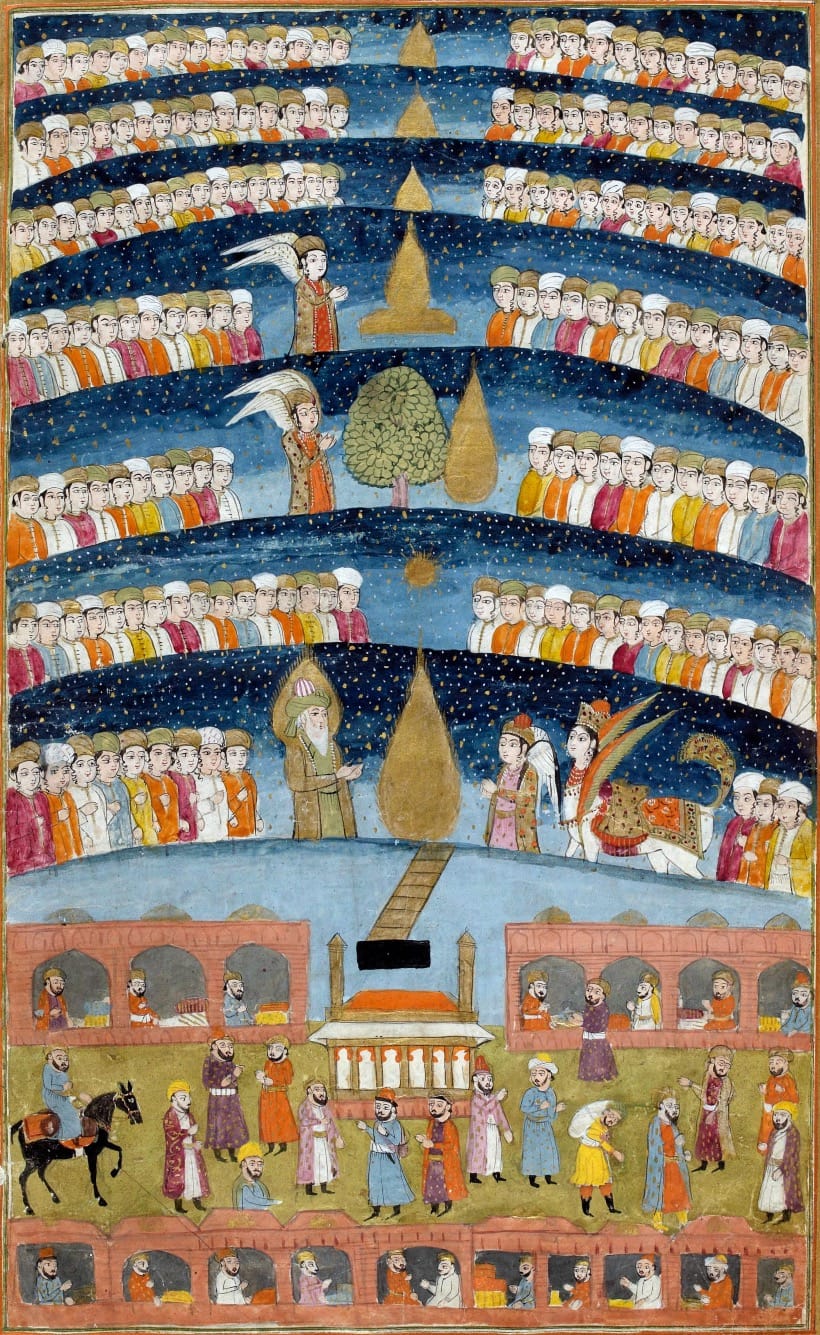
Roughly speaking, these worlds are the Celestial/Spiritual, the Psychic/Astral/Imaginal, the Sensual/Corporeal, and the Physical/Material. Many further sub-divisions of these four main levels-of-Being are possible, and often necessary—the placement of the Etheric or Subtle Material dimension as a barzakh or isthmus between the Psychic and the Corporeal for example, or Dionysius the Pseudo-Areopagite’s division of the Celestial into the nine angelic choirs—but these four remain the most important and the most fundamental.
The Celestial or Spiritual plane is the world in which, and as which, the Logos, the face of the Absolute that is turned toward the created Cosmos, initiates the creative, outward projection of all the positive Attributes or Names of God. On the highest level these Names appear as Attributes of God that have not yet departed from their original home in the Divine Nature, but as the wave or sphere of God’s universal manifestation continues to expand—simply because there are no barriers within God’s Infinity to prevent it from doing so—the Names begin to appear as what Plato called the Universals or the Ideas or the Intelligibles, which function as the prototypes for innumerable discrete angelic beings in descending choirs and eschelons, each of which (as St. Thomas Aquinas said) is so perfectly individuated that it constitutes a species all its own. We tend to think of the higher spiritual worlds as more abstract than this terrestrial world, whereas the opposite is actually the case: the beings who inhabit these spiritual worlds are more concrete and individuated and unique the higher they are placed on the Great Chain of Being, since the higher they are the more directly they participate in the Absolute Uniqueness of God.
The Psychic plane, also known as the Astral, the Imaginal or the Malakut—what Ibn al-‘Arabi called the Alam al-Mithal—intersects with the Celestial or Angelic plane at its higher reaches, but is more properly described as the world where the truths of the Celestial world begin to appear as, or project themselves in the forms of, what Ibn al-‘Arabi called “image-exemplars”, which are in one sense independent conscious entities and in another sense the collective or individual psychic experiences of human beings appearing in dreams, or in the kind of mental imagery, manifesting as veridical visionary experience, that transcends mere fantasy but has a degree of objectivity to it, imagery that emanates from what William Blake called the Divine Imagination—although, unlike the Celestial Plane which is the realm of metaphysical objectivity per se, the Psychic Plane is better described as a mass psychic subjectivity that transcends individual consciousness, like the Collective Unconscious of Carl Jung. This is the realm of the Jungian “archetypes”, or at least those aspects of them that human beings are capable of directly experiencing; these archetypes, however, are not purely psychic realities as Jung imagined, but rather the reflections of the Platonic Ideas or Names of God in the universal psychic substance. If the environment of the human body is the Corporeal Plane, the world reported by the five senses, the environment of the human soul or psyche is the Malakut or Astral Plane, the Alam al-Mithal, which can be considered to be made up of the collected psychic experiences of all sentient beings, and which consequently is supremely complex and varied in its manifestations, host to a myriad of potential experiences, entities and views of reality, stretching from those bordering on the Celestial or Angelic to those that are nothing more than the psychic reflections of corporeal experiences, if not of actual infernal realities emanating from what René Guénon called the “infra-psychic”. The Psychic plane is the dimension of reality utilized by today’s “remote viewers”, who have apparently learned how to view the Corporeal Plane, or possibly the immediate Etheric or subtle-material reflection of the Corporeal Plane, from the point-of-view of the Psychic—as indeed we do every day when we intentionally “pay attention” to our corporeal surroundings. But while much of what the remote viewers report has been independently corroborated, any attempt to view the Corporeal through the lens of the Psychic operating independently of sense experience introduces the danger that a Psychic or Astral reality may sometimes “impersonate” a Corporeal one—something that makes remote viewing, while statistically verifiable, a less-than-reliable tool for investigating the Corporeal world, which is properly designed to be experienced by the senses.
The contemporary confusion between the Corporeal and the Material worlds, aided by the volatilization of human experience produced by cyberspace, is one of the things that tend to make us feel we are living in an unreal world.
The Corporeal plane is our familiar terrestrial world, the world reported by the five senses, plus the range of visceral senses that inform us about our own physiological processes. By virtue of its relative stability it is a more direct reflection of the Celestial plane than the ever-changing phantasmagoria of the Psychic plane, though on a much lower and more circumscribed level,
As Dr. Wolfgang Smith has pointed out however, in his book The Quantum Enigma, the Physical or Material plane is distinct from the Corporeal Plane and exists on a lower ontological level. Speaking in Aristotelian/Thomistic terms, the Corporeal Plane is like an actualization of the materia of the Material plane through the intervention or incarnation of metaphysical forma, of Forms or Ideas ultimately derived from the Celestial Plane, to produce what Aristotle called “substantial forms,” real existing things. The Material plane per se, however—the world defined and investigated by modern quantum mechanics—is not our familiar world of real existing things like mountains or tables or human bodies. It is a world not of substantial forms but of pure potentia, of possible entities rather than actual ones, which is why it cannot be approached through the paradigm of a strict mechanistic determinism but only through the science of probability. The contemporary confusion between the Corporeal and the Material worlds, aided by the volatilization of human experience produced by cyberspace, is one of the things that tend to make us feel we are living in an unreal world, possibly some kind of “matrix” (as in the Matrix films) or computer simulation.
Each higher ontological level is the cause of all that lies below it; each lower ontological is a symbol of all that lies above it. In the words of René Guénon, “the effect is a symbol of the cause.”
Imagination is both the essence of the creative power of God to project the hidden aspects of His nature into, and as, every level of the ontological hierarchy, and the power of Man to reflect and recapitulate this Divine Imagination.
We must not forget, however, that the Corporeal and Psychic worlds influence one another; while the soul is the ontological origin of the body, the states of the body can also affect the soul. The science of neurology, at least according to some researchers, has determined that emotion, perception and memory are partly related to brain-states, while ratiocination and free will are not—in other words, that emotion, memory and perception have a corporeal element; they are not purely psychic. Nonetheless memory functions as an aspect of the soul or psyche to the degree that the will can intend to remember, just as ratiocination can draw upon the facts provided by memory in order to reach its logical conclusions. The brain has the power to access memory; nonetheless the events that memory draws upon not stored in the brain but exist as indelible imprints on what has been called “the akashic record”—that world, related to God’s “eternal present”, where past, present and future areundifferentiated, where what has been, is. In this sense memory is psychic, not corporeal. Likewise the affections, while they are in one sense dependent on brain-states, can also be invoked by thought or belief, which, when functioning properly, are dependent on ratiocination, which itself is based in Intellection. And the affections are also a function of the will in the sense that—with sufficient training—they can be suppressed, invoked or transformed by a conscious intent to place the attention on this or that object. As for perception, it is corporeal in that our senses present to us a real corporeal world; nonetheless a corporeal change in brain-state—for example, one artificially induced by a drug—will change the quality of that perception. Likewise thought and belief can also alter perception. Thought can interrupt the steady attention that’s required for us to see the Corporeal World as it is; likewise the more closely belief is conformed to the truths of the objective metaphysical order, the more truly and objectively we will see the Corporeal World, whereas beliefs influenced by subjective thoughts and emotions will distort our view of that world. So here we can see how Body and Psyche form a single psycho-physical system. To the degree that this system is ruled by ego and self-will it is involved in illusion; to the degree that, through a will submissive to ratiocination and Intellection, it is conformed to the Spirit, it will exist in a real world, seeing and knowing what is. As for the faculty of Imagination, it is both the essence of the creative power of God to project the hidden aspects of His nature into, and as, every level of the ontological hierarchy, and the power of Man to reflect and recapitulate this Divine Imagination, first by intellectively receiving or conceiving of these projections, and then by expressing them, according to his capacity, as creative human thought and the whole range of actions that flow from it.
When operating on the Spiritual or Celestial plane, human Imagination conceives of metaphysical principles and angelic realities. When operating on the Psychic level in response to the Spirit, Imagination transforms these conceptions into images as they appear in true visionary experience or veridical dreams, either spontaneously in response to a Divine infusion or methodically as in the spiritual exercises of St. Ignatius Loyola or the Shen Buddhist practice of envisioning the Pure Land. When operating on the Psychic level alone rather than according to the promptings of the Spirit, the Imagination will reflect the subjective states of the soul, drawing upon memory and the affections, as well as upon the conclusions of ratiocination and the intentionality of the will. And when operating according to the dictates of egotism, passion and self-will, the Imagination appears as fantasy, either intentionally self-serving or else chaotic and uncontrollable. Lastly, when operating on the Corporeal level the Imagination will present images to our consciousness that are affected by the states of our brain alone, thus manifesting as what we call hallucinations. The will may also direct the Imagination to conform itself to the Corporeal, resulting, as we have already seen, in what is now termed remote viewing. So we can see here how the faculty of Imagination, based in Intellection yet pervading all levels of the Human Form, is the Divine power—which is nonetheless capable of being participated in and employed by human intentionality—that binds the Spiritual, Psychic and Corporeal levels together and facilitates communication between them; this is why William Blake called it “an Intellectual Fountain,” the central faculty of Man, and why Ibn al-‘Arabi saw the Divine Imagination as the power by which God creates all the levels of existence, all the worlds.
Ontology Expressed as Anthropology
Of all sentient lifeforms inhabiting terrestrial reality, only Humanity mirrors the entire ontological hierarchy, and is thus capable of conceiving of, and acting as host to, God or Absolute Reality.
Every level of the ontological hierarchy is mirrored in the Human Form—Spirit, Soul and Body; in Traditional Metaphysics this is known as the correspondence between the Macrocosm (the Cosmos) and the Microcosm (the Human Form). Of all sentient lifeforms inhabiting terrestrial reality, only Humanity mirrors the entire ontological hierarchy, and is thus capable of conceiving of, and acting as host to, God or Absolute Reality. This is what the Qur‘an means when it tells us that Humanity alone holds the Amana, the “Trust,” and what the hadith qudsi (prophetic tradition in which Allah himself speaks) means when it says “Heaven and earth cannot contain Me, but the Heart of my loving slave can contain Me.” The Cosmos, including the material universe, can thus be seen as an outward projection of all that is contained, in latent or potential mode, within the Human Form, just as this Form can be taken as a distillation or epitome of all that the Cosmos, the Great Chain of Being, embraces. As William Blake said it: “Man anciently contain’d in his mighty limbs all things in Heaven and Earth….But now the starry Heavens are fled from the mighty limbs of Albion.”
The mutual correspondence between Macrocosm and Microcosm is the basis of the various types of what is called the “anthropic principle” in contemporary speculative physics. By every indication, the various parameters of cosmic Corporeal and Material reality are fine-tuned to make conscious human life possible—a microcosmic life that is as if expressly designed to understand a Macrocosm which, at least from the perspective of time, must appear to have progressively produced and developed it. To understand that Macrocosm through the five senses and their extensions—extensions that include our ability to create instruments and experiments capable of further investigating it—as well as through ratiocination expressed as our power to discern the reality of (and consequently invent the science of) mathematics that allows us to design such instruments and experiments and interpret their results—is something that only humanity can accomplish. This should not be surprising, since the Macrocosm as we experience it is necessarily proportional to the faculties that make us capable of perceiving and understanding it, since it is by these faculties that we initially discerned and defined it; whatever lies beyond the scope of the human faculties and their extensions, and the experiments we design to further inform them, must remain forever inaccessible to us, at least in Corporeal and Material terms. The universe that apparently designed us to see it—speaking now on the visible or Corporeal level alone and ignoring the actual creative power of God as mediated by the higher levels of the Great Chain of Being—is a universe necessarily defined by the quality, shape and limitations of that very seeing.
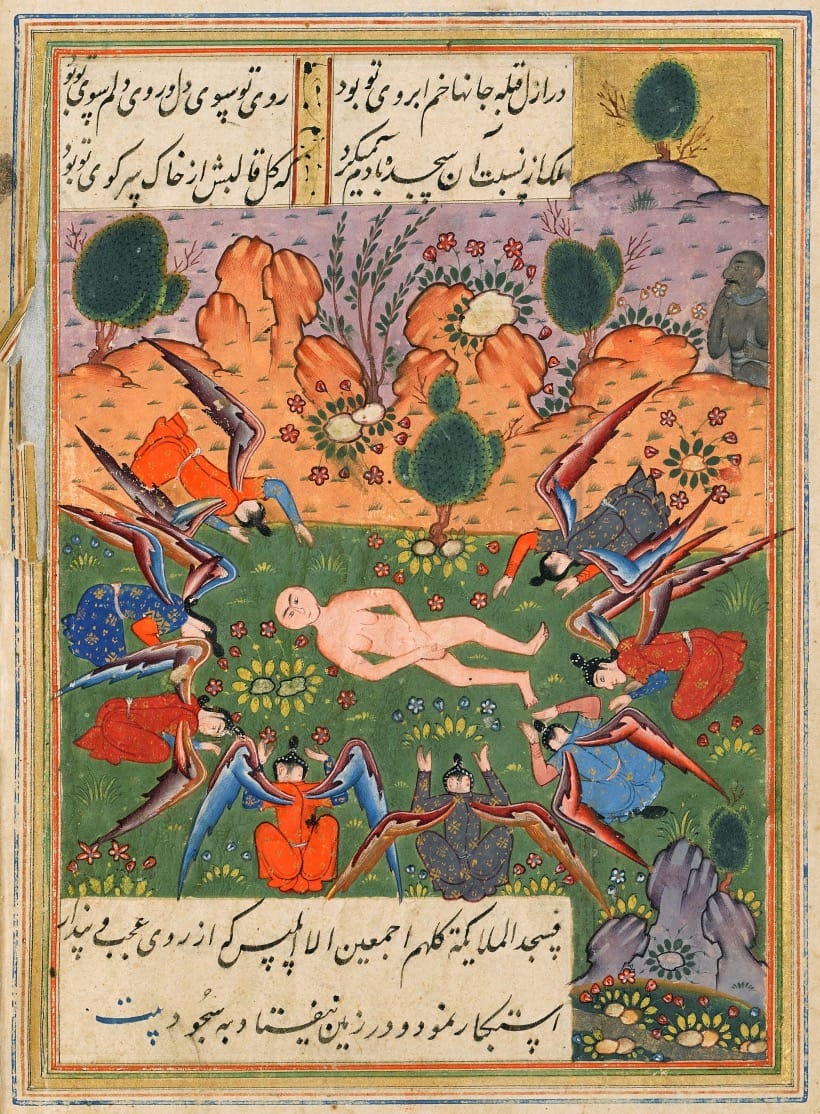
The Human Form is traditionally considered to be composed of Spirit, Soul and Body. Spirit is the spark of God’s Presence within the human microcosm—the Imago Dei, the One Self at the center of all. Spirit need not be saved because it has never fallen; it is eternal and inviolable. To the degree that the totality of the human Microcosm is conformed to that Spirit, the fallen Soul, which initially is in need of salvation insofar as it has become involved in its own subjectivity and forgotten the Spirit of God within it, is saved; to the degree that it falls short of that full conformation, the Spirit remains as a rebuke to the Soul for its darkness and disorder, while never ceasing to call that Soul to turn away from itself as a false center and return to its true Center in God. The Spirit as Pneuma or al-Ruh is the breath of life of the entire human form, the reverberation of God’s creative Word within the Microcosm; that same Spirit as the indwelling transcendental Intellect, the Nous or Eye of the Heart, it is the faculty that allows the human being to know God directly, just as the eye knows light. What makes this possible is the power of Intellection, the final fruit of which is divine Gnosis, the direct and intimate knowledge of God.
The Soul is the Psyche, which is the totality of the individual’s experience of him- or herself and equally of the universe, set within a subconscious world of latent tendencies or possibilities that the individual has not yet become fully conscious of. As the human Microcosm is divided into Spirit, Soul and Body, so the Soul itself is divided into a similar yet subordinate triplicity, that of Thought, Affections and Will. When the soul is in an unredeemed state, dominated by the passions, it is known in Sufi terminology as the nafs al-ammarabi’l su, the “soul commanding to evil”; this nafs or egointerrupts the correspondence between the human Microcosm and the cosmic Macrocosm, thus transforming the cosmos as a revelation of the Signs of God into the dunya, the Darkness of This World, the regime of collective egotism and illusion. In the fallen Soul, thought is dominated by the will, just as the will is dominated by the affections; the fallen will exists only to enact the wishes and impulses of the unredeemed affections, while the only use of thought under such a system is to devise strategies to aid the will in its slave-mission to give the affections what they want, or else to hatch various rationalizations designed to justify the will’s transgressive actions. In the redeemed or edified Soul on the other hand, thought turns to the Nous, the Intellective faculty of the Spirit, for its Ideas or First Principles—after which, employing the faculty of ratiocination, the rational faculty of the Soul, it goes on to discover the various logical implications and the practical applications of these Principles, on the basis of which it formulates specific directives addressed to the will. The redeemed and obedient will in turn submits to what Intellection has revealed and to the rational applications of that revelation produced by redeemed and obedient thought—and once the will’s submission to thought-enlightened-by-Intellection is complete, the affections, which had to be kept more-or-less in suspension to prevent them from again dominating the will as they had done before the Soul was fully edified—this being the spiritual function of asceticism—are re-awakened and released, until they become the living energy of the liberated and dedicated will that allows it to operate without weariness or self-contradiction, in the fullness of its power. The true power of the will, however, is certainty as to what is true, which comes only by the Intellect; the deepest and most powerful tides of feeling possible for the human being to experience arise from certainty and nothing else.
when the will is pacified and comes to rest in its submission to the Intellect, the turbulent waters of the Soul become calm, like the surface of a placid lake on a windless day.
Nonetheless the affections also have another mode of operation in which thought and the active will play no part: when the will is pacified and comes to rest in its submission to the Intellect, the turbulent waters of the Soul become calm, like the surface of a placid lake on a windless day. A lake made turbulent by the wind reflects the light of the Sun—the universal symbol of the Intellect—in a fragmented way, presenting it to us as a million dancing sparks of light; but when the wind drops and the lake becomes calm, it reflects the image of the Sun in a single unified form. By this analogy we can see how the affections, once they are purified of concupiscence, impulsiveness and self-will—that is, after they stop being emotions, defined as feelings that are not experienced as they actually are but only as motivations immediately and unconsciously connected to the will—must return to their original essence as pure unmediated feeling, thereby becoming capable of mirroring the truths of God directly, without the intervention of either rational thought or active will. This is the reality of mystical contemplation, which lies beyond both intentional thought and deliberate obedience.
The Body is the anchor of Spirit and Soul in the Corporeal world. The Body is given its existence by the Spirit; it also reflects, in its anatomy and its physiology, both gross and subtle, the entirety of the Soul, whether it be redeemed, or fallen, or somewhere in between. In terms of subtle anatomy, here using the terminology of shakti-yoga, the Spirit and Soul are reflected in the Body through the system of the seven chakras and the nadis or energy-channels that connect them and deploy their various energies. This psycho/spiritual/somatic energy or prana appears in various different though related modes in other systems as well, including the Kabbalistic Tree of Life, the acupuncture meridians in Chinese medicine (where it is termed ch’i), or the system of the lataif or “subtleties” in Sufism, which are analogous but not identical to the chakras in Hindu yoga. When the Soul is fallen and inverted these energy-channels manifest various blockages, imbalances and inner conflicts; when the Soul is redeemed, these pathways begin to become unblocked—though if the Soul has spent too long in too deep a condition of disorder, even if it itself is fully redeemed before death, the Body may not have time to fully reflect this redemption before Body and Soul are (temporarily) separated.
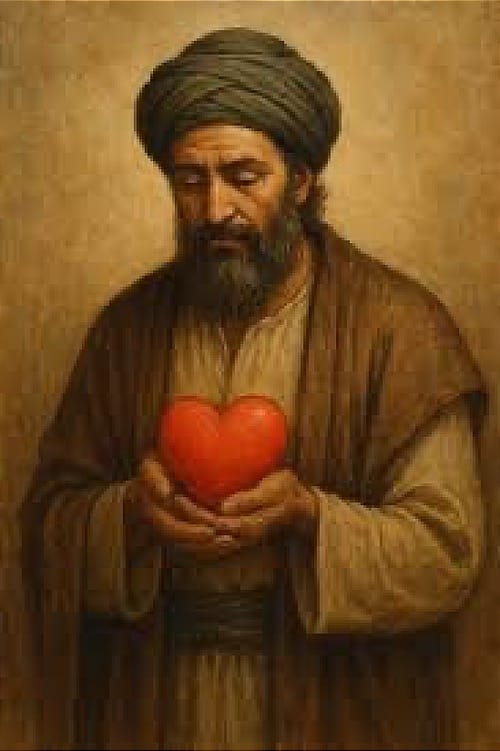
in the person whose Soul is in the process of redemption, this nafs is progressively conquered and expelled by the power of the Ruh, the Spirit. This is what is known in the Hesychast tradition of Eastern Orthodox Christianity as the “unseen warfare”, and in Sufism as the “greater jihad.”
Traditional metaphysics also speaks of another subtle “organ” in the structure of the human microcosm: the spiritual Heart, called al-Qalb in Sufism, Kardia in Eastern Orthodox Christianity, and the Hridayam or “cave of the Heart” in Hindu yoga. The Heart is the epitome and synthesis of the entire ontological hierarchy from God to the Corporeal world, and equally the synthetic epitome of the human microcosm, Spirit, Soul and Body; as such it is the place where the human psychophysical system is intersected by the ray of the Spirit—the site where, as in every temple, Heaven and Earth unite. The Heart is consequently the psychophysical seat of the Spiritual Intellect, the Nous, which in the Sufi tradition is called the “Eye of the Heart”. If we define the Nous as that organ in the human spiritual anatomy that comprehends the Celestial Plane through direct Intellection, its symbolic position is in the head, specifically in the ajña-chakra or Third Eye; if we define it as the organ that has direct Intellective knowledge of the entire Ontological Hierarchy, and the God from which that Hierarchy emanates, its symbolic position is in the center of the chest, at the deepest stratum or transcendental Center of the heart-chakraor anahata—the point of the Spiritual Heart or Hridayam. Consequently when Allah, in the hadith qudsi, says “Heaven and earth cannot contain Me, but the Heart of my loving slave can contain Me,” He is defining Himself not simply as the Transcendent Creator but as the Immanent Essence of the Great Chain of Being on all levels. According to the Sufis, the Heart in the human person whose Soul is fallen is occupied by the nafsal-ammara bi’l su, manifesting as concupiscence and self-will; in the person whose Soul is in the process of redemption, this nafs is progressively conquered and expelled by the power of the Ruh, the Spirit. This is what is known in the Hesychast tradition of Eastern Orthodox Christianity as the “unseen warfare”, and in Sufism as the “greater jihad.” When this conquest is complete, the Eye of the Heart opens, the faculty of Intellection is unveiled.
As the Soul is the setting or bezel of the Spirit, so the Body is the crucible of the Soul; when the alchemical transmutation of the human microcosm is complete within this double vessel, the purpose of human incarnation into this terrestrial world is fulfilled.
Epistemology
Epistemology is the metaphysical science designed to answer the question “how do we reach certainty? How do we know?” Without a sound epistemology we would have no certain knowledge of the nature or existence of God, the structure of the Ontological Hierarchy, or the subtle anthropology of the Human Form; lacking this knowledge, no comprehensive Spiritual Pathwould be conceivable. What, then, constitutes a sound method for reaching this certainty? What criteria must such a method rely upon and follow?
each degree of knowledge is evaluated and brought to a greater degree of relative certainty by the forming and judging action of the plane immediately above it
Only that which really Is can truly Know: Certainty (yaqin), the final goal of epistemology, is the seamless union ofKnowing and Being.
On lower ontological levels than the Celestial or Spiritual plane, the plane of absolute certainty, each degree of knowledge is evaluated and brought to a greater degree of relative certainty by the forming and judging action of the plane immediately above it. Corporeal experience, whether of the outer world through the five senses or of the various motions, conditions and energy-states of the body through the visceral senses, is evaluated and “made sense of” on the level of the Psyche through imagination, memory, feeling and rational thought. The Psyche, in turn, is made sense of and evaluated, on the Celestial level, according to the criteria of the objective, metaphysical Principles that constitute the Celestial or Spiritual plane, which determine how well or how poorly the Psyche reflects these Principles. These metaphysical Principles—Plato’s “intelligibles”—are validated by being understood as necessary projections of the universally-creative Logos, like rays of light streaming from the disk of the Sun, while the Logos Itself is seen to be a necessary overflow-into-manifestation from the level of Pure Being, since it is the face of this Being that’s turned toward manifestation and defined as existing in relation to it. And Pure Being itself is understood to be eternally-established and Necessary to the degree that Beyond Being or the Formless Absolute, which transcends even the categories of existence and non-existence, “leaves room” for it, neither commanding it to exist nor preventing it from existing, as with the Cha’an Buddhist concept of “the Void eternally-generative”.
In Revelation, God reveals Himself to us; in Intellection, we see and know God through a faculty that He Himself has placed within us.
On the Spiritual plane, the reliable sources of certain knowledge or Gnosis are two: Revelation and Intellection. Revelation is the self-disclosure of Divine realities by God, accompanied by doctrines that express a true cosmology and a true anthropology, to human prophets and sages, or in the person of human avatars, most often assisted by the activity of angelic messengers—with the understanding that the first and primordial revelation of God is creation itself. As the product of a Divine Self-manifestation, Revelation is every bit as directed and intentional as it is inevitable and universal; all the major world religions are the results of the action of Divine Revelation. And Intellection is the intrinsic yet fully intentional receptivity of the Nous or Eye of the Heart to this Divine Revelation. As we have already seen, the Nous or indwelling spiritual Intellect is that faculty within the human constitution that witnesses Truth directly just as the eye sees light; the Nous can know Truth because, on the deepest level, it is of one substance with what it knows. In Revelation, God reveals Himself to us; in Intellection, we see and know God through a faculty that He Himself has placed within us. Without intrinsic Revelation—which in inseparable from God’s creation of the universe, given that the cosmos itself is His original Self-disclosure—Intellection could never be awakened, nor would there be any sentient creatures in which the faculty of Intellection might operate. Without Intellection, God’s Self-revelation, both as the cosmos and as those fundamental scriptures and various other forms of direct communication that God has provided to the human race, would be closed to us—unintelligible—opaque.
So we can confidently state that Intellection is catalyzed and activated by Revelation, while Revelation can be fully received and understood only through the power of Intellection. Revelation plus Intellection, since they give access to the realm of the Celestial Plane, the Plane of the Intelligibles, Platonic Ideas or Names of God, together establish the first principles of true knowledge, allowing us to know and contemplate the Always So. The total human store of spiritual knowledge provided by Revelation and Intellection working together is what is known as the Primordial Tradition.
On the Psychic plane, reflected spiritual Knowledge is available to us from four main sources: imagination, memory, feeling and ratiocination. But in order for this mass of unformed information to be transformed into true Knowledge it must be evaluated according to the eternal Principles that are disclosed by Revelation and Intellection, whose influences emanate from the Spiritual plane. Imagination can in turn be divided into true objective imagination based on a symbolic apprehension of Celestial realities such as may appear to us in angelically inspired visions or true dreams, and subjective fantasies, based on fear and desire, that serve only the ego. Likewise true memories, which represent fully actualized substantial forms that have taken their proper place in the created order, must be differentiated from various forms of distorted memory, memory falsified by the ego, which is based on toxic nostalgia and/or self-serving revulsion. Pure feeling-tones, which function as impartial mirrors and resonant manifestations of eternal realities, must be clearly separated from passional emotions ruled by the ego, which are feelings motivated by the will, or that motivate the will. Finally, the true products of rational thought that manifest as necessary logical conclusions, and consequently represent Psychic reflections of Necessary Being as it exists on the Spiritual plane, must be distinguished from the cunning schemes and dishonest rationalizations of the rational faculty when enslaved by the ego.
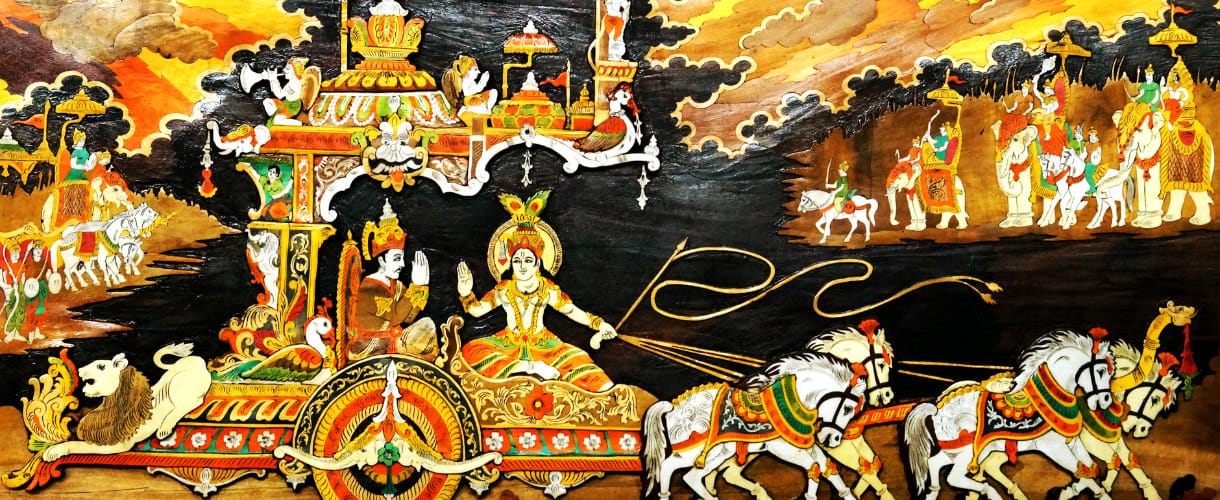
This is how true imagination, memory, feeling and ratiocination serve the fullest possible expression, on the Psychic plane, of the Revelation and Intellection of Spiritual realities, given the more limited scope of the Psychic vis-à-vis the Spiritual. In addition to this, however, the same four faculties, when purified of egotistical biases and obsessions, also allow us to employ Psychic means to intelligently investigate and directly evaluate various qualities and potentialities of the Corporeal plane. True imagination lets us correctly envision the objective qualities of things, persons, situations and potential courses of action; true memory helps us establish objective facts reliably enough for us to use them as clear points-of-reference; true feeling gives us the power to evaluate things, persons, situations and potential courses of action in terms of how closely they serve, or how radically they depart from, the eternal values intrinsic to Divine Love; and true ratiocination allows us to draw the necessary logical conclusions from what imagination, memory and feeling have presented to us, thus situating our practical decisions in the widest conceivable context and placingthem on the most dependable foundation imaginable.
On the Corporeal plane, our closest approach to true knowledge comes by the power of five senses to present us with an objective material world, plus the various visceral senses that inform us as to the state of our own bodies; from the totality of the human, historical records of such sensual experiences; and from the results of whatever scientific experiments humanity has carried out to investigate the Corporeal world, and the Physical world that (in ontological terms) lies beneath it. This mass of material, however, can only come into intelligible form when it is viewed and evaluated according to the four the Psychic faculties of imagination, memory, feeling and ratiocination, which in turn can only function reliably when founded upon the eternal Celestial or Spiritual Principles that Revelation and Intellection provide.
The Spiritual Path
…the full form of the Spiritual Path is both intellective and existential; it embraces not only the opening of the Eye of the Heart but the full conformation of the human will and affections to what that Eye sees and knows.
We have said that epistemology, in the context of Traditional Metaphysics, is the seamless union between Knowing and Being; therefore we can define the Spiritual Path as a practical epistemology through which the Knowledge of God is united with the Being of God within the locus of the Human Form. To define the Path in this way, however, is incomplete, since it presents only the intellective side of things, whereas the full form of the Spiritual Path is both intellective and existential; it embraces not only the opening of the Eye of the Heart but the full conformation of the human will and affections to what that Eye sees and knows. It is entirely possible for a person to receive profound intuitions as to the nature of Reality through the Spiritual Heart, from a source much higher than any mere academic study of metaphysics, higher even than a true ratiocination based on sound metaphysical principles, and still fall far short of the full conformation of all the faculties of the soul to what these intuitions have revealed. God will sometimes give us a true spiritual knowledge far beyond what we have earned—as if such a gift could ever truly be earned!—in order to draw us closer to Him. Such knowledge is a two-edged sword, however, since if we do not conform the totality of our being to what that knowledge has revealed, it will stand in judgment over us. And even true spiritual knowledge cannot be retained unless it becomes an integral part of our being [cf. Matthew 22:1-14]—unless, speaking in Sufi terms, what is freely given to us as a spiritual state (hal) becomes a spiritual station (maqam), a permanent aspect of our character. When the affections are attracted to false objects, inducing the will to follow them instead of leading them, the waters of the soul become turbulent to the point where they can no longer reflect the light of the Intellect; consequently the Eye of the Heart is darkened. And the power that extistentializes the intellect—resulting not just in spiritual perception but in the full actualization or realization of what is perceived—is, precisely, Love.
As we have already explained above, the full conformation of all the faculties of the soul to the light of the Intellect is known as edification, which is related to the architectural term “edifice”. Through edification the soul is built up, as it were, into a temple for the Spirit—a permanent home for It, not merely a branch on which the bird of the Spirit may temporarily perch, then fly away again. As we have already seen above, the fallen soul is falsely hierarchicalized with the affections at the top, the will subordinate to the affections, and the intellect subordinate to the will. The affections, sunk in concupiscence and wedded to false objects, dominate the will, which is then recruited to fulfill the affection’s desires; consequently the will becomes transformed into self-will, filled with unconscious impulses and obsessions. Finally the transgressive will, enslaved to the affections, dominates and perverts the rational intellect, using it only to devise strategies that will allow the affections to get what they want, as well as producing dishonest rationalizations designed to justify this perverted state of affairs.
In the redeemed soul, however, the faculties are truly hierarchicalized once more, with the affections at the bottom, the will above the affections, and the Intellect above the will. The Spiritual Intellect (Nous, Intellectus) unveils the Always So, from which the rational intellect (dianoia, ratio) draws the necessary conclusions and imperatives, expressed as philosophical knowledge and/or plans for practical action. Informed by these conclusions and imperatives, the will enacts them, thus conforming itself to the rational intellect, even as the rational intellect has conformed itself to the Spiritual Intellect. Lastly, the affections become obedient to the submissive and enlightened will and follow it, thereby transforming themselves, through spiritual fervor, into the very fuel and energy and constancy of that will. The primal power of the will, however—as we have already seen above—is certainty, and certainty can only come through Nous or Intellectus. The darkened will knows only Possible Being, only what might be—if, that is, it succeeds in gathering enough might to make it be. The enlightened and redeemed will, on the other hand, as a servant of the Spiritual Intellect, knows God as Necessary Being, as that which must be, and therefore spontaneously conforms itself to this Necessary Being with great power and confidence, without the slightest shadow of doubt or self-division. And to the degree that the will submits to Truth the affections eventually follow, changing the submissive will from a hard taskmaster that serves Truth in penance and self-denial and self-sacrifice into a will that knows such service as a delight and a privilege, thereby in turn transforming the affections into a full manifestation of Divine Love, the kind of Love that knows spiritual Truth directly, in perfect intimacy, because it loves to dwell upon its Object—now unveiled in all its Beauty—and is never tempted to look away.
This is the masculine/hierarchical aspect of the Spiritual Path, the vertical dimension of it. In the horizontal dimension however, the complementary feminine or intentionally-receptive aspect of the Path, the affections, when purified of attachment to all false objects of desire, gain the power to reflect Spiritual Truth directly, independent of the actions of the will and the rational intellect as separate faculties. Dianoia or ratio, subsumed directly into the Nous, the Divine Intellect, stops drawing conclusions and defining imperatives; consequently the will, no longer receiving commands from the rational faculty, ceases its independent action and, having reached perfect submission, virtually disappears; the waters of the Soul, no longer made turbulent by the will’s activity, are pacified, until they become a flawless mirror perfectly reflecting the image of the Sun of Truth. This is the dimension of mystical contemplation.
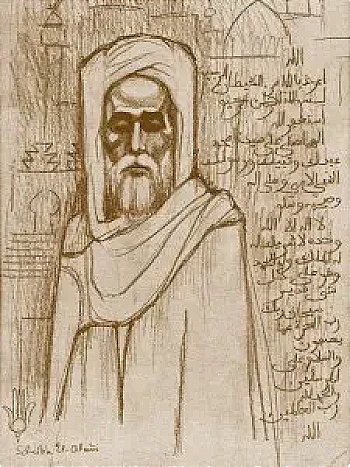
In Sufism—as in every other rendition of the spiritual life in one way or another—the essence of the Path is taslim, “submission.” And though the Intellect is necessarily the Lord of the active will, since without Knowledge there is no way the will can know what to will, the will perfectly submissive to God transcends even the Intellect because it transcends Knowledge itself; the will in perfect submission comes into contact not with what God is but with that God is—with al-Dhat, God in His nakedness, the unknowable Divine Essence. The ultimate fruit of this submission is the true Spiritual Knowledge or Gnosis that the Sufis call Ma’rifa.
In behavioral and psychological terms, submission begins as obedience to the rulings of the divine moral and ritual law—in the case of Islam, the shari‘ah. At a later stage it becomes submission to the ongoing commandments of God that are born in each waqt, each moment of spiritual time, and which appear to us in terms of various spiritual states; it is through receptivity to such states, to what the Sufis call the ahwal, that the soul becomes “qualified by the Names of Allah”, thus transforming these states into spiritual stations, the maqamat. And at the final stage of the Path in its Sufi rendition, where taslim is perfected, submission to the Names of Allah is transcended through submission to God Himself in His naked Essence. Submission to the shari‘ah begins the mortification of self-will by transforming the rebellious ego, the nafs al-ammara bi’l su or “soul commanding to evil”, into the repentant ego, the nafs al-lawwama or “accusing soul”. Submission to the ongoing commands of God manifesting as spiritual states as they appear, moment-by-moment, further purifies and lifts the burden of self-will by transforming the repentant ego, the nafs al-lawwama, into the spiritually active ego, the nafs al-mulhama or “inspired soul”. And submission to the unknowable Essence of God, al-Dhat, transforms the spiritually active or actively receptive ego, the nafs al-mulhama, into the nafs al-mutma’inna, the “soul-at-peace.” In one sense the term nafs al-mutma’inna may be applied to the soul perfectly submissive to God at any level—including submission to the shari‘ah without the slightest hint of weariness or rebellion, or submission appearing as the soul’s immediately responsiveness to the commands of Godmanifesting as spiritual states, without the least trace of memory, anticipation, resistance or self-will, “like a corpse in the hands of a washer of the dead”. Nonetheless the soul can never reach as-Salaam, the perfection of peace, while any residue of self-identity remains, and self-identity is only finally annihilated when the unknowable Essence of God supervenes.
As for the practical contemplative techniques on which the Path is based in various traditions, these include prayer, meditation, the awakening of the psychospiritual potentials hidden in the human body as in various forms of yoga—often by the use of breath-control or pranayama—as well as the remembrance of God, usually in the form of a constant silent recitation of one of His Names, a practice called japam in Hinduism, mnimi Theou in Eastern Orthodox Hesychasm, and dhikrullah in Sufism. In some traditions the entire ontological hierarchy, including the prefiguration of this hierarchy within the Divine Nature itself, is laid out as a detailed map of the journey which includes all the stations of the Spiritual Path, as with the chakra-system in shakti- or kundalini-yoga or the ten sefiroth of the Tree of Life, along with all their connecting paths, in certain forms of the Kabballah. On the other hand, in such traditions as the more common forms of Sufism the central practice is to constantly place one’s spiritual attention upon the reality of God alone—both according to the highest conception of the Deity the practitioner is capable of and in the knowledge that, however high such a conception may be, God in His true nature is infinitely higher than that—a truth represented by the common Muslim invocation Allahu Akbar—and then to let the various states and stations of the Path unfold as they will, in God’s own time. In order to remain constant in such attentive remembrance of God a certain amount of asceticism will be necessary at one point, since there is nothing more distractingthan the common vices such as lust or gluttony or envy or anger. But unless such methodical techniques are performed within the context of taslim they are in danger of being hijacked by the nafsor subtle ego, which is entirely capable of turning spiritual aspiration into a form of self-aggrandizement based on an egotistical ambition to “take heaven by storm”. We need to remember here that since God is ultimately the only Doer, it is He alone who draws us toward Him, or delays our full acceptance, or banishes us from His felt presence for a time if He knows we are in need of such chastisement. God can inspire our prayer, meditation and remembrance and put them all to good use, but no form or amount of spiritual practice, if it is based on self-will, will allow us to approach Him by the span of a millimeter if He wills otherwise.
In any case, if the Spiritual Path is defined in terms of an ever-increasing perfection of taslim, submission-to-God, this submission can in turn be envisioned as a progressive annihilation of ego, of self-identity; as John the Baptist declared in John 3:30, “He must increase, I must decrease”—or as Jesus said to St. Catherine of Sienna in one of her “auditions”, “I am He who is; you are she who is not”. The self-assertive ego is enslaved to the passions, and consequently sees God as the irresistible power of natural law, instinct and individual will that must be fully identified-with and obeyed. The self-accusing ego remains enslaved by its own self-willed and therefore futile attempts to free itself from the passions, and so tends to see God as a ruthless tyrant who demands perfection from us while at the same time making it impossible to achieve. The inspired ego sees God as a King, a Guide and a Protector who frees the ego to become its true self while continuously leading it beyond itself. And the pacified ego, which is effectively annihilated, sees no God separate from itself because it no longer sees itself.
Therefore to the degree that the Path is defined as a progressive dissolution of the artificial self-concept, the last two stations of that Path, as the Sufis assert, will be fana’ and baqa’, Annihilation and Subsistence. The soul under the power of self-will essentially believes that it has created itself and so must fight to maintain itself in existence. As self-will begins to relax its grip, the soul progressively understands itself as a creature of God, who owes not only its existence but all its knowledge and achievements to God alone; in the words of the Qur‘an 57:96, Allah created you and that which you do. And the soul in which self-will has finally been annihilated is freed from any artificial self-concept whatsoever; this is fana’. Nonetheless the annihilation of the self-created ego is not the annihilation of the Human Form itself; that Form is a creation of God, and whatever God creates, since all His creations are perfect, subsists forever; this is baqa’. Whatever is self-created goes perpetually to Annihilation, but whatever is created by God subsists in Eternity as an Act and a Name and a Face of its Creator; this is one of the things the Qur‘an means when it says that All is perishing except His Face. So the ego that must be annihilated in the course of the Spiritual Path is not any true human identity but merely the obsessive habit of self-definition—which, when projected, is inseparable from its twin and mirror-image, the obsessive habit of world-definition. We have no real ability to say who we are or what the world is; only God has both the power and the right to conceive and declare identities. Whatever we define things or selves as being is all conjecture and fantasy; whatever He defines selves or things as being is what they truly are. Therefore our willingness torenounce the habit of self-definition and submit to the total annihilation of our artificial self-concept in the presence of God is inseparable from, and identical to, our willingness to let ourselves be created.
Speaking still in Sufi terms, it is in fana’ and baqa’, Annihilation-and-Subsistence, that the Spiritual Path, the goal and essence of Traditional Metaphysics, is completed and perfected. Annihilation, however, can never take place except in the presence of Love and by the power of Love; without Love the destruction of one’s self-concept is all self-loathing and cruelty and alienation, a spiritual murder or suicide whose final outcome is often insanity or death. And Subsistence too is by the power of Love alone, since only Divine Love is willing and able to give of Itself freely, to surrender Its own Life and Reality in total self-abandoning generosity, without the slightest gesture toward self-preservation, thereby eternally creating and maintaining the universe and all the sentient beings within it; this is what is meant in Revelation 13:8 by “the Lamb is slain from the foundation of the world”. The Spiritual Path by which metaphysical Knowledge is perfected and transcended, the Way that was secretly seeded in Love is now openly perfected in Love, till the light it radiates fills the entire cosmos to overflowing; this is the reality that Dante, in the last line of his Divine Comedy, calls “The Love that moves the sun and the other stars.” Likewise Ibn al-‘Arabi defines Allah’s “general Mercy”, Al-Rahman—a Name the Qur‘an tells us is equivalent to “Allah” itself—as the Mercy that allows all things to be what they yearn to be, what they were created to be, what they truly are, thereby annihilating within us the foolish and lethal impulse to attempt to create ourselves, to long to be other than ourselves, to deny what we are. If the Spiritual Path has any one essential lesson to teach, it is that the means by which God creates and maintains and redeems all things is, precisely, Love—because Love is the one and only power that lets things be.


