“They reckon ill who leave Me out.”
— 'Brahma' by Ralph Waldo Emerson[[1]]
William Blake avowed that ‘Man is either the ark of God or a phantom of the earth and the water.’[[2]] The visionary poet presents us with a stark and simple choice; in a sense, everything depends on it. In similar vein Carl Jung: ‘The decisive question for man: Is he related to something Infinite or not? That is the telling question of his life.’[[3]] Whatever one might think of Jung’s psychological theorizations, and however one answers ‘the decisive question’, his dictum serves as a useful starting point for our inquiry into ‘religion, science and politics in a dark age’. The Renaissance humanists affirmed that ‘man is the measure of all things’, a catch-cry foreshadowing the eclipse of religious faith over the succeeding centuries. The subversion of the medieval Christian view of ‘the infinite’, the cosmos and our human situation proceeded through a series of tumultuous revolutions – philosophical, scientific, political, technological, existential. In our own period the latest scientific-technological developments such as those in ‘bio-technology’ and ‘Artificial Intelligence’ (both oxymoronic terms) may well be harbingers of further transformations of an unimaginable kind, some of them no doubt sinister and quite possibly carrying the seeds of our own self-destruction.
The philosophical and scientific progenitors of the modern worldview are many but include Descartes, Bacon, Newton, the Enlightenment philosophes, Locke, Hume, Comte, Darwin, Marx, Freud, Nietzsche. Maybe, for their sins, Henry Ford, Mark Zuckerberg and Elon Musk should be listed as well! The long historical arc since the Renaissance is often seen as an ascent, the march of Progress towards a future Utopia in which humankind at last seizes its destiny in its own hands, jettisons the superstitions of the past, and through the application of reason and science creates a new and better world. This has been the dominant narrative in post-medieval European civilization, one which followed the Western imperial powers into remote lands and in time gave birth to the ‘global village’ in which anyone anywhere can eat a Big Mac at any time, day or night. All of this under the pennant of ‘Progress’.
By way of an expedient, let us label the cluster of beliefs, values, assumptions and attitudes which inform the prevailing worldview as ‘modernism’[[4]], an outlook which Lord Northbourne characterized as ‘anti-traditional, progressive, humanist, rationalist, materialist, experimental, individualist, egalitarian, free-thinking and intensely sentimental.[[5]]’ (Many would accede to such a catalogue but perhaps be puzzled by ‘sentimental’ which actually signals one of the principal characteristics of much modern political thought – ‘intensely sentimental’ is just the right way of stating the case. Sentimentality: an excess of shallow or ersatz feeling at the expense of intelligence. Or, as D.H. Lawrence put it, ‘the working off on yourself of feelings you haven’t really got,’ also observing that, ‘Never was an age more sentimental, more devoid of real feeling, more exaggerated in false feeling, than our own’[[6]].) In the light of developments since Lord Northbourne was writing half-a-century ago, we might add ‘relativist’: the post-modern Parisian oracles, those ‘monks of negation’, have elevated relativism to its zenith. Both science and political philosophy have been deeply implicated in the triumph of this zeitgeist though they are rarely held accountable for its consequences. In the Western world at least, the modernist worldview, especially in its scientistic aspect, has largely usurped the role previously played by religion. Crucial to this change was the emergence of a rationalistic, materialist and empirical science which became the breeding ground for scientism, a new philosophy or ideology dressed up in the vestments of ‘objectivity’, a warrant for its claim to be an account of how things actually are. The distinction between science, a method of inquiry in a limited domain, and scientism, a worldview informed by certain philosophical assumptions, must remain in our eyeline during our forthcoming explorations.
Clearly the outlook Northbourne describes could not triumph without secularization, a process which Augusto Del Noce diagnoses as ‘the radical disease of our century’[[7]]. In the most ‘advanced’ and ‘developed’ parts of the world (usually taken to mean the most industrialized, capitalistic, economically powerful, liberal and ‘democratic’), religion is now regarded by the majority, especially the ‘well-educated’, as at best a more or less harmless private option, a kind of lifestyle choice which is tolerated, perhaps even accorded some respect as a therapeutic ‘safety-valve’ or as a custodian of some residual moral and social values even though the Western intelligentsia has, for the most part, endorsed Voltaire’s declaration that God is a hypothesis we no longer need and welcomed Nietzsche’s fateful pronouncement of ‘the death of God’. The theological/metaphysical underpinnings of traditional Western religion and philosophy are deemed to be no more than relics of the benighted ages of pre-Renaissance times. ‘Medieval’ has itself become a by-word for superstition, persecution, barbarism and social iniquities of the worst kind. We may also note in passing that in some parts of the world, totalitarian regimes,shaped by imported Western ideologies, have attempted to eradicate religion altogether, (actually, history would suggest, a futile enterprise). The spurning of religion is often justified by claims that religion is ‘outdated’, that it has outlived whatever utility it might once have had. We newly-enlightened folk have ‘outgrown’ it. To such claims the Swiss-German metaphysician, Frithjof Schuon, responds in this way:
Nothing is more misleading than to pretend, as is so glibly done in our day, that the religions have compromised themselves hopelessly in the course of the centuries or that they are now played out. If one knows what a religion really consists of, one also knows that the religions cannot compromise themselves and they are independent of human doings… as for an exhausting of the religions, one might speak of this if all men had by now become saints or Buddhas.[[8]]
From time to time, driving from my hometown to Melbourne, I crest a ridge affording a panoramic view of the city, usually covered by a heavy pall of smog of which the inhabitants remain largely unaware. That smog is akin to the modern worldview which we take so much for granted that it remains more or less invisible. One of the most toxic pollutants in this smog is the deeply rooted belief in ‘Progress’ and the often unacknowledged or camouflaged notion that the prevailing way of life of the modern West (secularism, liberal democracy, capitalism, empirical science, industrial technology, Facebook, AI) is, when all is said and done, an ‘advance’ on the ‘backward’ cultures of yesteryear. The idea of Progress is one of modernity’s most potent shibboleths, shrouded in a ‘pseudo-mythology’ (René Guénon’s term) derived largely from the so-called Enlightenment and fertilized by Darwinism and Marxism. It is quite bizarre that such a pseudo-myth should survive the unprecedented barbarisms of the 20th century. Many brutalities and infamies have been justified in its name; the obliteration of the nomadic cultures is but one of them, the rape of nature another. The locomotive of these inter-related destructions is the idea of progress. Theodore Roszak’s words from half a century ago remain all too pertinent:
The Last Days were announced to St John by a voice like the sound of many waters. But the voice that comes in our day summoning us to play out the dark myth of the reckoning is our meager own, making casual conversation about the varieties of annihilation… the thermonuclear Armageddon, the death of the seas, the vanishing atmosphere, the massacre of the innocents, the universal famine to come… Such horrors should be the stuff of nightmare… They aren’t. They are the news of the day… we have not stumbled into the arms of Gog and Magog; we have progressed there.[[9]]
In an earlier essay, ‘The False Prophets of Modernity’, I examined four of the seminal figures in the growth of ‘modernism’: Darwin, Marx, Nietzsche, Freud. It identified six hallmarks of their philosophies, now widely shared by the Western intelligentsia and pervading the prevailing worldview. The earlier summation of their shared characteristics provides some useful signposts to the modernist mentality in general.
• A spurious ‘originality’: Each of these thinkers imagines that he has discovered an hitherto unknown secret, a key with which to unlock the mysteries of the human condition, one of which our ancestors were utterly ignorant. For Darwin it is the evolutionist schema fuelled by adaptations to the environment, mutations and the ‘survival of the fittest’ in a jungle ‘red in tooth and claw’; for Marx, the dialectic of the material forces of history; for Freud the sexual drive with all its accompanying repressions, projections, complexes and neuroses; for Nietzsche, the ‘will to power’. There is an apparent novelty in the theories of each of these figures; hence their elevation to the pantheon of modern thought which treasures nothing so much as a mis-named ‘originality’[[10]]. In reality, such apparently new insights as are to be found in the works of these thinkers often turn out to be a distortion of ideas which have been in circulation for centuries, even millennia, if not in the West then elsewhere. By way of examples one might adduce the parodic Darwinian appropriation of the Great Chain of Being or Freud’s unacknowledged debts to Kabbalah[[11]]. The theorizations of these false prophets often amount to little more than the negation, parodying or inversion of traditional doctrines half-understood, wrenched out of their theological/metaphysical framework and ‘flattened out’. The ‘grand narratives’ of these four figures are also characterized by a more or less total ignorance of the philosophical and scientific traditions of civilizations beyond Europe and its extensions[[12]]. It goes without saying that they paid not the slightest heed to the mythologically-based traditions of primordial and nomadic peoples; after all, they were merely the anachronistic remnants of the Stone Age, as Darwin and his epigones so tirelessly told us.
• Evolutionism, progressivism: Most of these ‘prophets of modernity’ succumbed to evolutionist and progressivist ideologies which engendered a contempt for the past, and indeed, for the very notion of Tradition. By and large, the Western ‘intelligentsia’ followed suit. Of course, the horrors of the 20th century, stretching from the fields of Flanders through the Holocaust to the desecration of the natural order and the reign of the Technocratic Moloch, disenchanted some of the more perceptive apostles of Progress, but the idea still retains a bulldog grip on much modernist thinking. Evolutionism and progressivism have also intruded into the domain of religion itself, evident in the thought of people such as Madame Blavatsky, Teilhard de Chardin, Ken Wilbur, Swami Vivekananda and Sri Aurobindo, to name only a few. (Significantly, the two Indian figures mentioned were largely Western-educated). Not surprisingly, the consequences have been unedifying.
• The idolatry of Rationalism and Scientism: The modern mentality is rationalistic, materialistic, empiricist, historicist and humanistic (in the narrow sense of the word), characteristics all too evident in the work of our representative figures, three of whom were regular worshippers at the Temple of Reason (Nietzsche being the exception). The adulation of rationalism and scientism could only arise in a world in which the sacra scientia of the traditional worlds had been lost. To cleave to these modern modes of thought is to inadvertently announce that one is entirely bereft of any metaphysical discernment and entrapped in the world of maya, that tissue of fugitive relativities which makes up the time-space world. As Frithjof Schuon has remarked,
The equating of the supernatural with the irrational is characteristic… it amounts to claiming that the unknown or the incomprehensible is the same as the absurd. The rationalism of a frog living at the bottom of the well is to deny the existence of mountains: this is logic of a kind but it has nothing to do with reality.[[13]]
• The rejection of Tradition: To succumb to the idolatry of Reason is also, necessarily, to turn one’s back on the ever-present sources of traditional intellectuality and spirituality, which is to say doctrine and spiritual method as found in the epochal Revelations,providentially directed towards various human collectivities, and inthe traditions issuing forth from them: the Scriptures, the commentaries of the doctors and sages of each tradition, the sacred rites and iconographies, the witness of the saints and sages. All this is thrown out in favour of the prejudices of the day, largely fashioned by those pseudo-mythologies current in any particular period.
• The denial of God/Transcendence/the Absolute: Each of these thinkers leaves God out of the frame. In the case of Marx, Freud and Nietzsche, the disavowal is quite explicit whilst in Darwin it is a matter of ignoring the question. These are godless thinkers whose legacy unwittingly testifies to the truth of Dostoevsky’s frightful premonition that ‘without God, everything is permitted’. The transcendent ‘dimension’ – the Absolute (the metacosmic Reality), its immanence in the universe (macrocosmic) and in the human being (microcosmic) – is stripped away to leave us in an entirely horizontal world in which there is no longer any sense of our dignity, responsibility and freedom as beings ‘made in the image of God’. In such a world there is no longer any sense of the sacred from which we might take our spiritual bearings.
• The denial of Man: Finally, let us ask ourselves to what manner of self-understanding these pseudo-mythologies force-march us? In each case we are offered a thin and charmless portrait of the human condition: man as biological organism, as a highly evolved apewhose behaviour is governed by the iron dictates of biological necessity; man as economic animal, fashioned by his material environment and by the impersonal forces of history; the human being as a marionette of the dark forces of the Id, that ‘cauldron of seething excitations’ as Freud described it; man as a herd-creature, mediocre, cowardly, foolish and deluded, redeemed only by the Ubermensch who dares to exercise the will to power. In the face of these bleak accounts of the human being, one can only ask, what could be expected of such a creature? The inescapable answer is, not much! Is it not one of the most galling ironies of modernity that these much-vaunted philosophies which, we are told ad nauseam, have emancipated us from ‘the shackles of ignorance and superstition’, have, in reality robbed us of all that is most precious in the human estate ‘hard to obtain’, by denying the Divine Spark which we all carry within? This, truly speaking, is a monstrous crime against God and thereby against humanity. As Schuon insists, ‘Nothing is fully human that is not determined by the Divine, and therefore centered on it. Once man makes of himself a measure, while refusing to be measured in turn… all human landmarks disappear.’[[14]]
Recovering the Sacred is an exploration of some of the deeper 20th century critiques of modernism, often informed by traditional theology, cosmology and philosophy. The angle of approach is through a series of sketches or ‘intellectual portraits’ of a sample of thinkers who have participated in what we might call ‘the Resistance’ against the depredations of modernism, particularly as they exerted themselves in the domains of religion, science and politics. The reach of the study is restricted to roughly the last century. Of course, many such critiques appeared earlier: one thinks of those luminaries who were not seduced by false prophets and who found cause for deep alarm in the various ‘revolutions’ which disfigured our understanding of ourselves, of the world, of what was Real. In passing we might tip our hats to such figures as Blake, the Romantic philosophers and poets, the American Transcendentalists, Kierkegaard, Dostoevsky, Nikolai Berdayev, and Carl Jacob Burckhardt – to name only a small sample, and not forgetting such Christian saints and sages as survived the times.
man is not ‘the measure of all things’ as there is a Reality which infinitely surpasses him
A good deal of the philosophical defiance of the ‘Enlightenment Project’ or the ‘Grand Narrative’ of modernity has come from theologians, philosophers, artists, intellectuals of various colour and stripe, who, one way or another, still paid homage to a transcendent Absolute (‘the Good’, God, Rudolf Otto’s mysterium tremendum) such as is affirmed under different names in all integral religious traditions (beyond Europe: Brahman-Atman, the Tao, Nirvana, Wakan-Tanka, the Great Spirit, and so forth). In a Western context most of the thinkers presented here retain at least some faith in a philosophical-theological lineage stretching back to the sages of Antiquity and the Christian Fathers, a tradition anchored in the notion that that there is a supra-material and Immutable Absolute on which all else depends, a Reality to which we owe our very existence as well as our deepest allegiance; thus man is not ‘the measure of all things’ as there is a Reality which infinitely surpasses him. As Schuon so unequivocally affirms, ‘To say that man is the measure of all things is meaningless unless one starts from the idea that God is the measure of man’[[15]]. Elsewhere he states that
Humanistic culture, insofar as it functions as an ideology and therefore as a religion, consists essentially in being unaware of three things: firstly, of what God is, because it does not grant primacy to Him; secondly, of what man is, because it puts him in the place of God; thirdly, of what the meaning of life is, because this culture limits itself to playing with evanescent things and to plunging into them with criminal unconsciousness. In a word, there is nothing more inhuman than humanism, by the fact that it, so to speak, decapitates man.[[16]]
Seyyed Hossein Nasr has stated the principle at stake in away which doesn’t privilege any particular religious tradition. In doing so he deploys the principle of verticality which contrasts with the profane horizontality of modernity which has lost all sense of the transcendent, all sense of the sacred. It is characteristic of Nasr’s modus operandi that he should mingle the language of Vedanta with that of mystical Sufism:
…as human beings we are given the intelligence to know the One Who is the Origin and End of all things, who is Sat (Being), Chit (Consciousness), and Ānanda (Bliss), and to realize that this knowledge itself is the ultimate goal of human life, the crown of human existence, and what ultimately makes us human beings who can discourse with the trees and the birds as well as with the angels and who are on the highest level the interlocutors of that Supreme Reality who has allowed us to say ‘I’ but who is ultimately the I of all I’s.[[17]]
This passage provides one avenue into the ‘sense of the sacred’ which reverberates through all traditional cultures. Schuon gives us another:
That is sacred which in the first place is attached to the transcendent order, secondly possesses the character of absolute certainty, and thirdly, eludes the comprehension of the ordinary human mind… The sacred is the presence of the center in the periphery… The sacred introduces a quality of the Absolute into relativities and confers on perishable things a texture of eternity.
Elsewhere Schuon describes the sense of the sacred as ‘the quasi-natural predisposition to the love of God and the sensitivity to theophanic manifestations’[[18]], or more poetically, ‘Love of the sacred implies love of God, and inversely, the sacred is the perfume of Heaven’.[[19]]
Both Nasr and Schuon belong to a school of perennial philosophy which will command our attention in the first part of this book. Thinkers of this ilk view the modern repudiations of traditional wisdom as so many seed-beds for contemporary man’s fatal hubris, what Tage Lindbom has called Luciferism, one which has resulted in our self-inflicted alienation from the Transcendent and from our true vocation, all mirrored in the despoilation of the natural order, a catastrophe symptomatic of a profound scission between Heaven and Earth.
Critics and Critiques of Modernism
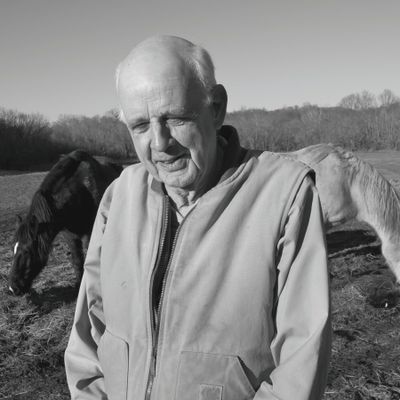
Contenders for possible inclusion in this book comprise an honour roll of 20th century’s religious and philosophical thinkers: Wendell Berry, Anthony Bloom, the Dalai Lama, Mircea Eliade, T.S. Eliot, Bede Griffiths, Carl Jung, C.S. Lewis, Thomas Merton, Alasdair MacIntyre, Kathleen Raine, Theodore Roszak, Huston Smith, Aleksandr Solzhenitsyn, Thich Nhat Hahn, and Simone Weil as well as several perennial philosophers to whom only passing mention can be made. These all crossed the horizon of a prospective book. All of them contributed in their various ways to the Resistance and all helped to shape my perspective. Here they have been reluctantly left on the side-lines… but most of them will at least pop their heads up here and there.
Since the appearance of Guénon’s writings early in the 20th century a small but potent perennialist ‘school’ has emerged in various parts of the world
The thinkers who did make the cut naturally organize themselves into three groups, reflected in the book’s structure. The first and most cohesive of these groups encompasses exponents of the philosophia perennis, a timeless wisdom to be found everywhere in traditional civilizations. This Wisdom of the Ages has now been freshly minted, addressed to the most urgent needs of the age and authoritatively expounded in the works of the French metaphysician René Guénon, the Anglo-Indian savant Ananda Coomaraswamy, and Frithjof Schuon, the movement’s most imposing figure.
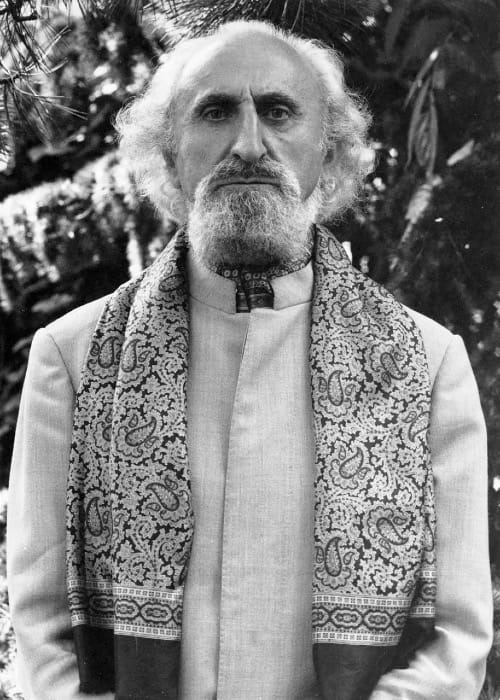
Since the appearance of Guénon’s writings early in the 20th century a small but potent perennialist ‘school’ has emerged in various parts of the world. These writers have issued the most implacable and profound challenge to the hegemonic modern outlook.
It is important to understand from the outset that ‘perennialism’ is not just another dish on the smorgasbörd of modern philosophies and ideologies which, for all their apparent diversity, are actually variations on the singular underlying theme of modernism, all of them rooted in Blake’s ‘Single Vision’ (empirical, materialist, relativist, humanist, progressivist) bequeathed to modernity by Descartes et al, all of them bereft of any sense of the sacred (though there are plenty of ersatz substitutes). Perennialism does not come from the same serving-board. For those who subscribe to this theoria, its re-formulation is nothing less than providential. As Nasr has observed,
In a sense the formulation of the traditional point of view and the reassertion of the total traditional perspective, which is like the recapitulation of all the truths manifested in the present cycle of human history, could not have come but at the twilight of the Dark Age which marks at once an end and the eve preceding a new morning of splendor. Only the end of a cycle of manifestation makes possible the recapitulation of the whole of the cycle and the creation of a synthesis which then serves as the seed for a new cycle.[[20]]
Herein lies the explanation for the fact that a whole school of thought, self-consciously articulating an understanding of ‘tradition’ and the sophia perennis, and doing so in a manner which drew on all religious heritages, should emerge in the early decades of the last century to meet the peculiar needs of the ‘eleventh hour’.
Perennialism offers a radical alternative to all the ideologies and philosophies which deny or ignore (which in the end amounts to the same thing) the Transcendent: from this perspective it hardly matters whether the pseudo-mythology of modernism takes on a Darwinian, Marxist, Freudian, feminist, existentialist, libertarian, anarchist, neo-liberal, socialist, post-modernist, post-colonial, ‘trans-humanist’ or LGBTQ coloration: the recipes may vary but the basic ingredients are always the same; we are always eating the same pie whatever sauce we use to give it a distinctive flavour. In the end one must make a choice between two radical and incompatible alternatives: crudely put, Tradition or Modernism. In Western culture this opposition is often reduced to a conflict between Christian theism and atheistic/agnostic modernism. The Columbian philosopher Nicolás Gómez Dávila described the modern history of ideas as ‘a dialogue between two men: one who believes in God, another who believes he is a god’[[21]]. M. Ali Lakhani alerts us to the same Great Divide in writing that ‘the true dividing line in politics is not between the liberal left and the totalitarian right, but between those who accept the transcendent order and those who do not’[[22]]. The Italian philosopher Augusto Del Noce put the matter in more elaborate terms, describing two ‘philosophical anthropologies’:
The true clash is between two conceptions of life. One could be described in terms of the religious dimension or of the presence of the divine in us; it certainly achieves its fullness in Christian thought, or in fact in Catholic thought, but it is not per se specifically Christian in the proper sense…. According to the second conception – the instrumentalist one, found in positivism, pragmatism, Marxism, and evolutionism in general… – there is nothing in spirit and in reason that possesses an independent metaphysical origin.[[23]]
The italicized phrase alerts us to the fact that any inquiry into what is here at issue should not be confined to the conflict between a particular monotheistic theology (such as we find in Judaism, Christianity and Islam) but rather should enfold a variety of conceptions from both East and West, some of them non-theistic, but all of which rest on a principial Absolute/Transcendent and which necessarily give rise to a sense of the sacred. Furthermore, a sense of the Absolute and of the sacred should be understood as our birth-right, inscribed in every individual soul, no matter in what mythological and religious forms it might find expression. In other words, any full-scale discussion should situate itself in a metaphysical rather than a theological frame – which is not to reject but to subsume this or that religious perspective which may or may not be theistic.
Many of us have landed on the atheistic/agnostic side of the ledger, sometimes, as a matter of deliberate decision but often simply by the osmosis of ideas, so to say. But in the end we must commit in a general way to the understanding vehicled by either Tradition or by Modernism. On the most fundamental questions there can be no accord. In the words of Lord Northbourne,
Attempts at compromise between the traditional and progressive points of view, as applied to the origin and destiny of man and the universe, can only lead to confusion. Their mutual incompatibility is total and unequivocal. The ideology of progress envisages the perfectibility of man in terms of his terrestrial development, and relegates it to a hypothetical future, whereas tradition envisages the perfectibility of man in terms of salvation or sanctification and proclaims that it is realizable here and now.[[24]]
Of course, the confusion to which Northbourne refers is on displayin the compromises and equivocations of well-intentioned but misguided people who want to ‘bridge the gap’. Hence such self-contradictory phenomena as ‘Marxist Christianity’, ‘liberal theology’ (or even worse, ‘postmodern theology’), ‘secular Buddhism’, or Stephen Jay Gould’s earnest proposal about the separate magisteria of ‘religion’ and ‘science’ – quite untenable unless one concedes the hierarchical superiority of the former just as one must always honour metaphysical principle and cosmological symbol over brute fact.
On the other hand, one must feel some sympathy for those various non-traditional thinkers who have resisted and critiqued modernist thought in its crudest aspects (scientistic, progressivist, humanistic), and who have attempted to recuperate some sense of the transcendent and the sacred outside an institutional religion with which they have become thoroughly disenchanted, often for all too understandable reasons. In such figures one discerns a kind of spiritual nostalgia if one might so put it, sometimes accompanied by an attraction to occult ‘esoteric’ movements and/or some of the more mystical and non-theistic aspects of Eastern thought. In this context one may mention the Romantic philosophers and poets of both England and Germany, ‘existentialist’ thinkers such as Nietzsche, Heidegger and Hesse, and the Eranos constellation of comparative mythographers such as Carl Jung, Joseph Campbell, Mircea Eliade, and Heinrich Zimmer. Most of these figures might be seen as exiles in a shadowy world where the religiously sanctioned verities of Tradition have been occluded or rejected, leaving them to seek out alternatives to the spiritual nihilism of modernity as best they can. It is not difficult to find counterparts to such figures in the world of European ‘high culture’, most obviously in the domains of literature, art and music (Beethoven, Thomas Mann, Yeats, Kazantzakis, Kandinsky, and Matisse might be adduced as examples). The spiritual quests of such figures, at times misguided, often have a certain grandeur and nobility which places them well beyond the absurdities and grotesqueries of much anti-traditional philosophy and profane ‘culture’ in the modern era.
In Section I, ‘Perennialism and the Politics of Eternity’, we encounter five representatives of the perennialist school: Guénon and Coomaraswamy, two of the seminal figures, Lord Northbourne and Tage Lindbom, two of the more obscure, and M. Ali Lakhani, the only living representative with whom we shall spend some time. At first glance such a selection might strike readers already familiar with this terrain as highly idiosyncratic. Why the omission of Schuon? And what of the towering figure of Titus Burckhardt, or perennialism’s preeminent living spokesman, Seyyed Hossein Nasr? There are several reasons. The present volume is not a comprehensive account of traditionalism/perennialism per se, a task undertaken in three other books: Traditionalism: Religion in the light of the Perennial Philosophy (2000), Frithjof Schuon and the Perennial Philosophy (2010), and the forthcoming Voices in the Wilderness: Modern Exponents of the Perennial Philosophy. Everything I want to say about Schuon can be found in the second of these books. Burckhardt and Nasr, two of the most weighty traditionalists, are deep, wide-ranging and sophisticated thinkers who cover a vast terrain; both have written extensively about not only modern science and scientism but about the sacred sciences of traditional civilizations, the latter providing a vantage-point from which the limits of modern science and scientism are more clearly discerned. Anyone with a serious interest in the subject would be ill-advised to ignore their works but here a few passing references must suffice, also the case with another of the front-rank perennialists, Martin Lings.
Lord Northbourne, English farmer, ecologist and philosopher, has been included precisely because he is still little known and because he made a distinctive contribution to perennialism. Tage Lindbom, political philosopher and statesman, is even less familiar, his influence not extending much beyond his native Sweden. He is one of the few representatives of the perennialist ‘school’ who have explicitly confronted political and ideological issues, as signposted by the title of one of his major works, The Myth of Democracy. M. Ali Lakhani is a Canadian of Indian background, a lawyer by profession, and the editor of the journal, Sacred Web: A Journal of Tradition and Modernity. Lakhani extends Lindbom’s critique of modern politics, taking account of the dark and drastic changes that have occurred in the decades since Lindbom was writing and addressing problems that had not yet arisen. In a very substantial essay running to some sixty pages,‘“Who Will Rule, God or Man?” – Politics and the Sacred’, Lakhani gives us a detailed and coherent account of the principles which inform traditional understandings of the political domain. It should be compulsory reading for all political philosophers! In the course of his exposition, and indeed elsewhere, Lakhani offers many discomforting insights into contemporary politics in many parts of the world.
It is perhaps worth pointing out that the present book’s horizons are not bound by the limits of Europe and its global extensions because the perennial philosophy embraces and honours all of the world’s great mythological, sapiential and religious traditions, including those of primordial and non-literate cultures, seeing them as treasure-houses of wisdom against which we might properly measure the delusions of modernity. Chuang-Tse, Sankara, Ibn ’Arabi and Black Elk have much more to tell us about our real situation, here and now, than Stephen Hawking or E. O. Wilson or Sam Harris or Steven Pinker! But, it should also be noted, The Recovery of the Sacred is not circumscribed by perennialism.
One of the subsidiary themes here is modern man’s pursuit of an illusory ‘freedom’, one of the false gods of modernity.
The group of thinkers in Section III is looser and more disparate in outlook but unified by the conviction that the Christian message provides urgently needed answers to the contemporary world’s many ills, especially in those portions of the globe where the civilization in question was nurtured by the Western heritage. They share the view of the Orthodox churchman, Metropolitan Anthony, who bluntly states that ‘The loss of God is death, is isolation, hunger, separation. All the tragedy of man is in one word, “godlessness”.’[[25]] One of the subsidiary themes here is modern man’s pursuit of an illusory ‘freedom’, one of the false gods of modernity. Consider for a moment the implications of such a passage as the following, from the French Catholic intellectual, Jean-Marie Domenach:
Freedom, identified with a vague notion of nature, unfolds in a vacuum, and toward what ends? Rest, happiness, friendship. These are the first fruits of Being, but they are utopian and ineffectual because they are not ordered to any hierarchy of values. In truth, Being is not a hidden treasure that will free itself… by exploding the crust of a repressive society. Being is an ascending totality within which human relationships are articulated: among humans, with nature, and with the supernatural. If Being is not affirmed as an order of values, it is pushed into the realm of dreams; being formless, it is confused with the impossible delights of a lost world or an imaginary world.[[26]]
Under the umbrella of ‘Some Christian Perspectives’ we encounter the thought of Augusto Del Noce and Michael Hanby, two A-league Platonic-Christian philosophers, both Catholics, one Italian, the other American; Ivan Illich a deracinated Austrian Catholic priest; a French Reform Protestant sociologist, Jacques Ellul; and Marilynne Robinson, American novelist and essayist of Calvinist affiliation.
Sitting not altogether comfortably between these two groups, centre-stage in Section II (‘Secular Interventions’), are three figures who do not share the first principles or religious commitments of our other dramatis personae but who have been included for particular reasons: Hannah Arendt for her treatment of two subjects inescapable for any serious-minded consideration of our recent political history, the Holocaust and political totalitarianis; Christopher Lasch because of his acute diagnosis of both an American malaise which has been exported to much of the English-speaking world and beyond, and of the ever-encroaching technocracy; and David Berlinski who has written a fiery critique of scientism, one which doesn’t rest on religious or metaphysical assumptions and is thereby more accessible to any mentality still under the sway of modernist ideas. While none of these thinkers declared any formal religious commitments, neither Lasch nor Berlinski are hostile to religion, while Hannah Arendt’s posture is perhaps best described as one of lofty indifference.
No anti-religion spokesperson is included in these pages, largely because the general case has been given more than enough air-time with nickel-and-dime critics of religion to be found on all sides. Richard Dawkins missed the cut by the length of the fairway. No need to aid a bad cause… which is not to suggest that religion is beyond the most searching criticism, nor to deny the melancholy fact that many evils of a very dark kind have made their way into the world under cover of religion.
Surveying the many ideologies and philosophies of modernity, Schuon remarks that ‘the worst of these false idealisms are, in certain respects, those which annex and adulterate religion.’[[27]] In matters religious the old Latin maxim holds: corruptio optima pessima, more colloquially expressed by C.S. Lewis: ‘of all the bad men, religious bad men are the worst’[[28]]. So it is, William Stoddart reminds us, that ‘It is atypically modern paradox that, in several countries, political parties that call themselves “secular” are distinctly better than parties which claim for themselves the epithet “religious”.’[[29]]
The contrast between tradition and modernity is a motif to be found in many of the essays in this anthology. The contrast is likely to be most illuminating when it is informed by the following considerations from Frithjof Schuon:
When the modern world is contrasted with traditional civilizations, it is not simply a question of seeking the good things and the bad things on one side or the other; good and evil are everywhere, so that it is essentially a question of knowing on which side the more important good and on which side the lesser evil is to be found. If someone says that such and such a good exists outside tradition,the answer is: no doubt, but one must choose the most important good, and it is necessarily represented by tradition; and if someone says that in tradition there exists such and such an evil, the answer is: no doubt, but one must choose the lesser evil, and again it is tradition that embodies it. It is illogical to prefer an evil which involves some benefits to a good which involves some evils.[[30]]
No one will deny that modernity has its compensations, though these are often of a quite different order from the loudly trumpeted ‘benefits’ of science and technology, some of which are indubitable but many of which issue in consequences far worse than the ills which they are apparently repairing. Furthermore, many so-called ‘advances’ must be seen as the poisoned fruits of a Faustian bargain which one day must come to its bitter conclusion. Developments in ‘artificial intelligence’, for instance, will no doubt prove to be a case in point. What indeed is a man profited if he gain the whole world but lose his own soul? On the other hand, one real advantage of living in these latter days is the ready access we have to the spiritual storehouses of the world’s religious and mythological traditions, including esoteric teachings which have hitherto been veiled in secrecy. As Schuon has remarked,
That which is lacking in the present world is a profound knowledge of the nature of things; the fundamental truths are always there, but they do not impose themselves… because they cannot impose themselves on those unwilling to listen.[[31]]
But for those with ‘eyes to see and ears to hear’ the timeless verities are always accessible.
Cards on the Table
The origins and gestation of the present work call for some explanation. The reader will already have identified where the sympathies of the author lie. Violating the dubious scholarly protocol which forbids the use of the first-person pronoun, and mindful of Nietzsche’s charge that all philosophy is an ‘involuntary memoir’, I here put at least a few of my cards on the table upfront.
My work as a comparative religionist (or in American parlance, a historian of religions) has been centrally concernedwith fathoming the writings of the major perennialist philosophers properly so-called, particularly those of Frithjof Schuon. My other primary and inter-related interests have been the spiritual encounter of East and West in the modern era, critiques of modernity, the environmental calamity in the light of traditional cosmologies, and the lessons we might learn from primordial cultures such as those of the Australian Aborigines and the Plains Indians of North America. Such explorations have produced several books. But of our triad of ‘religion, science, and politics’, the third has received only scant attention, partly because I have subscribed to Coomaraswamy’s declaration that ‘politics and economics, though they cannot be ignored, are the external and least part of our problem’[[32]], which is to say that the political realm of any given society is a superficial reflection of the philosophical and moral foundations of the culture as a whole, healthy or diseased as the case may be. In principle I still hold to Coomaraswamy’s view. However, politics has now become so omni-present, so all-devouring, that it is a subject which needs to be confronted more explicitly. We might note in passing that ‘politics’ is no longer conceived primarily as concerning the polis, the ‘body politic’ at large, nor as concerned with legitimate authority, but as a sulphurous domain of power relations in which traditional understandings of authority have been, as it were, vaporized in an ideological blitzkrieg carried out under the flag of democracy, equality and freedom. However, as Augusto Del Noce pointed out in ‘Authority versus Power’,
the rejection of authority, understood in its metaphysical-religious foundation, leads instead to a fullness of ‘power’. In other words, the [conventional] opposition authority vs freedom must be replaced by the opposition authority vs power, where the former has a liberating influence and the latter an oppressive one. In fact, it is hard to deny… that the real endpoint… of the process of revolutionary liberation leads to the complete dependence of man on society [i.e., political power].[[33]]
Politics has been absolutized: everything disappears into its all-consuming maw, a process which is part and parcel of secularization, one recently consolidated by much ‘postmodern’ theorizing (Foucault, Barthes Derrida et al). The obsessive preoccupation with ‘identity politics’ is but one symptom of this transformation.
I have been interested in politics since the mid-1960s when I hurled myself into activism of the sort common amongst my generation, which is to say ‘leftist’, counter-cultural and progressivist. Whilst I never abandoned some of the ideals and values I then espoused, they have been relocated in the much broader perspective provided by perennialism and have taken on a more ‘conservative’ cast, though that too is a hazardous term. For the moment all that need be said is that nowadays ‘conservative’, often unhappily assimilated with ‘right-wing’, is mis-applied to all manner of ideologues and regimes ranging from xenophobic nationalists and murderous military juntas through the hucksters of the capitalist-technocratic state to dreamy-eyed folk caught in a nostalgia for a past that never existed. In any case, don’t we all know that conservatism is an expedient political philosophy designed to protect the privileges of the powerful and wealthy? A tell-tale sign of the contemporary climate amongst the ‘intelligentsia’ is the Pavlovian response to words like ‘tradition’, ‘monarchy’, ‘authority’ and ‘hierarchy’ (bad!) and ‘freedom’, ‘democracy’, ‘rights’, ‘liberation’ and ‘equality’ (good!)[[34]]. And who these days would sympathize with Coomaraswamy’s observation, ‘I don’t want to be ruled by my equals. I want to be ruled by my betters’? A word in passing on ‘rights’: insofar as the concept of rights protects the dignity and freedom of the individual person it is altogether commendable. However, ‘rights’ is a precarious platform on which to build a better social order because it is a legalistic notion which has much less grip than either time-honoured customs or religiously sanctioned moral imperatives. And how much more impregnable a foundation for social relations is the religious doctrine of Imago Dei; every human life is infinitely precious because we are made in God’s image and likeness; ‘all equal before God’. As Simone Weil somewhere tersely observes, ‘One cannot imagine St Francis talking about “rights”.’
most of today’s so-called ‘conservatives’ (and Edmund Burke as well!) are actually no more than ‘cautious liberals’, tied as they are, either surreptitiously or unconsciously, to the idea of Progress
As one of my fellow-perennialists reminds me, philosophically speaking, most of today’s so-called ‘conservatives’ (and Edmund Burke as well!) are actually no more than ‘cautious liberals’, tied as they are, either surreptitiously or unconsciously, to the idea of Progress. By the same token one can also say that this kind of ‘conservatism’ is modernistic. Titus Burckhardt, on the other hand, alludes to the true nature of conservatism when he writes that
… the consciously conservative man [now] stands as it were in a vacuum. He stands alone in a world which in all its opaque enslavement, boasts of being free, and, in all its crushing uniformity, boasts of being rich… he knows that man, with all his passion for novelty, has remained fundamentally the same, for good or ill: the fundamental questions in human life have always remained the same; the answers to them have always been known; and, to the extent they can be expressed in words, have been handed down from one generation to the next. The consciously conservative man is concerned with this inheritance.[[35]]
From this viewpoint, true conservatives are a rare breed in the contemporary world. We might also profitably recall T.S. Eliot’s maxim that ‘When all have become the breakers of idols, the protector of graven images is the true revolutionary’. In any event, at a time when the vituperative categorizing and ‘cancelling’ of one’s ideological enemies is all the rage (‘rage is all the rage’, as Marilynne Robinson has remarked), we should be much more cautious in our use of the many political labels which carry a provocative and pejorative weight; one might adduce as examples ‘fascist’, ‘communist’, ‘woke’, and ‘reactionary’, often emptied of meaning and serving only as triggers to inflammatory rhetoric and destructive polarization. Furthermore, George Orwell’s observation that ‘In our time, political speech and writing are largely the defence of the indefensible’[[36]], made in 1946, remains more pertinent than ever. Many of the stock terms of contemporary political discourse – ‘right’, ‘left’, ‘liberal’, ‘socialist’, ‘conservative’, ‘radical’ – are like coins which have lost their value but not their currency. Insofar as we are obliged to continue using them we should avoid their further debasement. As Hannah Arendt wrote,
Clichés, stock phrases, adherence to conventional, standardized codes of expression and conduct have the socially recognized function of protecting us against reality, that is, against the claim on our thinking attention that all events and facts make by virtue of their existence.[[37]]
As to the obsessive identification of political thought in terms of the dichotomy ‘left/right’ or ‘progressive/conservative’ we would do well to heed Thomas Hardy’s wise and indispensable dictum:
Conservatism is not estimable in itself, nor is Change, or Radicalism. To conserve the existing good, to supplant the existing bad by good, is to act on a true political principle, which is neither conservative nor Radical.[[38]]
Hardy’s ‘true political principle’ alerts us to the danger inherent in any ideology, the tendency to become totalitarian in scope and intent, to subsume beliefs, ideas and values of another order which actually surpasses the limits of politics – the inner spiritual life of the individual, for example, or the domain of metaphysics, to move from the microcosmic to the metacosmic. In the modern context it is all too easy for profane ideology, and indeed the whole realm of politics, to becomes absolutized, everything else, religion included, relativized: political considerations become the criteria by which all else is judged. In stark contrast, in a properly-ordered civilization, it is necessary, in Schuon’s words,
to start from the idea that spirituality alone – and with it religion which necessarily is its framework – constitutes an absolute good; it is the spiritual, not the temporal, which culturally, socially and politically, is the criterion of all other values.[[39]]
One of the more absurd but potent slogans of the ‘revolutionaries’ in the streets of Paris in 1968 was ‘nothing outside politics’, echoed less offensively in the counter-culture battle cry ‘the personal is the political’. An argument might well be made that ideology, in principle and in itself, is an evil because it subverts and corrupts and overwhelms things of a higher order which can be signalled by words like ‘spiritual’, ‘religious’, ’transcendent’, ‘ethical’. Ideology becomes a counterfeit religion. The thinking of figures such as Dostoevsky, Simone Weil, and Augusto Del Noce at least tends towards the idea that all ideologies lean in that direction. What Camus said of governments might well be said of ideology as such: ‘By definition, a government has no conscience. Sometimes it has a policy, but no more.’[[40]] A more supple stance might suggest that ideology only becomes truly evil when it is allowed to become totalitarian, that it can be benign but only when it is held in its proper place by supra-political considerations and restraints deriving from a religious or metaphysical perspective. As a friend put it, ‘All ideologies are dangerous, some are evil.’
A religious outlook can accommodate an ideology insofar as the two remain consonant; but an ideology cannot encompass a religion which would be a matter of the lesser containing the greater. Fatal results almost invariably ensue when political ideology and religious conviction become entangled to the point of being more or less indistinguishable, as is the case in those religious fundamentalisms which are destroying the very fabric of the traditions which they claim to be preserving, a cancerous phenomenon perhaps most flagrantly displayed in so-called ‘Christian nationalism’ (another oxymoronic term) in the USA, belligerent Zionism and variations of Islamic fundamentalism in the Middle East, and the emergent ‘Hindu nationalism’ in the sub-continent. Such deformations, to say the least, do not bode well.
now, many years later, as the Further Shore beckons and before I can hope to ‘depart in peace’, I feel moved to essay a small contribution to contemporary debates situated in the frame of political philosophy’s inter-relations with religion and science
The decisive change in my own thinking about politics (and just about everything else) was galvanized by an abrupt and wholesale disillusionment with all ideas rooted in the notion of ‘Progress’, a therapeutic trauma detonated by René Guénon’s The Reign of Quantity (1945), a devastating critique of modernity buttressed by his exposition of metaphysical principles to which I was previously a stranger except in their heavily veiled Christian forms. Thenceforth my interest in politics was subordinated to more metaphysical and religious concerns. To borrow a phrase from Dávila, the ‘topography of my convictions’ had changed. But now, many years later, as the Further Shore beckons and before I can hope to ‘depart in peace’, I feel moved to essay a small contribution to contemporary debates situated in the frame of political philosophy’s inter-relations with religion and science. Hence, for better or worse, the volume you hold in your hands. (I can only hope you’re not reading it on a screen!)
Given the book’s perennialist orientation some readers might expect to meet somewhere in these pages Aldous Huxley, author of the widely celebrated The Perennial Philosophy (1945) which put the term into popular circulation, and two other figures often currently (and, one hopes, temporarily) associated with ‘traditionalism’, Julius Evola and Alexander Dugin. Here is not the place for a detailed rationale for their omission except to say that Huxley’s understanding of his subject was highly selective, idiosyncratic and tarnished by modernist prejudices, which is not to deny the more noble purposes which his often interesting and insightful book served. Julius Evola, the Italian aristocrat[[41]] and philosopher, derived a good deal from his reading of Guénon and much of his work is interesting and illuminating. But it too is contaminated by ideas and values which should be quite alien to perennialists-proper, in particular his disdain for exoteric religion, the fascist and antisemitic elements in his political discourse, andhis obsession, veering towards the pathological, with ‘virility’. Dugin’s tangled and tangential relation to perennialism has led to all sorts of misconceptions, as have precarious associations of perennialism with the ‘Far Right’ and the rise of demagogic populism as espoused by dangerous buffoons like Steve Bannon. Much of this miasma of confusion has been generated by the misleading claims of such contemporary commentators as Mark Sedgwick and Benjamin Teitelbaum[[42]]. In any case, to here bring either Evola or Dugin into the reader’s purview would not be worth the candle.
any remedy such as might be achieved by human efforts must be anchored in metaphysics and centrally concerned with our spiritual welfare as well as our social and material needs
Recovering the Sacred is not in the first place addressed to specialist scholars but to anyone with an open-minded interest in religion, science and politics, anyone receptive to alternate ways of thinking about these domains. It has no coherent or systematic political agenda; it presents neither a ‘solution’ to contemporary ills, nor a ‘strategy’ or ‘program’ or ‘policy’ towards that end. No political ‘solution’ is possible in a vacuum. Nor could it arise unless informed by an adequate awareness of our present situation – an awareness which is so conspicuously absent in the predominant discourses of modernity. It is to this fundamental blindness that the book is addressed, driven by the conviction that the thinkers presented here can help us find our way out of the darkness. In this respect our exposition should not be hampered by what Jacques Ellul called the great ‘political illusion’ of our time, one to which progressivists are especially vulnerable. Christopher Lasch, much influenced by Ellul, later summarized Ellul’s understanding of the ‘political illusion’ as the belief that ‘a change in political structures, without an attendant spiritual or cultural transformation, will bring about a genuine democratic society’[[43]]. (Whether a ‘democratic society’ should be our ultimate aim is a question to be left aside for the moment.) Nor will the reader find any schema of first principles, spelt out in text-book fashion; the reader, each in his or her own fashion, will discover them amidst these discursive wanderings. Nonetheless, the book is informed by the conviction that any remedy such as might be achieved by human efforts must be anchored in metaphysics and centrally concerned with our spiritual welfare as well as our social and material needs.
The world is as it is largely because of the state of human consciousness; only a change in our consciousness can effect a real change in the terrestrial conditions – a change of mind; what could be simpler, and at the same time, infinitely difficult? Such a transformation depends on revivifying a sense of the sacred without which, in the long term, all else will count for naught. At the same time we must be mindful that the cosmic situation at large and our particular terrestrial condition are shaped by supra-material and trans-historical forces which are quite unaffected by any Promethean agenda of ‘reform’. Such changes as human beings can effect will be for the better or the worse depending on the extent to which they are informed by a sense of the Absolute without which no political philosophy, no political program, can be anything more than the rearrangement of the proverbial deckchairs on the Titanic. As William Law put it three centuries ago, ‘If [we] have not chosen the kingdom of God first, it will make in the end no difference what [we] have chosen instead.’[[44]]
Readers receptive to the sophia perennis will find their thinking nourished by a set of axiomatic principles which are variously rehearsed by the figures who appear in Section I, and which are at least adumbrated or implicit in the writings of the Christian thinkers we meet in Section III. I hope that readers unable to accept the perennial philosophy in toto will nevertheless be able to derive some profit from the book. At the least it might stimulate them to take stock of their own kitbag of ideas and values, some of which may have become threadbare and would best be deposited in the nearest dustbin. Such has been my own experience in the bracing encounters with the figures who populate these pages. Some of them may be waiting to ambush you too! (I like Walter Benjamin’s remark that ‘Quotations in my works are like wayside robbers who leap out armed and relieve the stroller of his convictions’.[[45]])
The book is obviously informed by a particular worldview and by my own spiritual and intellectual trajectory, one which has brought me to a point where I find my general stance to ‘life’ intimated in a passage from Swami Shivananda:
Life is God in expression. Life is service and sacrifice. Life is love. Life is relationship. Life is poetry but not prose. Life is art and imagination but not science. Life is worship. We are here as passing pilgrims. Our destination is God.[[46]]
Then too, inescapably, life is also suffering, sorrow and perplexity or, as Graham Greene put it, ‘as long as one suffers one lives’. As to the many maladies in the modern world, not least in the political domain, one can hardly better the diagnosis popularized by Mahatma Gandhi in his list of ‘Seven Social Sins’ but actually first articulated by the English priest Frederick Lewis Donaldson, Archdeacon of Westminster from 1937 to 1946:
Seven blunders of the world which lead to violence: wealth without work, pleasure without conscience, knowledge without character, commerce without morality, science without humanity, worship without sacrifice, politics without principle.[[47]]
However, I have tried to allow my representative figures to speak for themselves, eschewing too much editorializing, or even worse, sermonizing (to which I am sometimes prone) – not that sermonizing is a bad thing when carried out in the proper contextby those ordained to that function. What the book does do is present some brief sketches of a range of thinkers who have captured my attention and who have something important to say to us in the peculiar and aberrant circumstances in which we find ourselves. It would be absurd to imagine that I agree with everything that each of them says – obviously a nonsensical possibility as well as being quite undesirable, no less preposterous than assuming that the thinkers in question speak with one voice. No, rather the purpose is to introduce readers to these thinkers and their ideas, perhaps unfamiliar, and to discuss their contributions to our understanding of the issues canvassed throughout. Thus the reader will also be exposed to a web of related themes which tie the book together. Perhaps it is not too much to hope that even readers already on more intimate terms with these Resistance fighters might find something of interest herein, stimulating them to explore new intellectual and spiritual pathways. If the book serves such a purpose it will not have been in vain. Simone Weil, in characteristically direct fashion, states that ‘any science which doesn’t take us closer to God is worthless’[[48]]. Whilst tempted to add some qualifications to her bald and confronting statement, I’m inclined to think the same of any human endeavour, especially those of an intellectual or spiritual order. Whatever its shortcomings, I hope the book has been written in that spirit.
[[1]]: I have followed William Stoddart who used this as a telling epigraph in Remembering in a World of Forgetting, 2008, 1
[[2]]: Blake cited in K. Raine, “The Underlying Order: Nature and the Imagination” in Fragments of Infinity: Essays in Religion and Philosophy, ed. A. Sharma, 1991, 208
[[3]]: C.G. Jung, Memories, Dreams, Reflections, 1983, 356-7
[[4]]: Not be confused with its more limited sense, referring to certain late 19th century artistic and literary movements
[[5]]: Lord Northbourne, Religion in the Modern World, 1963, 13
[[6]]: D.H. Lawrence, Lady Chatterley’s Lover (1928)
[[7]]: A. Del Noce, Interview, 1984, in The Crisis of Modernity, 2014, 269
[[8]]: F. Schuon, ‘No Activity without Truth’, in The Sword of Gnosis, ed. Jacob Needleman, 1974, 29
[[9]]: T. Roszak, Where the Wasteland Ends, 1972, xix (italics mine)
[[10]]: The Shorter Oxford English Dictionary’s definition of the principal meaning of ‘original’: ‘of or pertaining to the origins of something.; that existed at first or has existed first; primary; initial; first’
[[11]]: See W. Perry, ‘The Revolt Against Moses’, in Challenges to a Secular Society, 1996, 17-38
[[12]]: In fairness it should be pointed out that Nietzsche had at least a semi-serious interest in the philosophies of the East, particularly the Buddhist
[[13]]: F. Schuon, Logic and Transcendence, 1975, 42
[[14]]: F. Schuon, Stations of Wisdom, 1961, 47
[[15]]: F. Schuon, Stations of Wisdom, 47
[[16]]: F. Schuon, To Have a Center, 2015, 29
[[17]]: S.H. Nasr, The Essential Seyyed Hossein Nasr, ed. W. Chittick, 2007, 229
[[18]]: F. Schuon, The Transfiguration of Man, 2005, 113
[[19]]: F. Schuon, La conscience de l’Absolu, 2016, 60
[[20]]: S.H. Nasr, Knowledge and the Sacred, 1981, 63
[[21]]: Davila quoted in M. Pheneger, ‘Nikolás Gómez Dávila and the “Authentic Reactionary”’, The Imaginative Conservative, Oct 25, 2022; theimaginativeconservative.org/2022/10/nicolas-gomez-davila-authentic-reactionary-matthew-pheneger.html
[[22]]: M. Ali Lakhani, ‘”Who Will Rule, God or Man?” – Politics and the Sacred’. (Lakhani points out that precisely this distinction was made by Eric Voegelin in his correspondence with Hannah Arendt.) Lakhani’s important essay was written some years ago and first published in Sacred Web 35, Summer 2015, 13-68. It has recently been reproduced in digital form, accessible to non-subscribers at sacredweb.com. All subsequent quotations are from this unpaginated source
[[23]]: Carlo Lancellotti, ‘The Dead End of the Left: Augusto Del Noce’s critique of Modern Politics’, Commonweal, March 21, 2019 (italics mine)
[[24]]: Lord Northbourne, ‘Looking Back on Progress’ in Of the Land and the Spirit, 2008, 87 (italics mine)
[[25]]: Metropolitan Anthony of Sourzah (Anthony Bloom), God and Man, 1974, 68
[[26]]: Jean-Marie Domenach, quoted in C. Lancellotti, ‘The Dead End of the Left: Augusto Del Noce’s Critique of Modern Politics’, Commonweal, March 21, 2019
[[27]]: F. Schuon, To Have a Center, 1990, 30
[[28]]: C.S. Lewis, Reflections on the Psalms; www.goodreads.com. In similar vein Karen Armstrong: ‘There are some forms of religion which must make God weep’; ‘Bill Moyers Interviews Karen Armstrong’, January 2002
[[29]]: W. Stoddart, Remembering a World of Forgetting, 2006, 20
[[30]]: F. Schuon, Light on the Ancient Worlds, 1966, 42
[[31]]: F. Schuon, ‘No Activity without Truth’ in The Sword of Gnosis, ed. J. Needleman, 1974, 28 (italics mine)
[[32]]: Coomaraswamy quoted in Dale Riepe, Indian Philosophy and Its Impact on American Thought, 1970, 126
[[33]]: From Del Noce’s essay ‘Authority and Power’, excerpt cited in Carlo Lancellotti’s Introduction to Del Noce’s The Crisis of Modernity, 2014, xxiii
[[34]]: For a traditionalist counter-attack to such usages see Coomaraswamy’s essay, ‘The Bugbear of Democracy, Freedom and Equality’, from The Bugbear of Literacy, 1979. The essay is reproduced in The Betrayal of Tradition, ed. H. Oldmeadow, 2005, 121-149
[[35]]: T. Burckhardt, ‘What is Conservatism?’ in The Essential Titus Burckhardt, ed. W. Stoddart, 2003, 186 (italics mine)
[[36]]: From G. Orwell ‘Politics and the English Language’, 1946 (reproduced in many different places). On the relation between politics and the debasement of language see also George Steiner’s essay, “The Hollow Miracle’ in Language and Silence, 1967
[[37]]: From H. Arendt, The Life of the Mind, 1977-78
[[38]]: T. Hardy, Preface to Late Lyrics, 1922
[[39]]: F. Schuon, The Transfiguration of Man, 1995, 28
[[40]]: www.goodreads.com/quotes
[[41]]: Evola’s apparently aristocratic background has been contested by some scholars – but this issue need not concern us here
[[42]]: A critique of the work of either of these scholars is beyond our present compass. While there is much in their books that is informative, they are profoundly marred by the failure to make the necessary distinctions between perennialists (essentially conforming to the principles explicated by Guénon, Coomaraswamy and Schuon), quasi- and pseudo-traditionalists (such as Evola and Dugin) and demagogic right-wing populists (xenophobic, racist, authoritarian in some cases, libertarian in others). Approaching with caution, see M. Sedgwick, Against the Modern World: Traditionalism and the Secret Intellectual History of the Twentieth Century, 2004, and B. Teitelbaum, War for Eternity: The Return of Traditionalism and the Rise of the Populist Right, 2020. On Dugin, see C. Upton, Dugin Against Dugin: A Traditionalist Critique of the Fourth Political Theory, 2018
[[43]]: Ellul’s book L’illusion politique was published in 1965 and first appeared in English translation in 1967. Lasch’s remarks can be found in Eric Miller, Hope in a Scattering Time: A Life of Christopher Lasch, 2020 edition, 176
[[44]]: www.azquotes.com/author/8570-William_Law
[[45]]: Walter Benjamin’s One Way Street, 1928
[[46]]: Swami Shivananda, Bliss Divine; www.yogamag.net/archives
[[47]]: See Wikipedia entries on ‘Frederick Donaldson’ and ‘Seven Social Sins’
[[48]]: S. Weil, Gravity and Grace, 2002, 5