We are pleased to announce the appearance of Dr. Paraskevopoulos’s new book, titled Pearls of Emancipation: The Vision of Shin Buddhism, published by Dharmakāya Books in October 2026, which presents the main teachings of Shin Buddhism (Jōdo Shinshū—the Buddhist tradition most widely followed in Japan) in a thorough and easy-to-understand way.
The book is divided into three sections: Conversations; Expositions; and Presentations. The following interview, from the first section, was conducted by Samuel Bendeck Sotillos via e-mail from December 2020 to January 2021. It was originally published as ‘The Timeless Wisdom of Buddhism in the Contemporary World: A Conversation with John Paraskevopoulos’, in the Temenos Academy Review (Volume 25, 2022).

Samuel Bendeck Sotillos: For audiences that are unfamiliar with you or your writings, could you please tell us a few words about yourself and what led you to the Buddhist path?
John Paraskevopoulos: I was born in Australia of Greek immigrant parents. At the age of six, my father drowned during a family outing at the beach which left a deep impression on me regarding the ephemeral and unpredictable nature of human existence. This proved a major impetus for my quest to understand the conundrum of life as was the decision to study Philosophy at the University of Melbourne many years later. After a rather labyrinthine spiritual search during my early twenties, I decided to take refuge in Mahāyāna Buddhism; in particular, a school of the Pure Land tradition known as Jōdo Shinshū.
SBS: At a time where many find themselves estranged from the religious traditions into which they were born or were raised in non-religious households, one observes an increasing number of seekers finding their spiritual home in the Buddhist tradition. Why do you think that so many people in the West are drawn to Buddhism today?
JP: This is, by and large, a modern phenomenon in which we are confronted with an unprecedented number of spiritual choices (something that would have been scarcely conceivable just two hundred years ago). Westerners who have rejected Christianity or Judaism have either spurned religion altogether or sought to find an alternative that resembles them the least. The reasons for this rejection are complex and it would be unwise to over-generalise but, clearly, numerous people have concluded that the Abrahamic faiths have somehow failed to give them what they’re looking for.
I do not agree that the fault always lies with theistic teachings, given the rather rudimentary and unsophisticated understanding that many have of their own native religion. For example, I wonder how many thoughtful Christians would have abandoned their faith if they had only been exposed to the spiritual treasures found in, say, Dionysius the Areopagite (fl. 6th century), Thomas Aquinas (1225–1274), Meister Eckhart (1260–1328), Gregory of Nyssa (335–395) or Maximus the Confessor (580–662).
Nevertheless, many continue to struggle with the Church’s teachings on certain doctrinal questions including its theological response to the problem of evil and human suffering; not to mention an attitude to other faiths that is often ungenerous and chauvinistic. I am not suggesting, for a moment, that there aren’t more satisfactory ways of tackling such challenges than what is often found in your average Sunday sermon but, for those who have reached an impasse with these difficulties, Buddhism does offer an alternative path that can be spiritually fulfilling.
one ought only to leave the religion of one’s birth as a very last resort
SBS: You raise an important point. Are you suggesting that, if modern seekers were more familiar with their native traditions—especially among the Abrahamic faiths—there would be fewer conversions to Eastern religions?
JP: I do believe that one ought only to leave the religion of one’s birth as a very last resort when every possible avenue for reconciliation has been exhausted. Therefore, one shouldn’t do so lightly. The reason for this is that uprooting oneself from a faith that is in our ancestral DNA, so to speak, can be quite unsettling given the cultural and psychological impact that such defections may have on our psyche (which must adapt to what often feels like an alien spiritual ambience). Of course, this won’t always be the case but I have noticed that a number of Westerners, later in life, choose to re-embrace the spiritual patrimony of their parents for reasons of cultural or temperamental affinity, rather than for purely doctrinal reasons.
In other words, there is a strongly felt need to connect with a faith that is grounded in the language, customs and traditions of one’s forebears; that is, a quest for a familiar civilization and a yearning for one’s origins that is tangibly human and not just metaphysical. Given the chronic disquiet of the Western mind, there is a tendency to ignore the rich spiritual heritage under our very noses and to run after wisdom in far-flung places that are remote in more than just a geographical sense.
Notwithstanding the above, however, there are many seekers for whom the need for doctrinal purity, rectitude and integrity is paramount despite the price that needs to be paid in other respects. In the end, the prerogatives of truth—as understood by each wayfarer—must prevail but let us be sure that we have discerned our needs prudently before we ‘throw out the baby with the bathwater’.
when a spiritual path is reduced to establishing a utopia on earth … it can only descend into a barren reductionism that is but a parody of what the Buddha taught
SBS: A concerning feature of what often passes for Buddhism in the West is that it appears to diverge from what has been practiced in its more traditional forms. Can you please talk about this phenomenon and why it is important to view Buddhism as a religion rather than just a secular philosophy?
JP: It is certainly true that many forms of Dharma in the modern West have a distinctly secular flavour, divorced from any awareness of spiritual reality. This mirrors the aberration of modernity, which is the only widespread world-view in human history to have repudiated the sacred as foundational to human existence. Therefore, the notion of seeking liberation from this realm of birth-and-death (saṃsāra) appears foreign to its ambitions which are to anxiously pursue the unsatisfiable quest for mere worldly flourishing coupled with a restless activism in the socio-political sphere.
Seeking to improve conditions in our world is, without doubt, an imperative obligation. But when a spiritual path is reduced to establishing a utopia on earth (the possibility of which is extremely doubtful given the realities of the human condition), it can only descend into a barren reductionism that is but a parody of what the Buddha taught. The word ‘religion’ comes from the Latin re-ligare which means to re-bind or connect again—to what, you may ask? To that abiding reality that faithful Buddhists call Nirvāṇa. When this connection is severed, one cannot properly speak of religion at all or of an authentic spiritual path that helps us overcome the inescapable realities of sickness, old age and death.
SBS: Some Buddhists today have even sought to ‘update’ the teachings by making them compatible with the latest intellectual fashions. The Buddhist tradition has demonstrated 2,600 hundred years of time-tested efficacy, yet there is a concerted push to change the Dharma after a very short period in the West. How do you view these developments?
JP: The need to have Buddhism conform to the preoccupations of modernity (as if the latter constitutes an unquestionable standard of truth) is a deeply flawed endeavor. As they do with everything else, modernists believe that the Dharma must also be subject to ‘evolution’, whatever that might mean! Such views arise from their conviction that reality has no ‘essence’ or ‘substance’ and that, therefore, everything is ceaselessly fluid—including, they would argue, the teachings of Buddhism (not to mention truth itself). Furthermore, the modern mindset has completely failed to come to terms with the profound metaphysical symbolism of traditional myths and sacred stories which it is apt to dismiss with an arrogant condescension.
This is not to suggest that that we must become unthinking slaves to rigid or sclerotic dogmas. Through its notion of upāya or ‘saving means’, Buddhism embraces a plethora of innovative approaches to help people assimilate its liberating teachings. While the verities of Dharma never change, creative adaptations are necessary to accommodate the endless variety of human dispositions and spiritual needs. Therefore, Buddhist teaching is eminently dynamic as it constantly seeks new ways to reach those who thirst for the truth.
However, this is not the kind of ‘evolution’ whereby one thing simply morphs into another in an endless chain of pointless flux; rather, one should view this as a revelatory disclosure—conveyed through the limitations of language—of something that is immutable and ineffable. Our modern world is besotted with the notion that all views are ‘relative’; and yet we may well discover favourable conditions, in the midst of this benighted outlook, that can be harnessed into something positive. By unveiling the true ‘unity-in-diversity’ that permeates the Buddhist vision of reality, the evident relativity of partial perspectives is seen as being rooted in the unalloyed truth of a plenary reality.
What is often overlooked is that, while impermanence and non-substantiality are assuredly features of saṃsāra, transience is most certainly not—on pain of absurdity—a characteristic of Nirvāṇa as unconditioned reality (the attributes of which, according to the Mahāyāna, are ‘eternity, bliss, purity and true self’). Therefore, the means by which we come to realise the highest reality in Buddhism must also be protected from the clutches of what is a spiritually bankrupt and desiccated ideology. In lacking adequate self-awareness and objectivity, modernity reveals a deficient grasp of the human condition which it betrays though its implacable denial of transcendence.
(the modern world is witnessing) an increasing depletion of spiritual capital caused by an excessive absorption in perishable reality
SBS: Some have suggested that the historical Buddha’s enlightenment would not have been as complete as that attained by someone today. They believe this because the world is seen as constantly ‘evolving’ and becoming ever more complex. As the domain of manifested forms is considered ‘structurally fuller’ or more intricate now than at the time of the Buddha—and given the non-dual perspective of the Dharma—it is claimed that any spiritual realisation achieved today must be qualitatively superior because grounded in a greater ‘plenitude’ vis-à-vis our conditioned world of appearances. What do you make of such an idea?
JP: I find it curious, to say the least, that anyone would suggest that there was something ‘deficient’ in the Buddha’s enlightenment experience under the Bodhi Tree. From the aspect of spiritual well-being (and surely this matters above all else), nothing can surpass such an attainment, either in a partial capacity during this life (i.e. ‘Nirvāṇa with residue’) or as fully consummated posthumously (‘Nirvāṇa that has no abode’). In any case, I am not aware of any historical figure in the Buddhist tradition who could claim any measure of realisation that remotely resembles that of its founder, whose spiritual amplitude was truly universal and continues to resonate to this day.
I would agree that awakened individuals must embody their wisdom and compassion in the world of saṃsāra in an integrated manner consistent with a perfectly non-dual realisation—of which unenlightened beings like us are, most assuredly (and unfortunately), incapable. However, I would question using the fact of any growing complexity in our ‘world of forms’ (e.g. technological development) as a criterion for judging the Dharma’s salvific efficacy. In doing so, one is having recourse to standards—generated by conditions that are fleeting and uncertain—to evaluate the timeless and unborn. Surely this is putting ‘the cart before the horse’ and inverting the true order of things.
Furthermore, it ought to be clear that we are not, in fact, currently witnessing a ‘fuller’ progression in this realm of birth-and-death with respect to what ultimately matters but, rather, an increasing depletion of spiritual capital caused by an excessive absorption in perishable reality.
SBS: Buddhism has now entered popular culture to become a commodity of mass consumption, especially within modern psychology and the self-help movement through the practice of meditation and mindfulness. Yet very few mental health professionals are aware that Buddhist psychology offers a path to healing through self-knowledge, metaphysics and a spiritual orientation to practice. What are your thoughts on this?
JP: As mentioned earlier, this is yet another example of pernicious reductionism; the notion that Buddhism is nothing but ‘enlightened’ scientific rationalism, or a ‘progressive’ political movement or a form of ‘self-help’ therapy that reduces human beings to just their psychological function or emotional capacity. When the Dharma is diminished in this way (i.e. the ‘vertical’ or transmundane dimensions of the tradition becoming flattened-out and rendered ‘horizontal’ or merely prosaic), there is no room for the emancipating presence of sacred reality to establish a foothold in our lives. We see this also in the very popular ‘mindfulness’ movement which has become thoroughly secularised into something quite vague and vacuous, completely lacking in enduring transformative potency.
This rejection of unadulterated spiritual principles eventually leads to a corrosive relativism that can only have a devastating effect on our hearts and minds. I do not wish to deny the immensely useful benefits brought about by modernity and its technological revolution in fields such as medicine and communications. However, we also need to be aware of its dangers and to acknowledge that the purpose of life is more than just meeting our ever-burgeoning demand for increased comfort, pleasure and convenience.
SBS: Although very much in vogue, Buddhism remains largely misunderstood in the West. A common impression is that this tradition is ‘dark’ and pessimistic as it portrays life in our world as inherently unsatisfactory (duḥkha) and full of suffering. However, the Buddha gave clear reasons for this and taught a way beyond it. Can you please account for this misapprehension?
JP: I think it’s fairly safe to say that many Western Buddhists have a largely ‘sanitised’ view of the Dharma. In other words, they recoil from its most uncomfortable insights which, at times, can be extremely confronting choosing, instead, to focus more on its uplifting message of peace, love and tranquility. Needless to say, there’s clearly nothing wrong in promoting the Buddha’s message of universal compassion towards all sentient beings but our twilight world of saṃsāra is more than just ‘sunshine, lollipops and rainbows’ to quote a popular song from the 1960s. The Buddha described our world as a ‘burning house’ that is constantly being consumed by the ‘fires’ of hatred, craving and delusion; suffering is ubiquitous and there is no end to the troubles and disappointments that beset us on a daily basis.
Accepting this reality about our lives is not being ‘pessimistic’; rather, it is simply speaking the unvarnished truth about how things really are in the world. In that sense, neither is it ‘optimistic’ in that both these labels suggest an evaluation that’s more determined by ill-informed expectations than by a clear-eyed view of reality. In other words, while Buddhism may not hold out much hope for a permanent fix to our worldly problems in this realm of imperfection and uncertainty, it does offer a supremely positive message regarding a solution at the spiritual level of our existence.
Of course, this is not to say that the Buddha’s teachings cannot improve our lives in significantly practical ways such as increasing our motivation to show kindness, good-will and concern towards others. The omnipresent reality of Nirvāṇa must permeate—and sacralise—this world of birth-and-death but it does so as a reflection or an echo (especially when we are in the presence of overwhelming love or beauty) but the full consummation of its joyful presence must await the end of our lives when we are no longer shackled by the manifold infirmities that, inevitably, afflict this ‘vale of tears’.
“The highest reality is not a mere abstraction; it is very much alive with sense and intelligence and, above all, with love purged of human infirmities and defilements.” (D.T. Suzuki)
SBS: The principle of an ultimate reality, and the need for metaphysics in general, is essential to all religions. Could you please discuss why the notion of an Absolute is also needed for a proper understanding of Buddhism?
JP: A common fallacy, entertained by many, is that there is no ultimate reality in Buddhism. It is quite remarkable that anyone would think that but, sadly, this is one of the many distortions that plague the tradition today. At best, one hears that there is indeed ‘something’ but that it’s more akin to an impersonal force that determines the operations of cause and effect. Now, it is certainly true that the law of karma does not comprise any kind of ‘personal’ agency but this is not the whole story. The renowned Buddhist thinker, D.T. Suzuki (1870–1966), once remarked that “The highest reality is not a mere abstraction; it is very much alive with sense and intelligence and, above all, with love purged of human infirmities and defilements.”[[1]]
The Mahāyāna, therefore, openly acknowledges the existence of a supreme reality that is not only known as Nirvāṇa (being the state of complete freedom from ignorance and suffering) but also the Dharma-Body (Dharmakāya) considered as the Absolute. Being the self-sufficient source of all existence, it is the underlying basis of mind and matter. The Dharma-Body which—in the final analysis—is all there is, lies beyond anything we can perceive or apprehend. Even so, it dwells in all things which is what allows us to know it directly, in that we become aware of its existence through that part of us which shares in its nature.
While inconceivable in itself, it confers the light by which a deeper awareness is made possible. The intelligence inherent in the Dharma-Body is necessarily embodied in the complexity, order and beauty we discern in the world (despite its many flaws which are inevitable) as well as in the astonishing faculties of human beings who are uniquely placed to intimately share in the divine life of this reality.
This is a far cry from the widely-held misconception that the object of Buddhist practice is to annihilate oneself in some kind of blind cosmic process that has no bearing on our spiritual welfare; a view that only serves to undermine both human dignity and the deepest longing of our hearts.
At the heart of life is a radiant, blissful reality that is compassionate and eternal.
SBS: If you were asked to summarize the doctrine and method of Jōdo Shinshū (better known in the West as Shin Buddhism) for those who are unfamiliar with this form of Mahāyāna, what would you say?
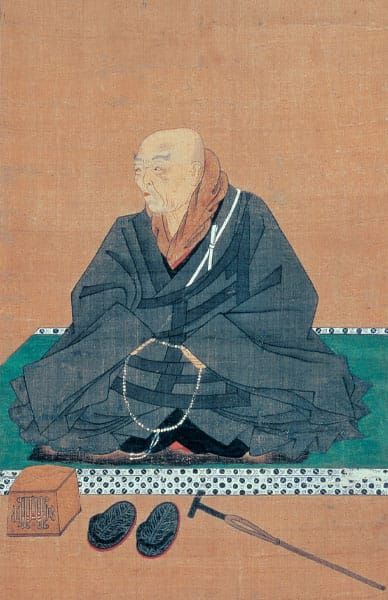
JP: This tradition was founded by Shinran (1173–1163) and remains the largest school of Buddhism in Japan today. Using the simplest possible language, the doctrinal essence of Shin is this: At the heart of life is a radiant, blissful reality that is compassionate and eternal. It is deeply implicated in the world of birth-and-death from which it forever seeks to unbind us. It does so because we belong to that reality, even though we often fail to see this. And all it asks of us is to consent to have its liberating power dispel our spiritual desolation so that we may rejoice in knowing who we really are and where we are going. The heart of its method can be stated as the complete abandonment of all self-willed attempts to attain enlightenment through conventional practices, coupled with a total surrender to the Buddha’s working to illumine and deliver all sentient beings.
Amida … is the accessible face of ultimate reality (which is supra-personal, not impersonal) … Invoking the name of Amida Buddha is an act of entrusting in response to a call from the beckoning ‘farther shore’ of the Pure Land or Nirvāna.
SBS: Across the diverse religions of the world, we find different ways of concentrating on the Divine with a view to psychological and spiritual integration. Could you please talk about the practice of nembutsu in the context of Shin Buddhism?
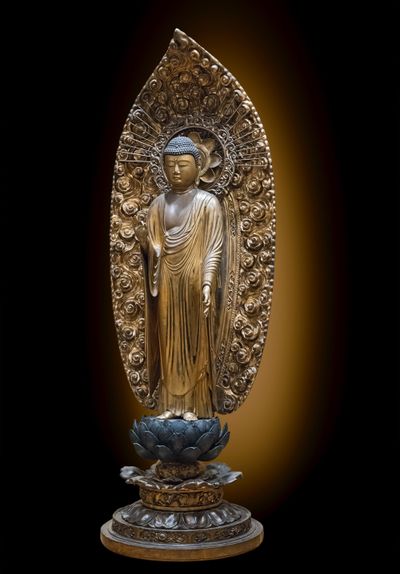
JP: Nembutsu—literally, thinking of or remembering the Buddha—is the practice of hearing and saying the Name of Amida (Namu Amida Butsu—‘I take refuge in the Buddha of Immeasurable Light and Life’). It is a contemplative act arising from Other-Power (tariki), which opens us up to the universal influence of ultimate reality which undertakes true practice on our behalf. We must therefore make room for its working in our lives. This is the only spiritually beneficial act of which we are capable.
This may suggest an attitude that is rather passive but, despite appearances, it is far from being idle. It entails a life of constant engagement with the teachings and, through them, exposure to the wisdom of Amida who is the accessible face of ultimate reality (which is supra-personal, not impersonal). In other words, the nembutsu becomes the vocalisation of a momentous existential transformation that takes over our lives. This, in turn, informs our acts of service in the world which we undertake, instinctively, without pride and in a spirit of sharing the Dharma with others.
Invoking the name of Amida Buddha is an act of entrusting in response to a call from the beckoning ‘farther shore’ of the Pure Land or Nirvāna. We say the nembutsu, not for any particular reason or with a view to gaining something, but simply because we acknowledge that this call—and our response to it—is Amida in action. This is why Shinran called it ‘great practice’, precisely because it is the working of Other-Power and not that of ‘foolish beings’ as the sutras describes us.
The Name is a form that discloses Amida’s compassionate intention for us; this declaration is also an invitation to accept the Buddha’s offer of salvation which, when we truly hear it, becomes irresistible to us. The joy and gratitude of our response to this call streams forth from our lips as the nembutsu which heralds a radical spiritual transformation in our lives.
It is … incorrect to think that Other-Power means ‘no effort’. … we need to suspend the focus on our ‘false’ self if we are ever to reach the spiritual haven to which only Other-Power can take us.
SBS: Shin Buddhism has been criticized due to its emphasis on Other-Power which is seen as dismissing the need for effort. The teaching that we cannot attain enlightenment or Nirvāna, as a result of our own initiative alone, is not widely known. Can you please elaborate on this?
JP: To rely on ‘Other-Power’ is to acknowledge our very real limitations as human beings. It is to accept our nature as ordinary people who are often overwhelmed by the raging tempests of existence but who also willingly surrender ourselves to the compassion of Amida’s Vow to release all beings from suffering. This abandonment to something greater provides relief from our suffocating ego and allows us to behold an unending vista of wonder, peace and light that sustains us throughout life.
The world is so framed by precarious instability that it cannot provide this kind of comfort or assurance. And we should not think, for a moment, that this is some kind of easy way out for timid or weak-minded people who cannot face the realities of life. Reality is actually seen for what it is through such a vision because it is grounded in that which does not perish. This is the only solution to the problem of impermanence and the anxiety it induces in those who mistakenly harbour the belief that this world is all there is.
It is therefore incorrect to think that Other-Power means ‘no effort’. While there is nothing we can do to secure enlightenment through our feeble spiritual gropings, we nevertheless need to awaken—through a brutally honest self-assessment—to that which can enlighten us. This must involve engaging with the teaching wholeheartedly and remaining receptive to its message. It also requires resisting our natural tendency to languor and sluggishness in living a life of nembutsu.
Overcoming this takes work as there is always a struggle involved in subduing the tenacious yet futile reliance on our own initiative and strength to vanquish the ego. Of course, such attributes are laudable in managing the practicalities of our daily lives but, when it comes to entering the realm of Dharma, we need to suspend the focus on our ‘false’ self if we are ever to reach the spiritual haven to which only Other-Power can take us. In this respect, virtue or moral conduct is not a prerequisite for attaining this understanding but, rather, something that flows naturally from awakening to the ‘true and real’ mind that Amida imparts to us (shinjin).
(We must) seek solace in the prospect of an eschatological resolution to the evils that can never be entirely overcome in our fractured existence.
SBS: Hinduism refers to the notion of Kali-Yuga or ‘dark age’ which teaches that, with the passage of time, human beings are gradually disconnected from the Spirit. In Buddhism, this era is known as mappō or the ‘Decadent Age of the Dharma’. Why is it important for those on the Buddhist path to understand this doctrine?
JP: The personal presence of the historical Buddha must have been powerful and unforgettable for those fortunate enough to have belonged to his order or crossed his path. Such good fortune would also have made possible the almost miraculous transformations in people that one reads about in the scriptures. Under his immediate influence, it certainly appears as if many individuals were able to attain enlightenment in their own lifetimes. There are many extraordinary episodes recorded in the sutras of the Buddha helping people to a deeper realisation of the Dharma through simple acts such as an exchange of a few words, a smile or simply holding up a flower with nothing needing to be said.
However, the Buddha himself did prophesy that this would not always be the case and that, with the passage of time following his entry into Nirvāna at death, the capacity of individuals to pursue the Dharma would degenerate to the point where no one would be able to attain perfect enlightenment through meditation and other traditional observances. While some may consider this to be a defeatist attitude, it is difficult to deny that we are living in an age when spiritual life is undergoing a pronounced debasement; and one is hard-pressed to find, in the world today, any widespread prevalence of genuinely enlightened people possessing the stature of the Buddha himself or even of his greatest disciples.
In this ‘Decadent Age of the Dharma’, the purely spiritual and contemplative aspects of the Buddhist path appear to have been largely abandoned in favour of an agitated quest to transform the world into something it can never be. Conflict and turmoil are seen as an inherent aspect of such an age and, as distressing as these realities are, they should not surprise or confound us.
While our ability to collectively redress this crisis may be seriously limited, we can at least aim to work on our own inner spiritual well-being (and helping others to do so) without which nothing positive can emerge in worldly affairs. The state of disorder that we see around us everywhere simply manifests our own toxic or damaged consciousness which only a spiritual form of awakening can ameliorate. Failing such a possibility in this life, Buddhism and other faiths exhort us to seek solace in the prospect of an eschatological resolution to the evils that can never be entirely overcome in our fractured existence.
while we can acknowledge the incompleteness or relativity of any single dogmatic viewpoint, we can also readily see that each one is perfectly adequate as a vehicle for emancipation.
SBS: How do you envision the Buddhist tradition playing a role in inter-religious or ecumenical dialogue among the world’s religions in the present day?
JP: An important feature of the Buddhist tradition is that it accepts all traditional religious forms as manifestations of the ultimate reality known as the Dharma-Body. Because it is considered—in its highest aspect—as formless and inconceivable, it can assume, out of compassion, any forms in the world of relativity that are necessary to save suffering beings.
This means that the Absolute is not, obviously, ‘sectarian’ in its essence. However, unless it embodies itself in particular (and thereby restricted) forms directed to various sectors of humanity—which possess a variety of needs, temperaments, inclinations and, it must be said, constraints—it cannot reach out and communicate its nature and will to us. Accordingly, different traditional perspectives can be seen as complementary rather than just antagonistic.
Every religion doubtlessly has its limitations; even Buddhism, despite it often being touted (but not without hubris) as ‘superior’, especially compared to theistic faiths. For example, Buddhists could certainly benefit from a more developed spiritual anthropology or a deeper reflection on the metaphysical significance of beauty in our world, which are themes we find more thoroughly explored in other traditions.
So, while we can acknowledge the incompleteness or relativity of any single dogmatic viewpoint, we can also readily see that each one is perfectly adequate as a vehicle for emancipation. This means that we ought to recognise that any doctrinal formulation is only an approximation (albeit fully efficacious) of a reality that transcends it, and which must always remain an incommunicable experience of the spirit.
SBS: Our lives are replete with a plethora of crises—a global pandemic, political unrest, economic upheaval, and high levels of anxiety and depression. Do you have any parting advice for spiritual seekers today?
JP: These can, indeed, be overwhelming challenges but we mustn’t think that they are historically unique. One could argue that, during times when traditional faiths had a greater hold over humanity, there were more effective spiritual resources available to help people deal with various calamities. Of course, many still suffered terribly in previous ages, especially through a lack of adequate medical care and sanitation, which we now enjoy in the modern world. But human nature has not changed and the problems posed by what the Buddha called the ‘three poisons’ (ignorance, anger and greed’) are still with us and no doubt exacerbated by the very real spiritual poverty that afflicts contemporary life.
I am not denying the importance of taking care of our basic material needs or ensuring social harmony, but these goods can never remain stable. If we ignore the ‘one thing needful’ (Luke 10:42)—which is our orientation towards the sacred—then we will continue to dwell in darkness, even if we feel physically safe, have plenty to eat and enjoy perfect health. Therefore, our response to any natural disaster or worldly commotion is to always keep the Buddha in mind (nembutsu) and dwell in the lasting joy which only the Dharma can give. To the extent that we identify our true self with Amida’s limitless wisdom and compassion, rather than relying for our happiness on the mutable conditions of this ‘burning house’, we are given a spiritually unassailable and meaningful existence, come what may.
SBS: I appreciate you taking the time to speak to me about these important matters and hope that our discussion might give readers a better understanding of traditional Buddhism, especially some of its lesser-known forms such as Shin.
[[1]]: D.T. Suzuki, The Essence of Buddhism (London: The Buddhist Society, 1957), p. 46