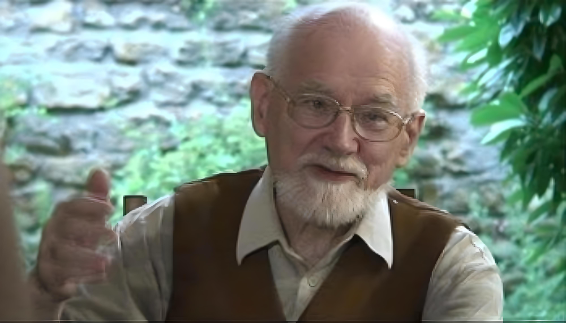
Jean Borella’s work has been referenced several times in this journal, and Sacred Web Volume 17 (Summer 2006) included a lengthy review essay by him titled ‘The Problematic of the Unity of Religions’ (translated into English from the French by John Champoux) as an Afterword to Bruno Bérard’s Introduction à une métaphysique des mystères chrétiens (2005), in which Borella explores the limitations of the Traditionalist idea of the “transcendent unity of religions,” and outlines his own view of an analogical rather than identical unity among faith traditions.
In this retrospective, Bruno Bérard briefly outlines Jean Borella’s intellectual journey, his philosophical legacy, and his contribution to Traditional thought.
An Education Between Western Philosophy and Eastern Wisdom
Jean Borella was born on May 21, 1930, in Nancy, Lorraine, into a Catholic family. His father, a military aviator of Italian descent, died in an accident in 1937. His mother gave him a Christian upbringing that would remain one of the foundations of his intellectual and spiritual life.
From an early age, he showed an interest in philosophical and religious questions. As an adolescent, he discovered Descartes and Pascal, whose reflections on God, truth, and the human condition helped awaken his philosophical vocation.
At the University of Nancy, several intellectual encounters would prove decisive.
Georges Vallin introduced him to the metaphysics of Vedānta and the great perspectives of Eastern thought. Guy Bugault introduced him to Platonic philosophy and the Indian traditions. Raymond Ruyer, a philosopher of nature and consciousness, opened up other horizons, particularly concerning the relationships between reality, meaning, and intelligibility.
The breadth of this education was remarkable. It brought together Western philosophy, Greek thought, Eastern traditions, and a constant questioning of the foundations of knowledge.
Borella would never be merely a commentator on Guénon or Schuon. His deepening understanding of the Christian mystery would gradually lead him to reconsider certain fundamental aspects of their teachings.
In 1953, Borella obtained his degree in philosophy and discovered the writings of René Guénon. This reading marked a decisive stage: it offered him a metaphysical perspective capable of unifying intuitions that had previously remained scattered.
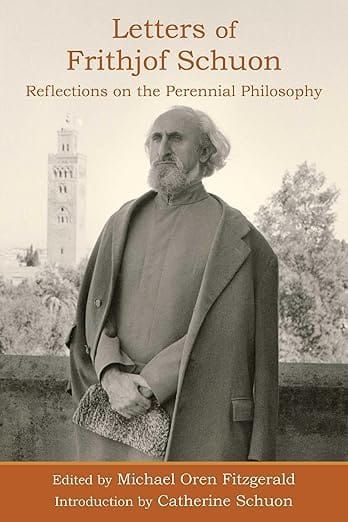
He subsequently deepened his knowledge of Frithjof Schuon's work, particularly his doctrine of the transcendent unity of religions, of which he would later develop a thorough critique.
These early influences, however, should not obscure the originality of his intellectual journey. Borella would never be merely a commentator on Guénon or Schuon. His deepening understanding of the Christian mystery would gradually lead him to reconsider certain fundamental aspects of their teachings.
Having passed the agrégation in philosophy in 1960, he taught philosophy and literature in the preparatory classes in Nancy from 1962 to 1977, and subsequently metaphysics and the history of ancient and medieval philosophy at the University of Nancy-II until his retirement in 1995.
In 1982, he defended a doctorat d'État at the University of Paris-Nanterre, under the supervision of Paul Ricœur, devoted to the metaphysical foundations of sacred symbolism. This research would give rise, in particular, to two of his major works: Histoire et théorie du symbole (“History and Theory of the Symbol,” not published in English) and The Crisis of Religious Symbolism.
From the Discovery of Guénon to an Original Christian Metaphysics
The encounter with René Guénon's thought is essential to understanding Borella's intellectual development.
Guénon had sought to demonstrate that modern civilization rested upon a progressive reduction of intelligence to discursive reason, knowledge to its empirical modalities, and reality to its quantitative aspects.
Against this reduction, he set the traditional metaphysical doctrines, founded upon the possibility of a supra-rational knowledge of universal principles.
Borella would permanently recognize the importance of this critique. He shared Guénon's conviction that human intelligence cannot be confined within the limits imposed upon it by modern rationalism.
He also shared with Schuon the view that the great religious traditions possess a metaphysical depth irreducible to their merely historical or moral expressions.
Nevertheless, his intellectual journey led him to raise a particular question: does the traditional metaphysical perspective allow us to understand fully the specificity of Christian revelation?
He considered that certain formulations of Guénonian esoterism risked subordinating Christian revelation to a metaphysical doctrine presumed to be more universal than revelation itself.
Borella's answer became progressively more nuanced.
He considered that certain formulations of Guénonian esoterism risked subordinating Christian revelation to a metaphysical doctrine presumed to be more universal than revelation itself.
For him, Christianity was not simply one religious form among others, whose deepest truth had to be sought in an esoterism external to its own revelation.
The mystery of Christ, the Incarnation, the Trinity, grace, and the sacraments possess their own metaphysical intelligibility.
This conviction explains his endeavor to conceive an authentically Christian gnosis, one that would be neither a secret doctrine opposed to faith nor an intellectual knowledge independent of revelation.
His critique of certain Guénonian and Schuonian positions therefore represented not an abandonment of traditional metaphysics, but a reassessment of some of its formulations in the light of the specific demands of Christian revelation.
The significance of this approach is considerable: it demonstrates that Tradition cannot be reduced to the repetition of doctrinal formulations, however eminent they may be.
Genuinely traditional thought must remain capable of questioning its own expressions in the light of the principles it acknowledges.
The Symbol: An Ontological Reality, Not Merely a Representation
One of Jean Borella's most original contributions lies in his metaphysics of the symbol.
Modern thought tends to regard the symbol as a sign to which the human mind assigns a meaning. The symbol is understood as representing an absent reality, without truly participating in what it signifies.
Borella reverses this perspective.
For Borella, the symbolic relationship pertains not only to signification, but also to being.
For him, the authentic symbol is not merely a mental or cultural construction. It manifests, according to its own order, a reality that transcends it.
In other words, the symbolic relationship pertains not only to signification, but also to being.
This conception rests upon the traditional doctrine of participation and upon metaphysical analogy: sensible realities can manifest intelligible principles because the different levels of reality are not radically alien to one another.
The world thus possesses a symbolic depth that is not added by human beings but belongs to its very structure.
This perspective makes it possible to renew our interpretation of religious symbols, rites, sacred art, and traditional cosmology.
It also helps explain why the loss of symbolic understanding is one of the most profound characteristics of modernity.
In The Crisis of Religious Symbolism, Borella shows that this loss results not merely from cultural impoverishment or the disappearance of traditional knowledge.
It arises from a more radical transformation of our conception of reality.
When the world is no longer perceived as anything more than a collection of material objects, the symbol can appear only as a subjective representation.
To rehabilitate the symbol is therefore necessarily to rehabilitate metaphysics itself.
Reason, Intellect, and Spiritual Knowledge
The metaphysics of the symbol naturally leads to an inquiry into knowledge.
Borella carefully distinguishes discursive reason from metaphysical intellect.
Reason proceeds through concepts, distinctions, and demonstrations. It is indispensable to philosophy and possesses its own legitimacy.
Yet it always presupposes an intelligibility that it does not itself produce.
Authentic gnosis is not the intellectual possession of God, but a participation in divine truth.
The intellect, in its metaphysical sense, designates that fundamental capacity of the human spirit to apprehend intelligible principles intuitively, prior to their discursive elaboration by reason.
The point, therefore, is not to oppose some vague intuition to rational rigor, but to recognize that reason does not exhaust our possibilities of knowledge.
This distinction brings Borella close to the great Platonic and Neoplatonic tradition, as well as to certain fundamental insights of the philosophia perennis.
Above all, it enables him to overcome an opposition characteristic of modernity: that between a supposedly autonomous reason and a faith reduced to subjective belief.
For Borella, faith and intellect are not two alien domains.
Faith opens onto a truth that the intellect is called to contemplate and deepen.
It is within this perspective that his defense of Christian gnosis acquires its meaning.
The term gnosis does not refer here to historical Gnosticism, with its particular doctrines, but to a spiritual knowledge of God, intrinsic to the Christian tradition itself and deeply rooted in the New Testament, both in St. Paul and in the Gospels, particularly that of John.
Such knowledge abolishes neither faith, nor grace, nor the sacraments, nor the spiritual life. Rather, it reveals their contemplative vocation.
Authentic gnosis is not the intellectual possession of God, but a participation in divine truth.
Love as the Fulfillment of Knowledge
It would nevertheless be insufficient to present Borella's philosophy as merely a theory of metaphysical knowledge.
Love occupies an essential place in his work.
As early as La Charité profanée, published in 1979 and later republished under the title Amour et Vérité (English translation: Love & Truth: The Christian Path of Charity), he sought to demonstrate that Christian charity cannot be reduced to a moral sentiment, humanitarian benevolence, or a simple ethical obligation.
Love possesses a metaphysical significance.
metaphysical truth is not an object to be possessed, but a reality in which one participates.
Where discursive reason distinguishes in order to understand, love unites without abolishing distinction. Yet this union does not suppress intelligibility; on the contrary, it reveals its ultimate depth.
This perspective finds its supreme expression in the mystery of the Trinity, where divine unity and the distinction of the Persons do not exclude one another.
It also allows us to understand why spiritual knowledge cannot find its fulfillment in the intellectual mastery of its object.
To know truly implies an openness to what is known, and this openness reaches its fullness in love.
Thus, intellect and love do not constitute two independent paths. They manifest two complementary dimensions of the relationship between the human spirit and truth.
This articulation represents, in my view, one of Borella's most profound contributions to traditional metaphysics: supreme knowledge cannot be separated from love, for metaphysical truth is not an object to be possessed, but a reality in which one participates.
The Man Behind the Philosopher
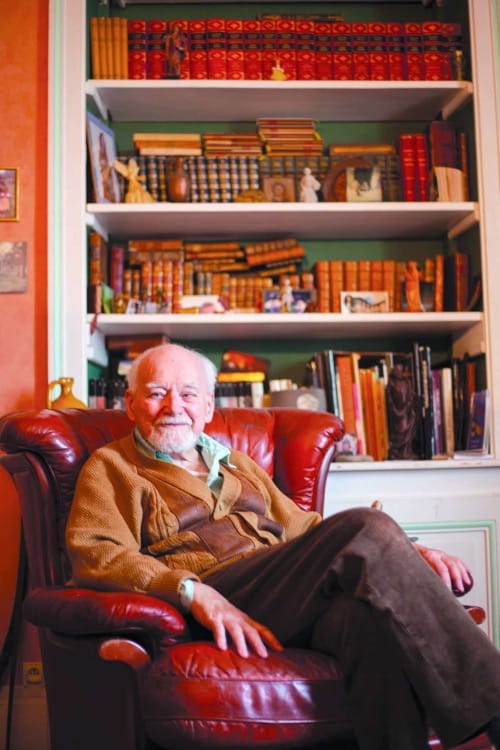
A philosophical work of such breadth might lead one to imagine a thinker enclosed within his own intellectual constructions.
Yet Jean Borella was a man of great simplicity, whose depth often manifested itself with discretion.
I remember, in particular, our first meeting at his home in Nancy.
At the time, I was working on the relationships between Christian metaphysics and the great spiritual traditions. To organize these complex questions, I naturally resorted to diagrams and conceptual representations.
Jean then made a remark that I have never forgotten.
Diagrams, he explained, can help us understand, at least partially. But we must then know how to forget them; otherwise, they risk imprisoning thought and preventing us from “thinking further.”
Concepts are necessary, but they are not reality. … in him, intellectual depth was inseparable from genuine attentiveness to others.
This observation, expressed so simply, admirably sums up his philosophy.
Concepts are necessary, but they are not reality. Systems may illuminate truth, but none can ever exhaust it.
The intellect must know how to make use of its own constructions without ever becoming their prisoner.
Another characteristic of Jean was his faithfulness in friendship.
Our exchanges depended neither on frequent meetings nor on geographical proximity. They continued mainly at a distance, through telephone conversations that were sometimes brief, but which continued until the final period of his life.
This discreet presence revealed something essential: in him, intellectual depth was inseparable from genuine attentiveness to others.
The love whose metaphysical function he emphasized was not merely a doctrine. It was also a way of life.
Jean Borella's Place in the History of the Traditionalist School
How, then, should Jean Borella be situated within the intellectual history of Tradition?
He unquestionably belongs to that family of thinkers who, during the twentieth century, challenged the rationalist and materialist limitations of modernity and reaffirmed the possibility of metaphysical knowledge.
In this respect, his work extends certain essential insights of Guénon and Schuon.
Yet it also differs from theirs on several fundamental points.
First, Borella accords a decisive place to philosophical inquiry as such. Whereas Guénon sometimes tends to oppose traditional metaphysics to Western philosophy, Borella seeks to show that the latter, particularly in its Platonic, Neoplatonic, and Christian expressions, contains authentic metaphysical resources.
Second, his philosophy of the symbol provides traditional thought with a particularly rigorous ontological elaboration. He does not merely affirm the spiritual value of symbols: he seeks to establish the metaphysical conditions of their reality.
Each revelation possesses a depth of its own, and metaphysical universality cannot be achieved at the cost of erasing this singularity.
Finally, his reflection on Christian gnosis shows that a religious tradition cannot be understood solely through general categories external to it.
Each revelation possesses a depth of its own, and metaphysical universality cannot be achieved at the cost of erasing this singularity.
In this sense, Borella calls traditional thought to meet an additional requirement: not to confuse the universality of principles with the uniformity of their expressions.
This position may give rise to debate among readers of Guénon and Schuon. Nevertheless, it constitutes an essential contribution to the intellectual vitality of the Traditionalist School.
For a philosophical tradition remains alive when it is capable of continuing to deepen its understanding, rather than merely repeating the formulations of its masters.
Jean Borella is therefore not simply a Christian representative of perennialism: he is a metaphysician who questioned certain of its presuppositions by drawing upon the resources proper to Christian revelation and the Christian intellectual tradition.
A Legacy Yet to Be Discovered
Jean Borella's body of work is substantial, yet its reception remains relatively limited, particularly in the English-speaking world. Although several of his books are now available in English translation, comprehensive studies devoted to his thought remain rare. Among them are A Metaphysics of the Christian Mystery: An Introduction to the Work of Jean Borella, by Bruno Bérard, and The Secret of the Christian Way: A Contemplative Ascent Through the Writings of Jean Borella, a selection of Borella’s key writings, edited by John Champoux, with a foreword by Wolfgang Smith.
This situation contrasts with the importance of the questions he addressed.
The nature of the intellect, the reality of the symbol, the relationships between philosophy and revelation, the possibility of spiritual knowledge, the unity and diversity of religious traditions, and the place of love in metaphysics: all these questions remain central to contemporary intellectual inquiry.
His books, including The Crisis of Religious Symbolism, Christ the Original Mystery: Esoterism and the Mystical Way, The Truth of Christian Gnosis, and Love & Truth: The Christian Path of Charity, represent successive stages in a remarkably coherent intellectual quest.
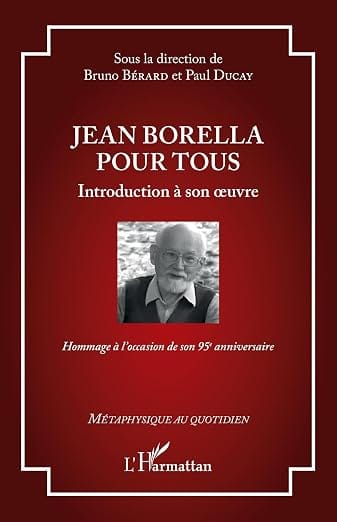
The collective volume Jean Borella pour tous (“Jean Borella for Everyone”), published in 2025 on the occasion of his ninety-fifth birthday, with an American edition planned by Angelico Press, bears witness to the desire to make his thought more accessible to new readers.
Yet much remains to be done, particularly to encourage the discovery of his work beyond the French-speaking world.
His legacy consists not merely of a series of philosophical theses, however important they may be.
It lies perhaps even more profoundly in a certain conception of human intelligence: an intelligence that is not condemned to remain imprisoned within its own representations, but is capable of opening itself to what transcends it.
Jean Borella thus reminds us that metaphysics is not an abstract speculation about an inaccessible world. It is an inquiry into the ultimate truth of what is, into the possibility of knowing that truth, and into the way such knowledge transforms our relationship with existence.
For the readers of Sacred Web, Jean Borella's work thus represents far more than another contribution to traditional thought. It is an invitation to pursue its further deepening without freezing it into a doctrinal system; to recognize the universality of metaphysical principles without effacing the singularity of revelations; and to rediscover, at the very heart of intellectual inquiry, that openness to truth which is inseparable from the spiritual life.
For this is perhaps Jean Borella's most enduring lesson: Tradition is not a collection of formulations that need merely to be preserved, but a living truth that the intellect is called to recognize, contemplate, and deepen. To think ever further, without forgetting that knowledge finds its fulfillment in love.